Deciding when to visit Bora Bora isn’t about chasing warm weather — the island stays tropical all year. The real difference between months lies in humidity levels, lagoon conditions, flight availability, and how much you’ll pay for that overwater villa.
As part of French Polynesia, Bora Bora follows South Pacific climate patterns shaped by trade winds rather than extreme seasonal shifts. Some months offer clearer skies and calmer waters; others bring higher humidity, occasional tropical showers, and noticeably lower resort pricing.
The island is stunning year-round. What changes is the balance between weather reliability, crowd levels, and cost. Understanding those shifts is what truly determines the best time to visit Bora Bora for your type of trip.
Here’s what actually varies month by month — and how to choose your dates strategically.
Understanding Bora Bora Weather: Dry Season vs Humid Season

Bora Bora has a tropical climate moderated by southeast trade winds.
Average year-round conditions:
- Air temperature: 24–30°C (75–86°F)
- Lagoon temperature: 26–29°C (79–84°F)
- Consistent daylight hours due to its near-equatorial location
There is no cold season. Instead, the year divides into two main periods:
Dry Season (May to October)
This period brings lower humidity, more stable sunshine, and noticeably cooler evenings thanks to consistent trade winds. Rainfall levels drop significantly compared to the rest of the year, and August and September are often among the driest months.
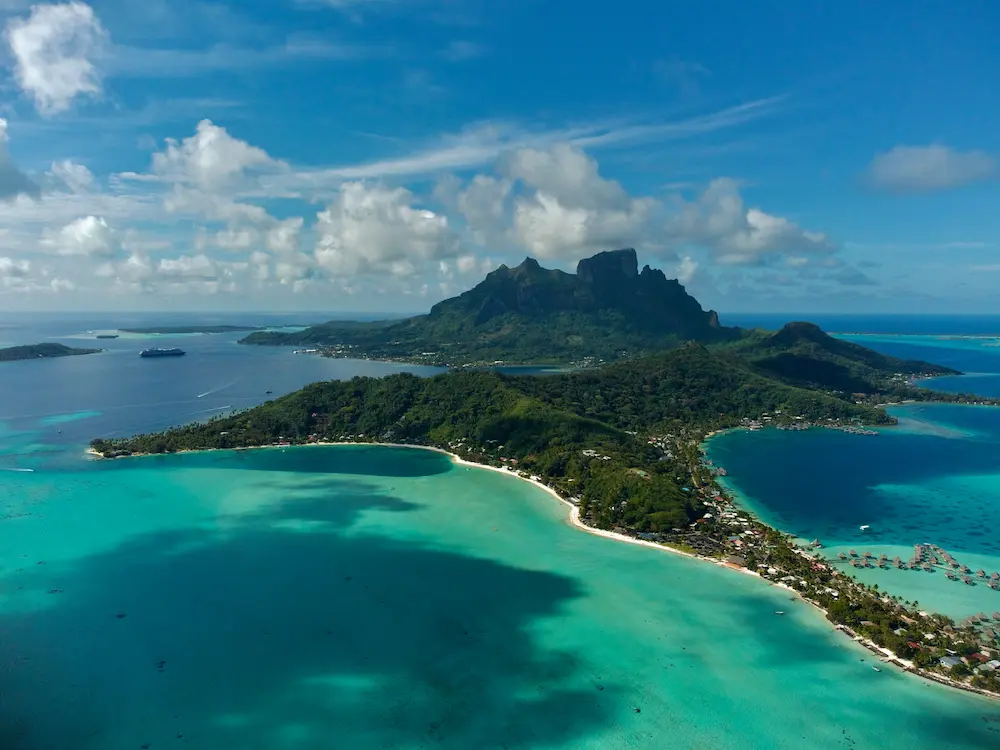
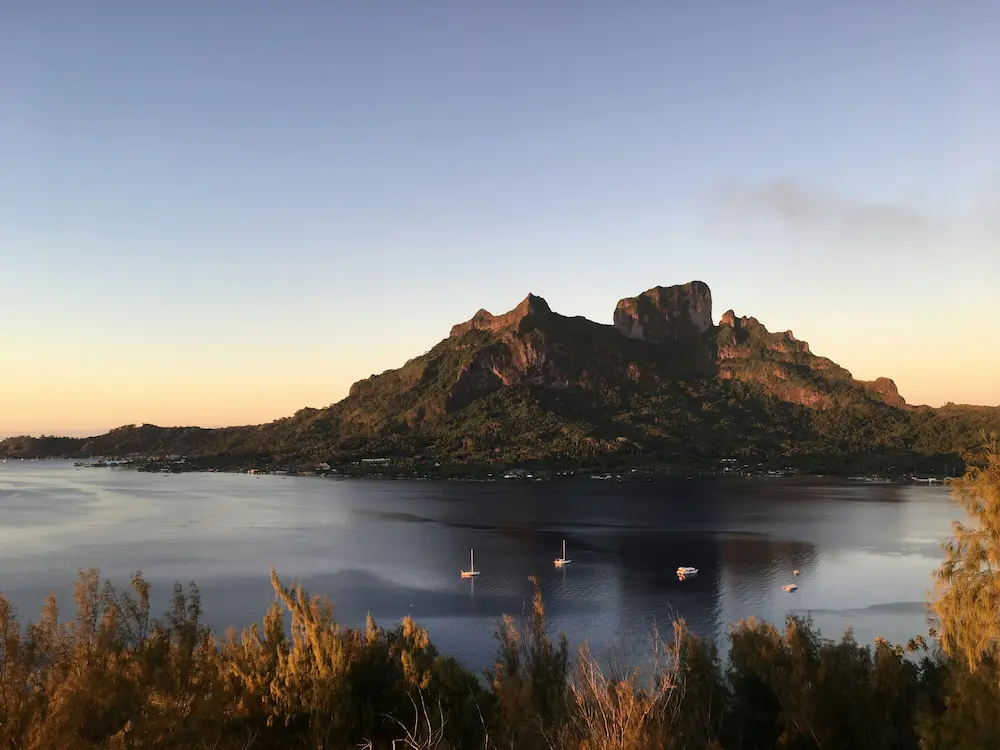
Sea conditions inside the lagoon are typically calm, making boat transfers smoother and snorkeling visibility particularly strong. This is also when Mount Otemanu is most consistently visible without cloud cover — something photographers and honeymooners especially appreciate.
Because this season sees the highest demand, comparing availability and pricing in advance is essential. You can check current rates, flexible dates, and seasonal differences directly on Trip, which allows you to evaluate both flights to Tahiti and Bora Bora stays in one place — especially useful during peak dry-season months when inventory moves quickly.
Humid Season (November to April)
This period brings warmer nights, higher humidity, and more frequent tropical showers. January and February are statistically the wettest months. Rain is often intense but short-lived rather than constant all-day downpours.
Tropical depressions are possible between December and March, although Bora Bora sits outside the main cyclone belt and direct hits are uncommon.
May to October: The Most Reliable Weather in Bora Bora
This is the best time of year to visit Bora Bora.
During these months, skies are clearer, humidity is lower, and Mount Otemanu is more consistently visible without cloud cover. Lagoon conditions are ideal for snorkeling, shark and ray safaris, paddleboarding, and boat excursions.
June, July, August, and September are considered peak dry-season months. The water clarity during this time is often exceptional, making it especially attractive for underwater photography and lagoon tours.
Evenings feel slightly cooler and more comfortable, which makes outdoor dining and sunset experiences particularly enjoyable.
However, this reliability comes at a cost.
This is peak tourism season:
- Resort occupancy is high.
- Overwater bungalows can sell out months in advance.
- International airfare is typically higher.
- Minimum-night requirements are common during summer holidays.
July and August align with North American and European vacation periods, further increasing demand.
If your priority is maximum weather stability and postcard-perfect conditions, this is the safest window — but early planning is essential.
November to April: Warmer, More Humid, Better Value
The humid season is often labeled the “rainy season,” but that description can oversimplify reality.
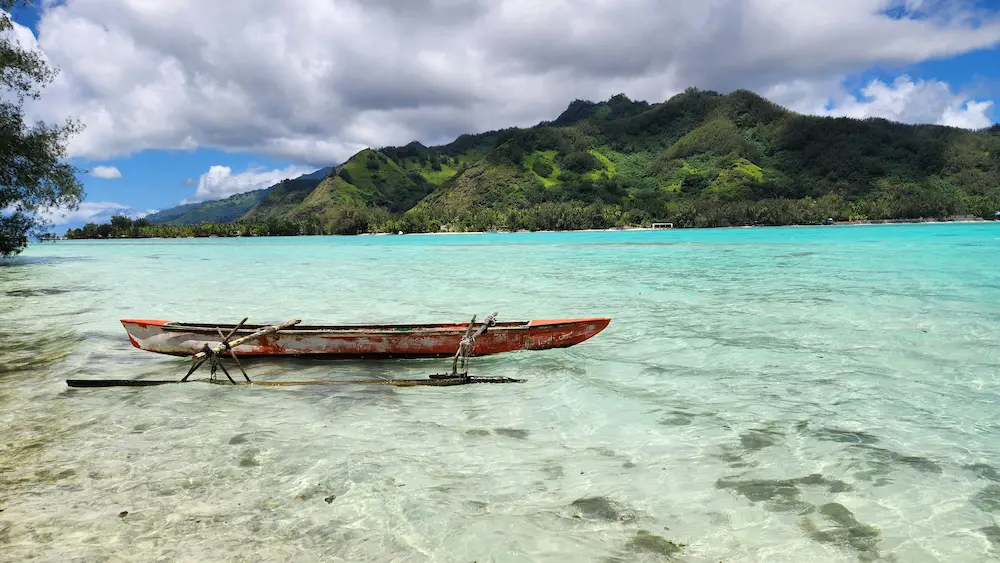
Rainfall increases, especially in January and February, but sunshine is still frequent. Many days include a mix of sun and passing showers. The lagoon remains warm and swimmable year-round.
Humidity is noticeably higher during this period, particularly at night. Afternoon cloud buildup is more common, and open-ocean conditions outside the reef can become choppier.
Financially, this is the most affordable period to visit Bora Bora outside holiday weeks.
Month-by-Month Overview

January and February: The warmest and most humid months of the year, with the highest average rainfall. Showers can be heavier and more frequent, particularly in the afternoons. However, outside of holiday weeks, availability tends to improve and pricing can be more flexible compared to peak dry season.
March: Still falls within the humid period but usually feels more stable than the start of the year. Rain events tend to become shorter and less persistent, making it a quieter time to experience the island without peak-season demand.
April: Is a true transition month. Rainfall gradually decreases, humidity begins to ease, and the island starts shifting toward dry-season patterns. It often offers a strong balance between improving weather and manageable rates.
May: Marks the beginning of the dry season. Trade winds become more consistent, humidity drops noticeably, and lagoon conditions stabilize. Many travelers consider this one of the most strategically balanced months of the year.
June: Brings reliably clear skies and calm waters, making it especially popular for honeymoons and milestone trips. Snorkeling visibility is typically excellent, and evenings feel slightly cooler and more comfortable.
July and August: Represent peak travel season. Weather predictability is at its highest, but so are resort rates and international airfare, particularly during North American and European summer holidays.
September: Remains dry and sunny, often with slightly fewer crowds than midsummer. It is frequently viewed as one of the most favorable months overall for combining excellent conditions with marginally softer demand.
October: Begins the shift back toward the humid season. Weather generally remains stable early in the month, though humidity gradually increases toward the end. It can still feel like a shoulder-season sweet spot.
November: Sees a noticeable rise in humidity and brief tropical showers, especially in the afternoons. Resorts often introduce seasonal promotions before the holiday rush begins.
December: Starts relatively balanced, but from mid-month onward, demand surges sharply due to Christmas and New Year’s travel. Availability tightens quickly, and nightly rates increase significantly.
Travel Logistics and Seasonal Considerations
All international flights to Bora Bora first arrive at Faa’a International Airport in Tahiti, near Papeete. Bora Bora does not receive direct long-haul international flights, so every traveler connects domestically before reaching the island.
From Tahiti, the journey continues on a 45–50 minute flight operated by Air Tahiti. What many travelers don’t realize is that these domestic flights sometimes include brief stops in other islands depending on the routing of the day. Seating is generally open (not pre-assigned), and luggage weight limits are enforced more strictly than on international carriers — something to plan for if packing for a longer luxury stay.
Upon arrival in Bora Bora, travelers land on a small motu rather than the main island. From there, transportation continues by boat. Resorts located on private motus organize their own transfers, typically lasting between 10 and 25 minutes. These transfers often serve as the first visual introduction to the lagoon, offering panoramic views of Mount Otemanu across the water.
Seasonality affects logistics more than most expect. During the dry season (June through September), domestic flights from Tahiti can sell out well in advance, particularly on arrival days that align with major long-haul routes from Los Angeles. Bora Bora’s infrastructure is intentionally limited, so flight capacity is not unlimited.
During humid season, short tropical storms occasionally cause minor delays, though the lagoon’s protective reef generally keeps boat transfers stable.
Holiday travel requires particular attention. From mid-December through early January, Bora Bora enters its most expensive travel window. Resort rates can double compared to shoulder season, and minimum stays of five to seven nights are common. Domestic flight availability also tightens significantly during this period.
Choosing the Best Time to Visit Bora Bora Based on Your Goals
If your priority is maximum sunshine, calm lagoon conditions, and iconic views, May through October offers the most reliable experience.
If your priority is budget efficiency and fewer crowds, January, February, and late November can deliver meaningful savings.
If you’re looking for a balance between improving weather and moderate pricing, May, October, and April are often strong compromise months.
Final Thoughts: When Is the Best Time to Visit Bora Bora?
There is no cold season in Bora Bora — temperatures remain tropical all year.
If guaranteed sunshine and calm conditions matter most, the dry season from May to October is the safest choice.
If value, flexibility, and fewer tourists are your priorities, November through April may be the smarter window.
The reality is that Bora Bora has the capacity to deliver extraordinary experiences in any month of the year. The scenery does not lose its drama, the lagoon does not lose its color, and the sense of escape remains constant — regardless of when you go.
The best time to visit Bora Bora ultimately depends on what you value most: absolute weather reliability, budget optimization, or a balance between the two