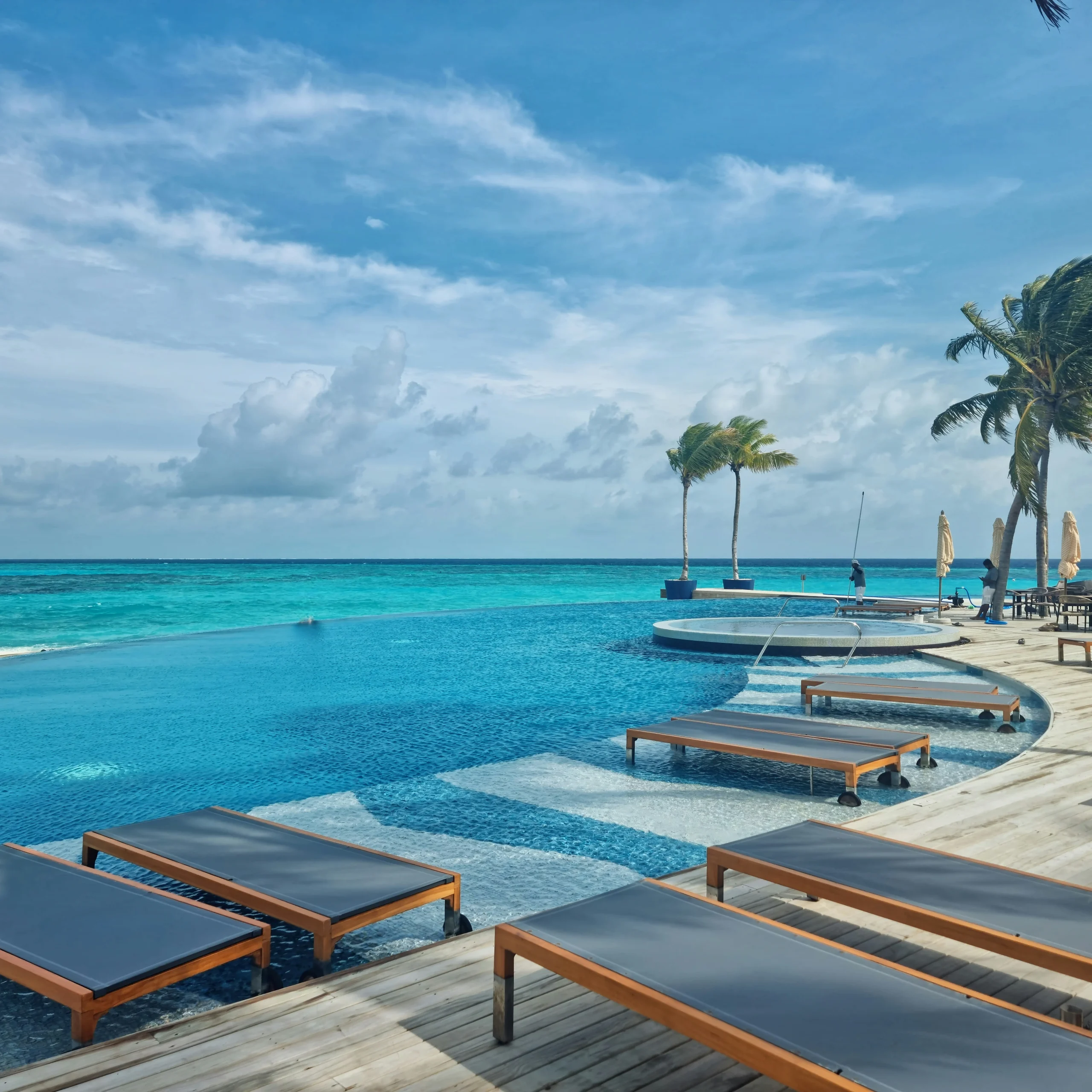
Most people assume Bora Bora is reserved for honeymoons and luxury resorts — and yes, that version of the trip exists. But did you know that traveling between May and June or in September and October puts you in dry season conditions with noticeably lower demand and better accommodation rates than peak months? The lagoon, […]
Most people assume Bora Bora is reserved for honeymoons and luxury resorts — and yes, that version of the trip exists. But did you know that traveling between May and June or in September and October puts you in dry season conditions with noticeably lower demand and better accommodation rates than peak months? The lagoon, the reef, and the activities are identical. The crowds and the prices are not.
And if you stay on the main island — in or near Vaitape — instead of on a resort motu, you can access the same lagoon excursions, the same reef dives, the same motu beaches, and the same marine life encounters for significantly less. Most of the best experiences in Bora Bora depart from the main island anyway. That’s why we recommend using Vaitape as your base during your stay.
If you are still comparing where to stay, Super can be a useful place to look. The platform bundles hotels and travel into discounted packages and features a wide range of stays across Bora Bora, from simple guesthouses to lagoon-view bungalows.
In Vaitape and along the main island, you will find local operators of all sizes offering lagoon tours, diving, hiking, and cultural experiences. Tours generally include snorkeling equipment, life jacket, round-trip boat transport, and in most cases a picnic or barbecue lunch on a motu. Some operators include drinks and underwater photos depending on the package. Ask specifically what is included before booking, as it varies.
1. Lagoon excursion with rays and sharks — half day
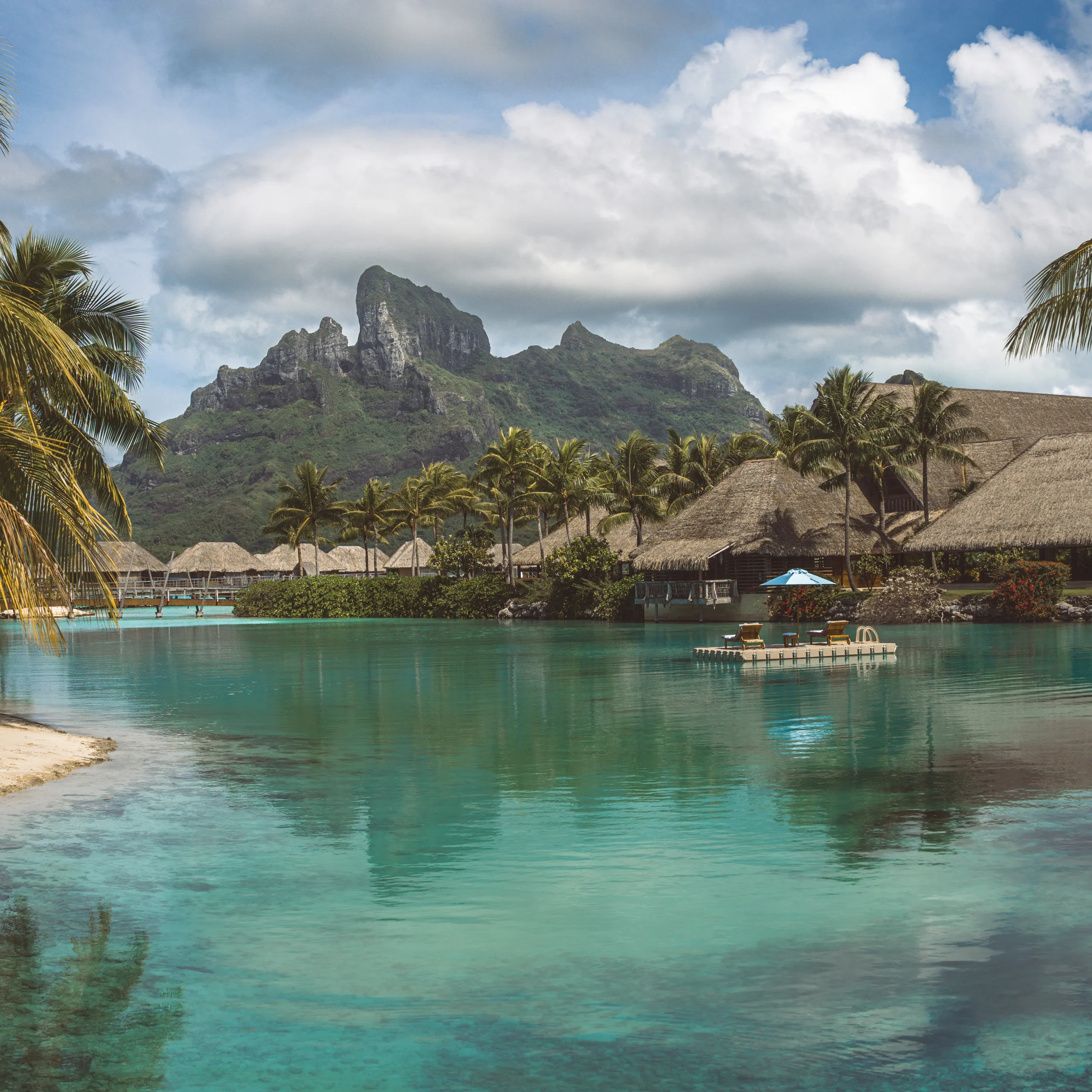
The signature activity of Bora Bora. Most operators run half-day versions that include a stop at a shallow-water site where blacktip reef sharks and large stingrays are reliably present, followed by a snorkeling session at the Coral Gardens (Jardin de Corail) and time on a motu beach. The sharks are small, common throughout the lagoons of French Polynesia, and not aggressive toward swimmers. Guides enter the water with the group. Equipment is included.
2. Full-day lagoon tour — snorkeling, motus, and pearl farm
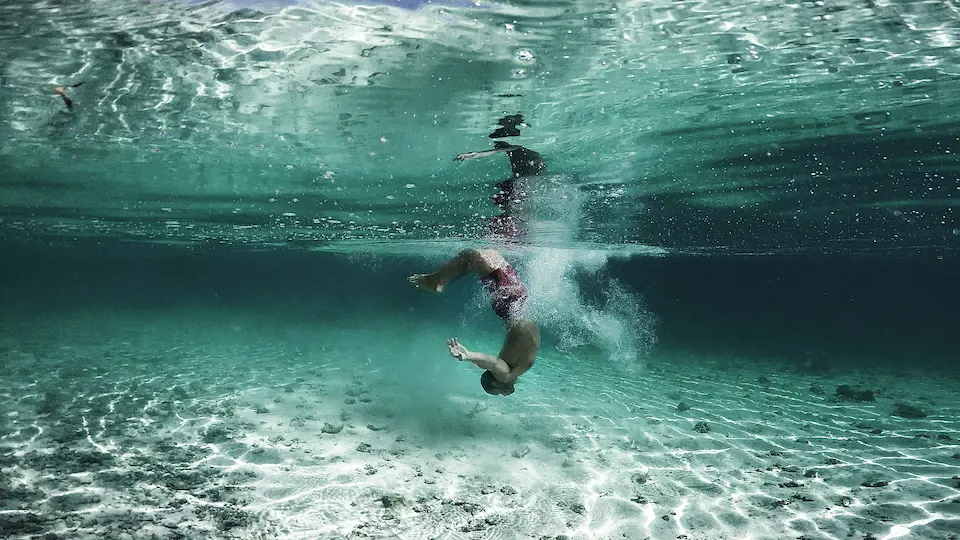
The full-day version of the lagoon tour adds more stops and more time on the water. Operators typically combine multiple snorkeling sites, a longer motu beach stop with a barbecue lunch, and often a visit to a working pearl farm where the cultivation process — grafting, growth, harvesting — is explained on-site. French Polynesia is one of the world’s primary sources of black pearls, and the farm visit provides real context for that.
3. Scuba diving — reef and pass dives
Bora Bora has established dive sites along the barrier reef and in the passes connecting the lagoon to the open ocean. The pass dives are where the most varied marine life appears — lemon sharks, eagle rays, grey reef sharks, and schools of barracuda are regularly seen. These sites have current and are recommended for divers with some experience. The shallower reef sites inside the lagoon are appropriate for Open Water certified divers.
4. Mount Otemanu base hike — half day
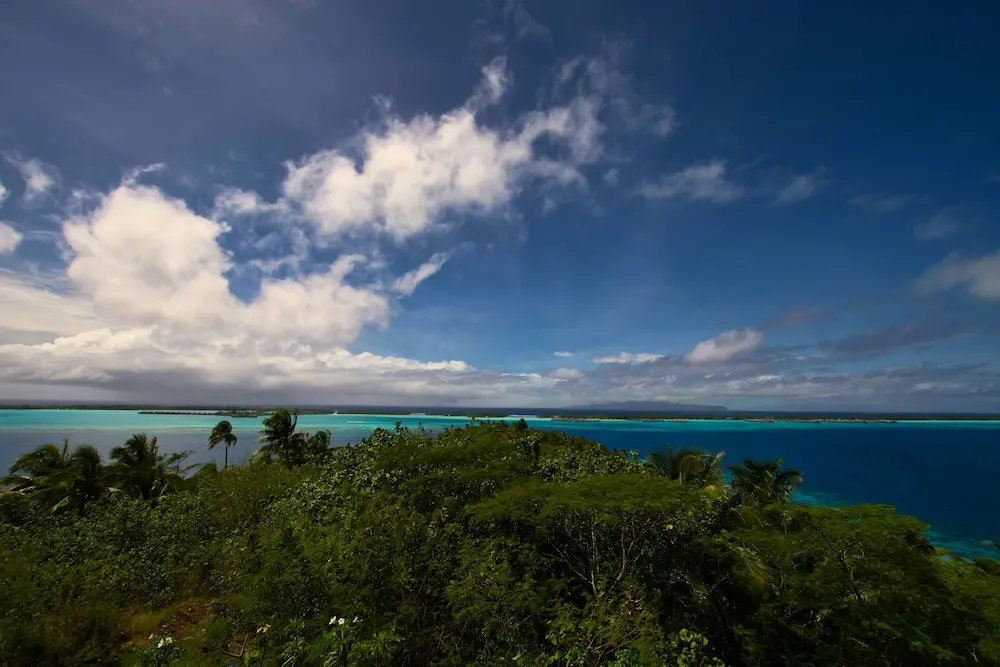
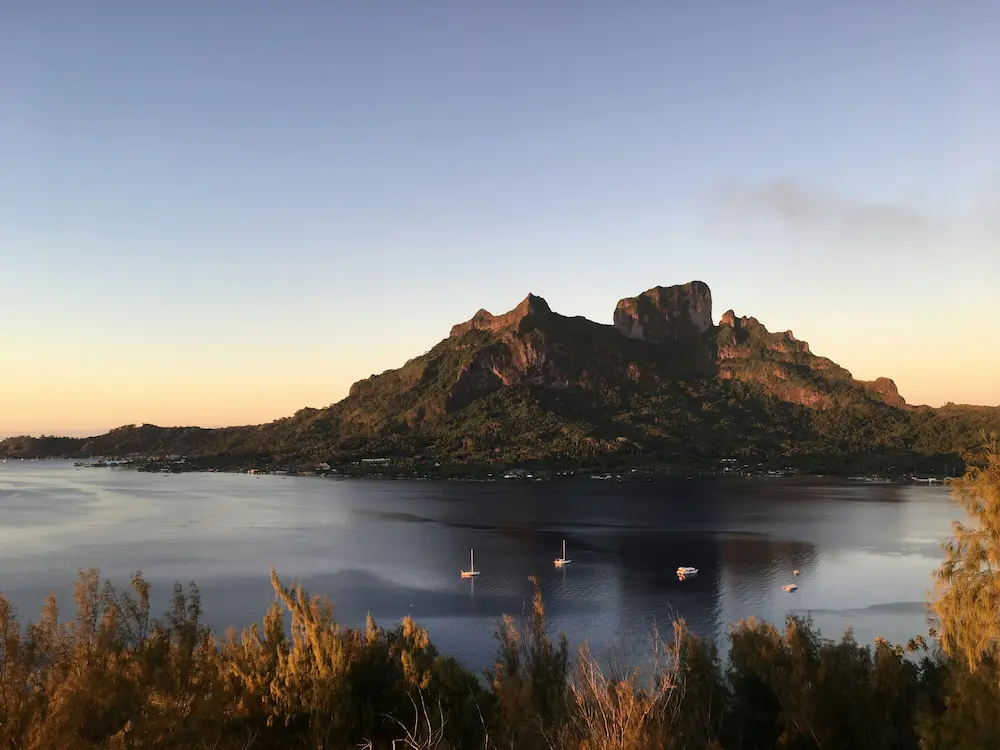
Mount Otemanu is the volcanic peak at the center of Bora Bora, visible from almost everywhere on the island. The true summit requires technical climbing equipment and is not a standard tourist activity. The base hike is accessible for most visitors with reasonable fitness, passes through dense tropical vegetation, and reaches an elevation where the full lagoon is visible below. Start before 7am — cloud cover builds reliably around the peak by mid-morning and the heat on the slopes increases quickly after 9am.
5. Coastal road by scooter — half day
The road that circles the main island runs approximately 32 kilometers and passes through every distinct environment Bora Bora has to offer: the Vaitape waterfront with its direct view of Otemanu, the lagoon-facing eastern shore, the quiet bays on the northern and western sides, the village of Anau on the northeastern coast, and Matira Beach at the southern tip. Done at a relaxed pace with stops, it takes two to three hours. Scooter rentals are available in Vaitape.
6. Matira Beach — free, no booking required
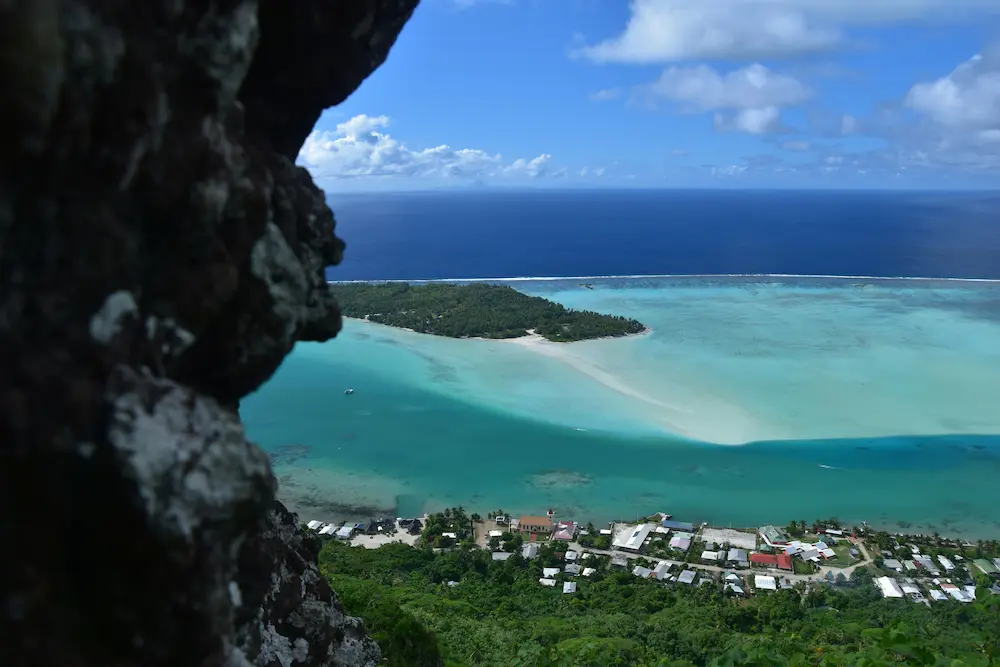
The only fully public beach on Bora Bora, at the southern tip of the main island. Entry is free. The sand is white and the water is shallow and calm. It is the most photographed beach on the island. Best in the early morning before the light flattens and before day-trippers arrive. No facilities on the beach itself, but small hotels and restaurants are within walking distance.
7. Resort day pass
Several resort properties in Bora Bora offer day passes that include access to their beach, facilities, and meals or a minimum spend. This is the most practical way to experience an overwater bungalow setting for a day without paying overnight rates. Availability and pricing vary by property and season — contact the resort directly rather than booking through a third party for the most accurate information.
The most practical eating on the main island is at the roulottes — local food trucks and open-air restaurants near the Vaitape waterfront, most active in the evening. Fresh fish, grilled meat, and poisson cru at prices well below anything in the resort areas.
Poisson cru is the dish to try: raw fish marinated in lime juice and coconut milk, served with cucumber and tomato. It is the most representative dish of French Polynesian cuisine and available at almost every local restaurant. Good poisson cru means fresh fish — it is the clearest indicator of kitchen quality on the island.
French-influenced food is a real part of daily life here. A morning stop at a boulangerie near Vaitape before a day on the lagoon is worth building into the routine. Resort dining exists in a different price category entirely — if you are staying at a resort and want local food for at least some meals, the boat transfer to the main island is the route.
Bora Bora is not only overwater bungalows and resort pools. Staying on the main island gives you access to the real range of what the island offers: a lagoon full of sharks, rays, and turtles; reef dives with eagle rays in the passes; a hike above the tree line with the full lagoon below; a free public beach; and roulottes on the waterfront at night.
Whether you are here for underwater encounters, land adventures, total relaxation, or a combination of all three — Bora Bora has a specific version of each. And from Vaitape, most of it is within reach for every type of traveler.