Most people assume Phuket is just a beach destination — you arrive, you pick a sunbed on Patong, you stay there for a week. And yes, that version of the trip exists. But did you know that traveling between May and October puts you in low season, when accommodation rates drop noticeably and the island […]
Most people assume Phuket is just a beach destination — you arrive, you pick a sunbed on Patong, you stay there for a week. And yes, that version of the trip exists. But did you know that traveling between May and October puts you in low season, when accommodation rates drop noticeably and the island is significantly less crowded? The temples, the Old Town, the food, and the day trips are identical. The prices and the crowds are not.
And if you stay in Phuket Old Town instead of directly on the beach, you get easier access to local restaurants, local operators, and the cultural side of the island — at a fraction of the cost of beachfront hotels. Most of the best day trips and experiences depart from or near Phuket Town anyway. That’s why we recommend using the Old Town as your base, at least for the first part of your stay.
If you are still comparing where to stay, Super offers bundled travel deals that combine accommodation and flights, often at discounted rates, making it easier to plan your trip to Phuket.
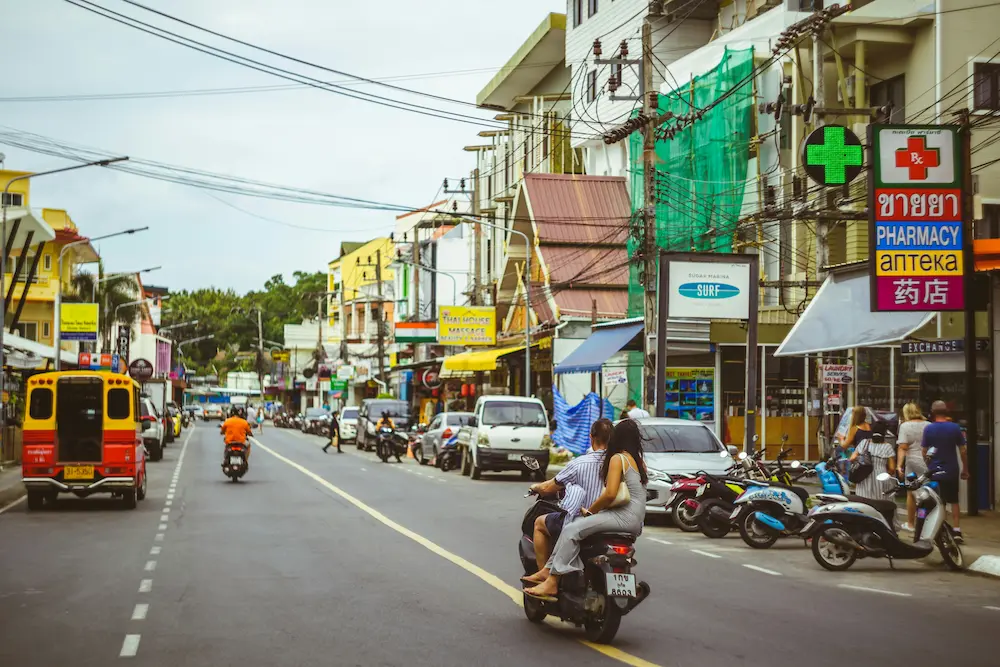
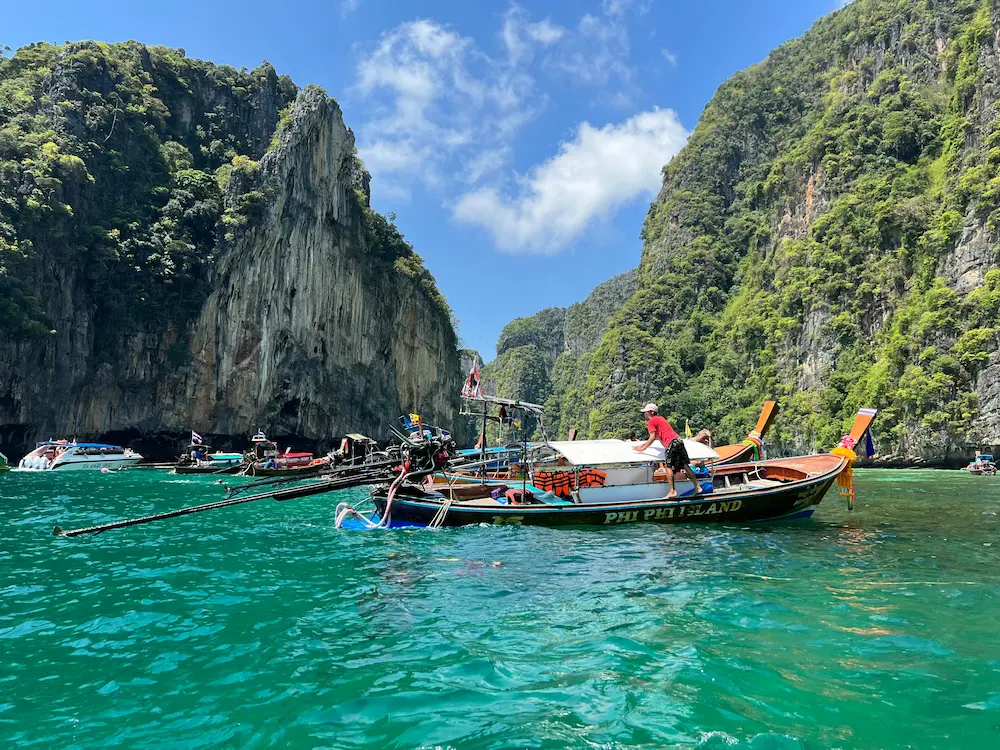
In Phuket Town and along the main tourist streets, you will find local operators of all sizes offering island day trips, snorkeling tours, temple circuits, and cultural experiences. Day trips to Phi Phi Islands and Phang Nga Bay generally include boat transport, snorkeling equipment, and lunch. Some operators include hotel pickup depending on where you are staying. Ask specifically what is included before booking, as it varies significantly between operators.
1. Phi Phi Islands day trip — full day
The most popular day trip from Phuket and one of the most visited island clusters in the Andaman Sea. The Phi Phi group includes Phi Phi Don — inhabited, with restaurants and guesthouses — and Phi Phi Leh, uninhabited and home to Maya Bay. Most full-day tours combine snorkeling stops around the limestone cliffs, a visit to Maya Bay, and time on Phi Phi Don. The water clarity around the islands is consistently good during dry season.
2. Phang Nga Bay — full day
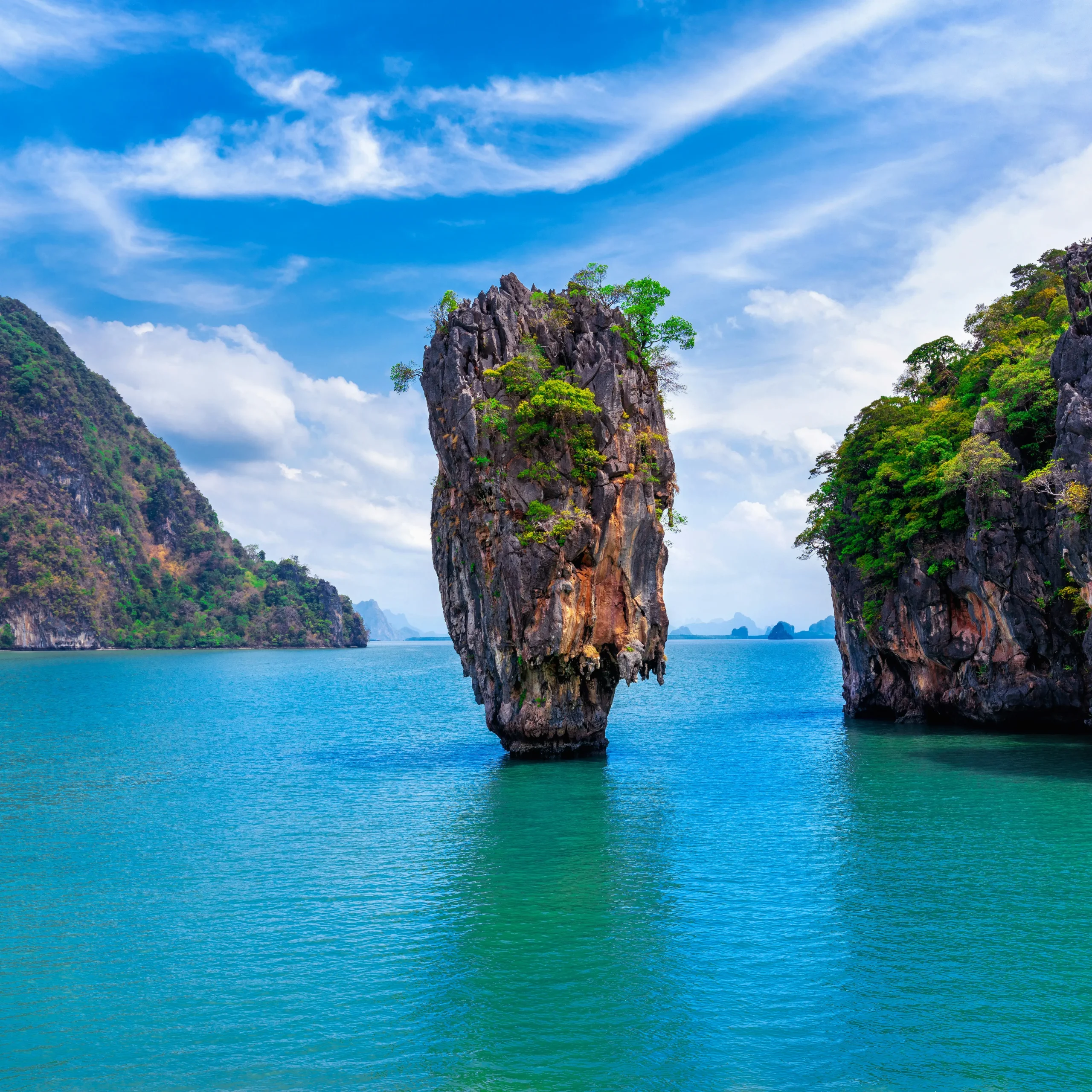
Phang Nga Bay is a bay northeast of Phuket filled with limestone karst formations rising directly from the water. The bay also contains James Bond Island (Khao Phing Kan), named for its appearance in a 1974 film, and Ko Panyi, a Muslim fishing village built on stilts over the water. Kayaking tours through sea caves and mangrove channels inside the bay give access to areas that larger boats cannot reach. One of the most visually distinct landscapes in southern Thailand.
3. West coast beaches — half day or full day
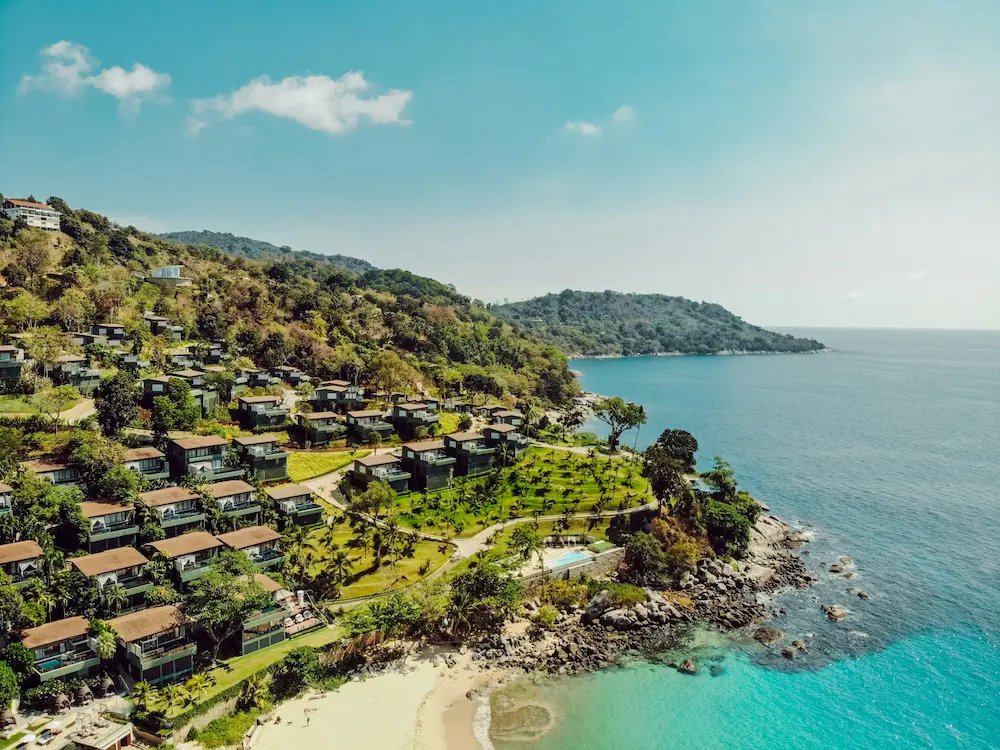
Phuket’s west coast faces the Andaman Sea and runs from Mai Khao and Nai Yang in the north down to Kata and Karon in the south. Each beach has a different character. Surin and Kamala are calmer and less developed than Patong. Patong is the most crowded — worth one visit to understand the scale, but not where most travelers want to spend the majority of their time. Kata Noi, immediately south of Kata, is the quietest of the main beaches. The viewpoint above Kata Beach looks north over three bays simultaneously and is one of the best vantage points on the island.
4. Wat Chalong and the Big Buddha — half day
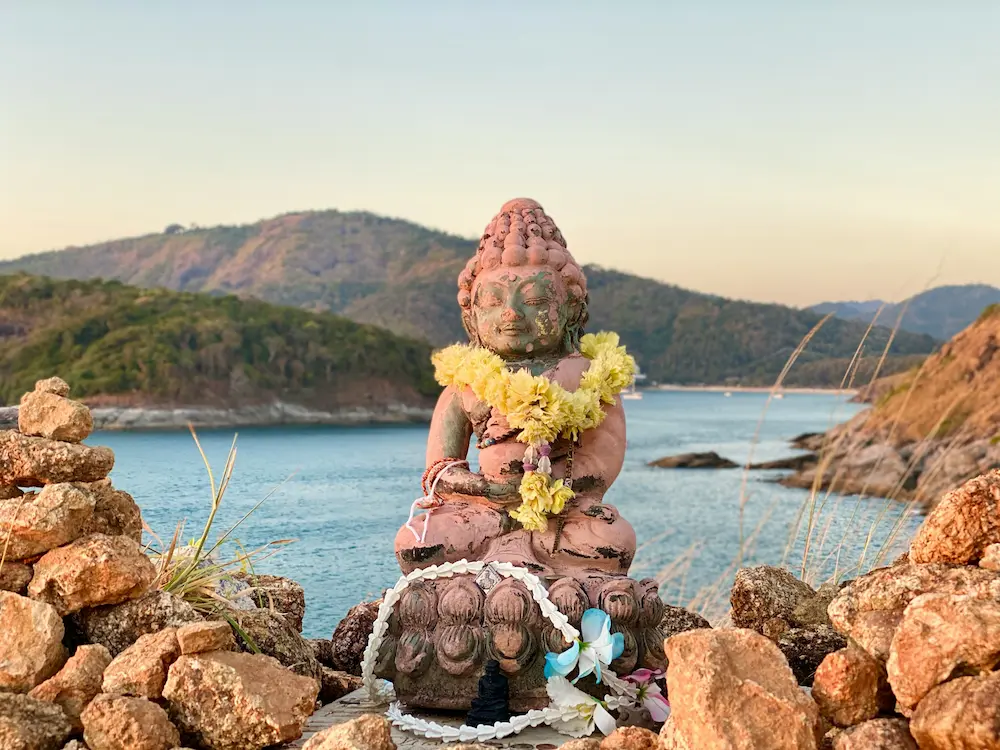
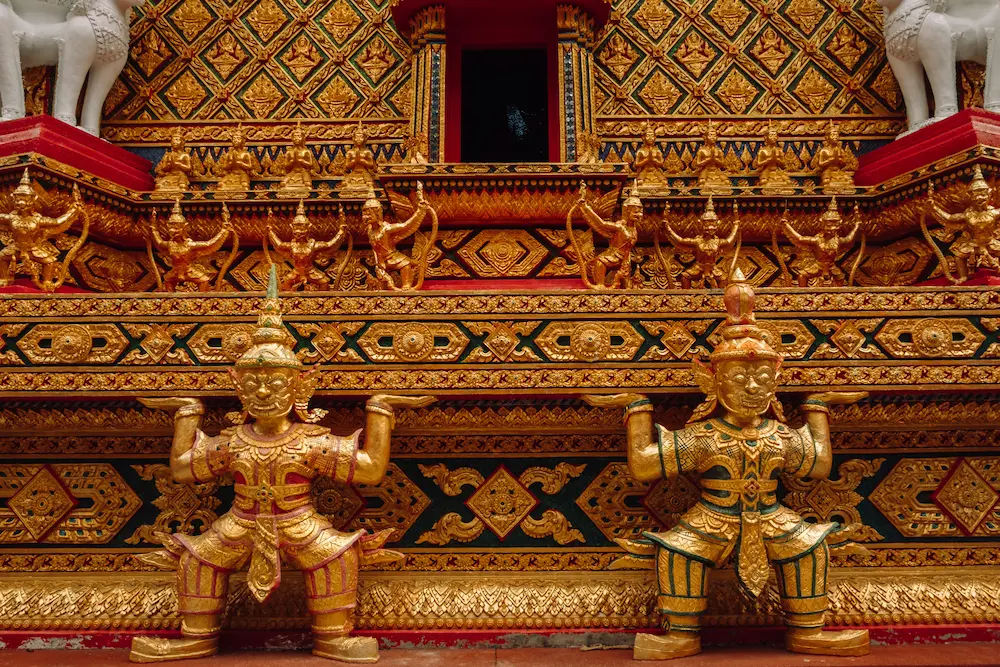
The two most visited religious sites on the island, both in the southern section and easily combined in a half-day trip. Wat Chalong is the largest Buddhist temple complex on Phuket — active, well-maintained, with several prayer halls and a stupa said to contain a relic of the Buddha. Entry is free; cover shoulders and knees. The Big Buddha is a 45-meter white marble statue on top of Nakkerd Hill, visible from much of the southern island. The views from the hilltop across the coastline are among the best on the island.
5. Phuket Old Town walking tour — half day
The historic district around Thalang Road, Dibuk Road, and Soi Rommanee has some of the most intact Sino-Portuguese architecture in Thailand — two-story shophouses with tiled facades and covered walkways built by Chinese immigrants during the tin mining period. The Phuket Thai Hua Museum on Krabi Road documents this history with well-organized exhibits. The Jui Tui Shrine on Soi Phuthon is an active Chinese Taoist shrine open to respectful visitors. No guide required — the neighborhood is compact and walkable in two to three hours.
6. Khao Rang Hill viewpoint — free, no booking required
A hill in the northern part of Phuket Town with a viewpoint looking out over the city, the bay, and the surrounding landscape. Free to access by road or on foot. Best in the early morning before heat haze reduces visibility. No facilities at the viewpoint itself, but small restaurants and cafés operate near the base of the hill.
7. Khao Lak or Similan Islands — full day or overnight
For travelers who want to extend beyond Phuket, Khao Lak is a quieter beach town about 80 kilometers north of Phuket Town, used as the main departure point for the Similan Islands — a group of nine islands in the Andaman Sea known for clear water and good diving and snorkeling conditions. The Similan Islands are a national park; entry is regulated and the islands are closed from mid-May to mid-October for environmental recovery. Day trips and liveaboard diving trips depart from Khao Lak during the open season.
The best local eating on the island is in Phuket Old Town, not at the beach hotels. The morning market near Ranong Road opens early and serves khanom jeen — rice noodles with curry — alongside dim sum from Chinese-style cafés and fresh fruit. Roti vendors operate from early morning on several streets in the Old Town.
For sit-down meals, the shophouses along Thalang Road and Dibuk Road have restaurants serving both Thai and Peranakan-influenced food. Mee hokkien — Hokkien-style noodles — is a local specialty that reflects the island’s Chinese heritage and is worth ordering at any Old Town restaurant that has it on the menu. It is the clearest indicator of whether a kitchen understands the local food tradition.
For Thai food, move away from the main tourist streets. Small restaurants where the menu is in Thai first and English second are consistently better value and better quality than anything on the beachfront strips. The food in Phuket — across both Thai and Chinese-influenced traditions — is one of the strongest arguments for spending at least the first few days of the trip in the Old Town rather than going straight to the beach.
Phuket is not only beaches and beach clubs. Staying in the Old Town gives you access to the real range of what the island offers: Sino-Portuguese architecture built by Chinese tin miners, active Buddhist temples, one of the most dramatic bay landscapes in the region, day trips to offshore islands with clear Andaman water, and a food culture that rewards anyone who eats away from the resort areas.
Whether you are here for the beaches, the temples, the island day trips, the architecture, or the food in the Old Town at night — Phuket has a specific version of each. And from the Old Town, most of it is within reach for every type of traveler.