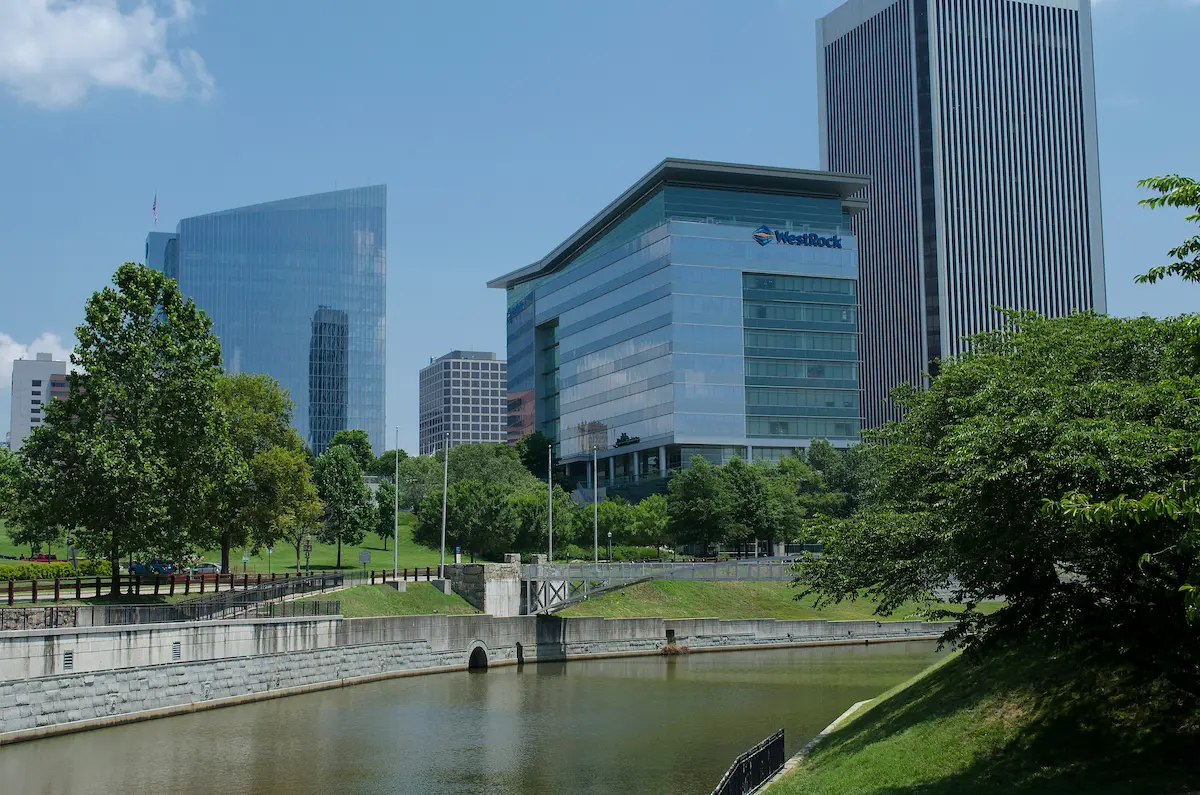
Most people arrive in Virginia with a single image in mind: fall foliage on Skyline Drive, probably a weekend in October, probably the most crowded version of it. But the most photographed spots in the state are rarely at peak hour or in the most obvious locations. They are on Blue Ridge overlooks at dusk, […]

Most people arrive in Virginia with a single image in mind: fall foliage on Skyline Drive, probably a weekend in October, probably the most crowded version of it. But the most photographed spots in the state are rarely at peak hour or in the most obvious locations. They are on Blue Ridge overlooks at dusk, in Richmond’s garden cemetery at 8am on a weekday, on the rock ledge of McAfee Knob with the valley suspended below, and at a 19th-century watermill sitting beside a pond as if nothing has changed since the 1900s.
If you stay in the Charlottesville or Shenandoah area and use it as a base, you are actually within reach of most of these spots without backtracking. It puts you close to the Blue Ridge Parkway, Skyline Drive, and the road south toward Roanoke — without paying peak resort prices. That is why we recommend it as your base if visual variety is the goal.
Those still planning their stay can check Trip — it tends to have strong rates across Virginia’s regions and is worth comparing before you book anything near the Parkway or Shenandoah.

Most of the images that define Virginia visually — the rock ledge at McAfee Knob, the waterwheel at Mabry Mill, the single tree at Raven’s Roost, the James River view from Hollywood Cemetery — are free to access and consistently undervisited at the right time of day. The crowds are real in October and on summer weekends, but the same spots on a Tuesday morning in April or November look completely different. All of the locations below are reachable by car with short walks, and none require a resort stay or an expensive guided tour.
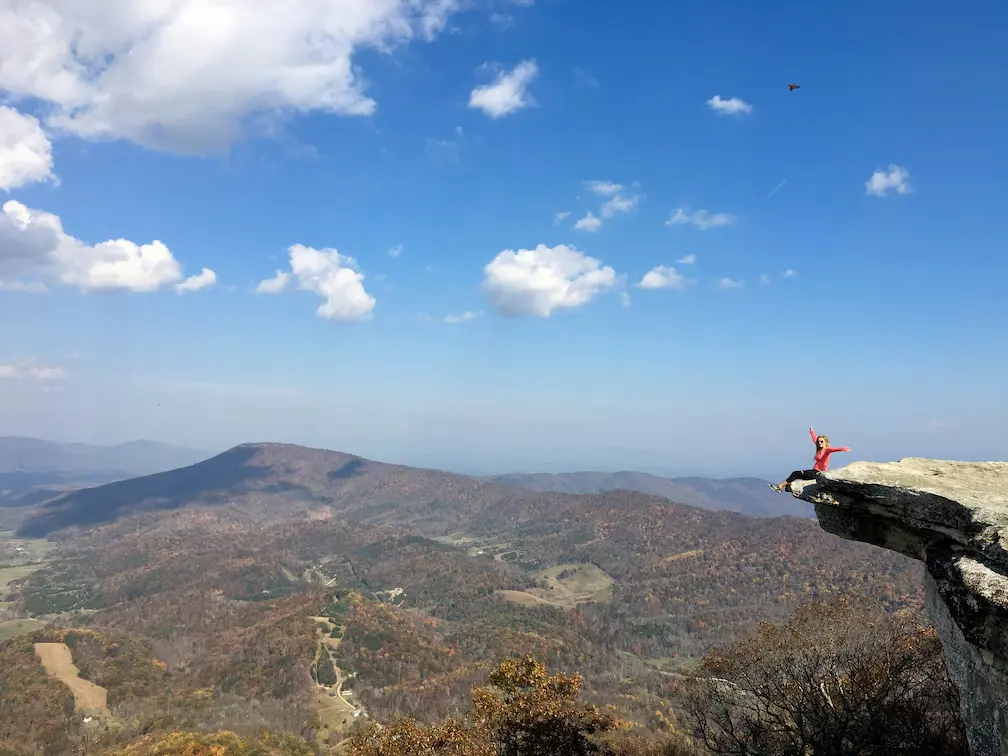
McAfee Knob, near Roanoke in Virginia’s Blue Ridge, is consistently cited as the single most photographed location on the entire Appalachian Trail. At 3,197 feet, the rocky outcrop juts out over Catawba Valley in a shelf-like ledge that reads almost like a diving board in photographs. The views extend 270 degrees: Catawba Valley and North Mountain to the west, Tinker Cliffs to the north, and the Roanoke Valley to the east. The hike from the VA-311 trailhead is approximately 8.8 miles round-trip with around 1,700 feet of elevation gain — moderately challenging, not technical. No entrance fee. The parking lot on VA-311 fills early on weekends, especially in fall. A paid seasonal shuttle ($10 round-trip) runs Fridays through Sundays from March through November from the I-81 Exit 140 park-and-ride. Weekday mornings in September and October give you the best combination of light, foliage, and manageable crowds at the knob itself.
Raven’s Roost is at milepost 10.7 on the Blue Ridge Parkway in Augusta County, at 3,200 feet elevation, and requires no hiking to access. You park, walk thirty feet, and you have a sweeping view of Torrey Ridge and the Shenandoah Valley to the west. It is one of the most photographed overlooks on the Parkway’s northern Virginia section, largely because of a single iconic tree near the left edge of the viewing area that frames sunsets cleanly. Arrive an hour before sunset on a clear day — the valley light from this angle is low and directional. Free, no entry fee. Note that the Parkway here can close in winter, so check conditions if visiting between December and March. Weekdays are noticeably quieter than weekends throughout fall foliage season.
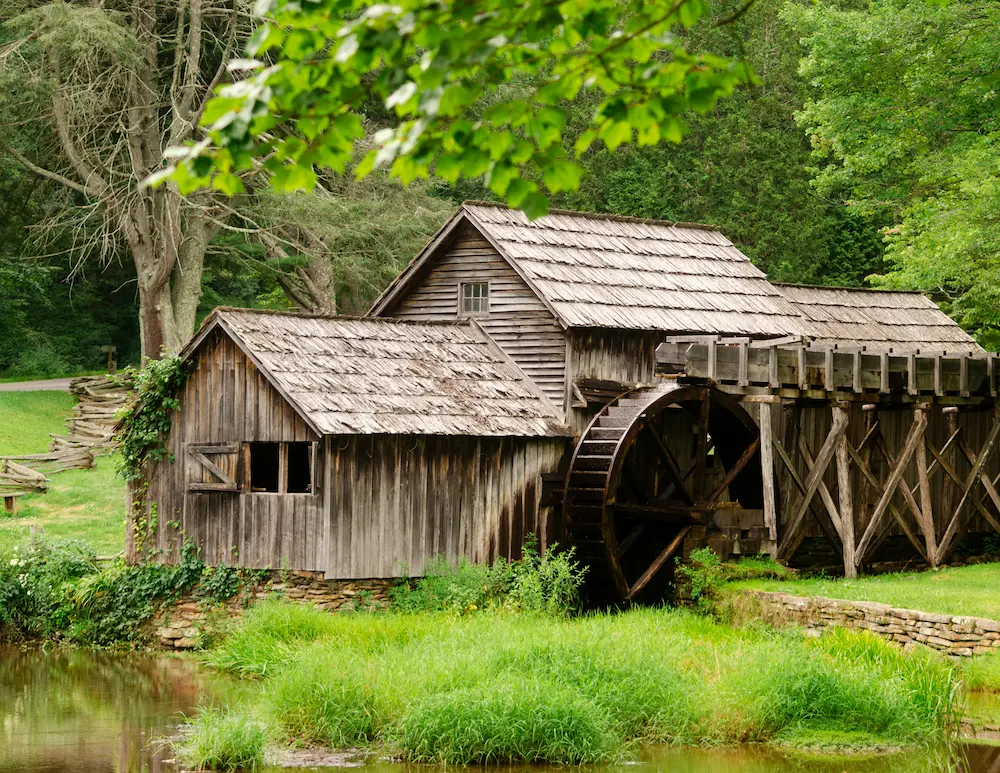
Mabry Mill sits at milepost 176.2 in Floyd County, about 30 miles from Galax and 55 miles from Roanoke, and it is consistently described as one of the most photographed locations in all of Virginia. A 19th-century gristmill and waterwheel sit beside a small reflective pond, surrounded by Appalachian forest. The composition photographs well in every season — fall color framing the waterwheel is probably the most reproduced version — but the pond reflection in early morning light is worth the stop year-round. A 0.5-mile easy walking trail connects the mill to a blacksmith shop, sawmill, Matthews Cabin, and other restored structures. From May through October the on-site restaurant and gift shop are open, and NPS volunteers run demonstrations of traditional rural skills on Sundays. Free to access. Arrive before 9am to get the mill and pond to yourself.
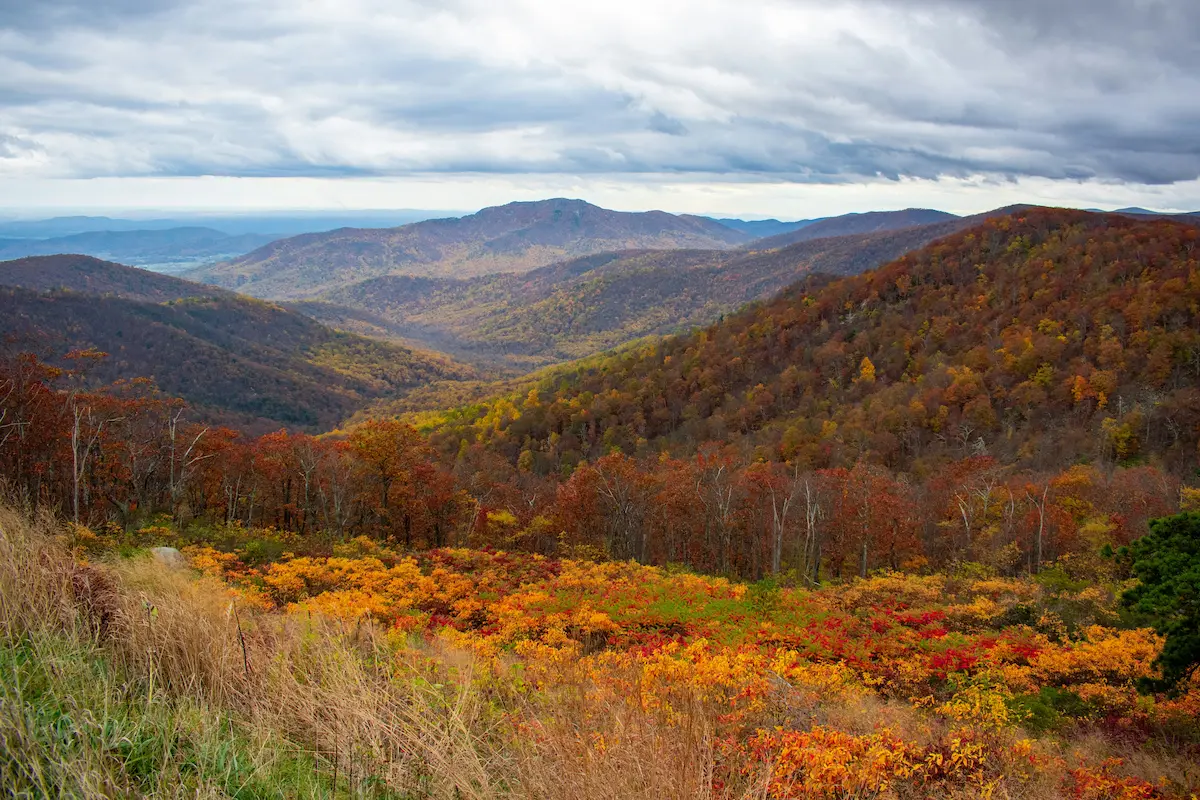
Skyline Drive runs 105 miles along the crest of the Blue Ridge through Shenandoah National Park, with 75 scenic overlooks. The most photographed are the ones that show the Shenandoah Valley floor from above — green farmland patchwork in summer, orange and red in October, fog in the early morning in spring. Stony Man Overlook at milepost 38.6 and Hogback Overlook at milepost 21 are among the most consistent compositions. Shenandoah National Park charges a vehicle entry fee (currently $35 for a 7-day pass; verify current fee before visiting). The overlooks are at their best in the first 90 minutes after sunrise, before the haze builds and before weekend traffic arrives on the road. October weekday mornings are the peak of the season. Spring mornings in late April and early May offer fog in the valleys and early wildflowers — less crowded and equally photogenic.
Hollywood Cemetery is a 135-acre garden cemetery on the banks of the James River in Richmond, established in 1847 and recognized as a registered arboretum. It is the final resting place of two U.S. presidents (James Monroe and John Tyler), Jefferson Davis, and dozens of Confederate generals — but what draws photographers is the combination of Gothic monuments, cast-iron fencing, Victorian-era mausoleums, stately old trees, and a hillside view over the James River that photographs well from multiple angles. The grounds are open daily from 8am to 5pm (6pm during daylight saving time). Entry is free. Guided tours are available from third-party operators for a fee. Early morning on a weekday gives you the place largely to yourself. The light on the river overlook is best in the first hour after opening.
Humpback Rocks is a rocky pinnacle accessible from a trailhead at milepost 5.8 on the Blue Ridge Parkway, roughly 20 miles west of Charlottesville. The hike is short — about 0.8 miles one way — but steep, with a rock scramble near the top. The payoff is a 360-degree view of the Blue Ridge and Shenandoah Valley that is nearly as dramatic as McAfee Knob at a fraction of the distance. Free to access, no permit required, though parking can be tight on fall weekends. Early morning or late afternoon on a weekday gives you the overlook mostly to yourself. The view looking east toward Charlottesville at sunrise, with the ridge in the foreground, is the composition most photographers go for.
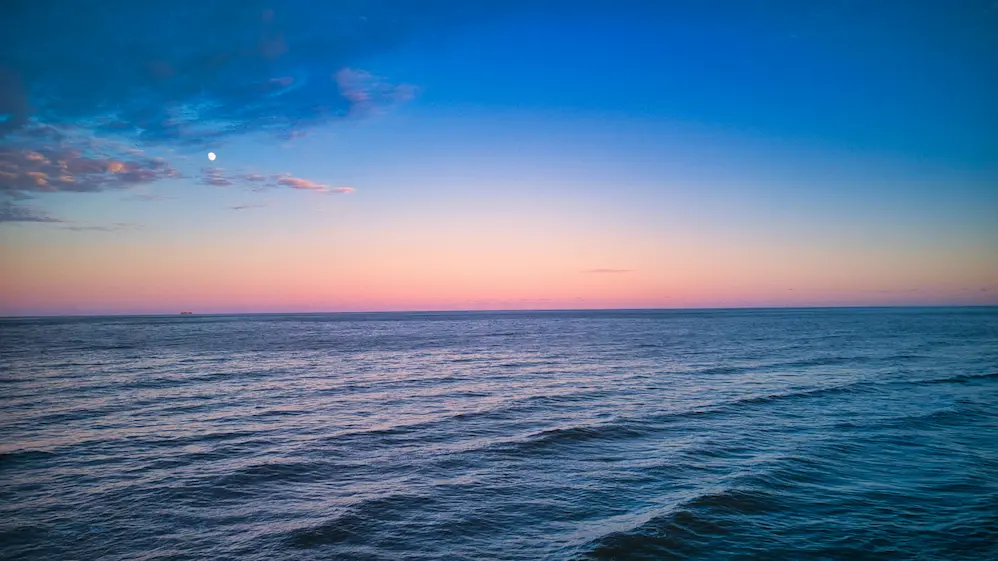
Virginia Beach’s oceanfront is the most crowded stretch of beach in the state by mid-morning in summer, but at sunrise it is an entirely different place. The 3-mile boardwalk is empty. The light comes from the ocean side, hitting the sand low and warm before the beach infrastructure — chairs, umbrellas, rental stands — appears for the day. The composition looking north along the beach with the Cavalier Hotel visible in the distance is the cleanest version of the Virginia Beach shot. The King Neptune statue at 31st Street is fully unobstructed before 8am. By 9am in July the light is overhead and the beach has filled. The window is about 90 minutes, and it is worth setting an alarm for.
Old Town Alexandria, on the Potomac River just south of Washington D.C., has one of the most dense concentrations of 18th and 19th century architecture on the East Coast. The cobblestone streets along Prince Street and King Street, the painted rowhouse facades, the waterfront along the Strand — these photograph best between 7 and 9am before foot traffic and delivery trucks fill the frame. The block of Prince Street between Fairfax and Lee, known as Captain’s Row for its original cobblestones, is the most reproduced composition in the area. Free to walk, no permit needed. The waterfront at Founders Park looks back toward the city with the Potomac in the foreground and photographs well in the late afternoon.
Natural Bridge, in Rockbridge County near Lexington, is a 215-foot-tall natural limestone arch that was once owned by Thomas Jefferson. It now anchors a Virginia State Park. The arch spans Cedar Creek and is one of the most dramatic natural formations in the eastern United States — the scale is hard to convey until you are standing beneath it and looking up. The park is open year-round, with an admission fee (approximately $7 per person for adults; verify current fee before visiting). The light inside the gorge is best mid-morning when it enters from above and illuminates the arch walls directly. The creek-level view looking up through the arch is the most reproduced shot. Early in the week and outside summer gives you the gorge without crowds.
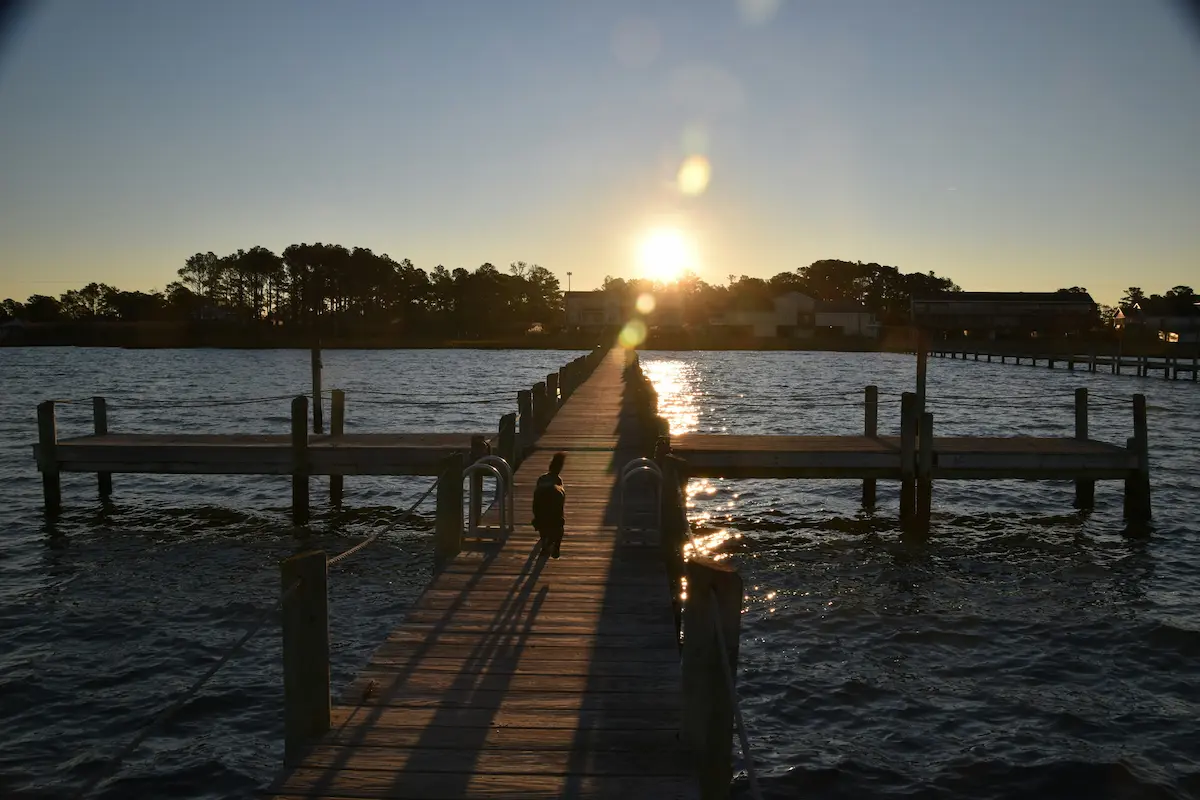
Chincoteague Island on Virginia’s Eastern Shore and the adjacent Assateague Island National Seashore offer a completely different visual environment from the mountains. Assateague’s wild ponies — a herd that has lived on the island since at least the 17th century — can be photographed from a safe distance along the Wildlife Loop road in Chincoteague National Wildlife Refuge. The Assateague Lighthouse, built in 1867, is one of the most photographed lighthouses on the mid-Atlantic coast. The beach itself — wide, undeveloped, and often nearly empty outside summer — photographs best at low tide in the early morning. The drive onto Chincoteague and into the refuge is straightforward. The Wildlife Refuge charges an entry fee (approximately $25 per vehicle; verify current fee). The ponies are most active near the road in the early morning and late afternoon.
For McAfee Knob, use the shuttle on weekends in fall — the VA-311 parking lot fills by 8am on October weekends and overflow parking adds a mile each way to an already full-day hike. Plan accordingly.
Skyline Drive entry at the Rockfish Gap entrance near Waynesboro puts you close to both Raven’s Roost (10 miles north on the Parkway) and Humpback Rocks (5.8 miles north). Combined with the Stony Man summit hike inside the park, these three make a full day on the mountain without driving more than 30 miles total.
Mabry Mill photographs best when the water wheel is running, which requires enough flow in Mayberry Creek. The restaurant and demonstrations run May through October — outside that window the mill is still accessible but the wheel may not be turning.
Chincoteague is a 3-hour drive from Richmond and roughly 4.5 hours from Northern Virginia. It pairs well with a stop at the Eastern Shore wine country on the way back. The ponies are always present but less predictable mid-day — early morning and late afternoon give the best chances of seeing them near the road.
Virginia’s most memorable photographs come from places that are spread across the state — a rock ledge near Roanoke, a watermill in Floyd County, a sunrise beach in Virginia Beach, a cemetery in Richmond, and a wild-pony shoreline on the Eastern Shore. Most of them are free or close to it, and most reward an early start and a weekday visit over peak-season weekend timing.
Whether you are shooting with a dedicated camera or a phone, chasing landscapes or architecture or wildlife — the most consistent advice across all of these spots is the same: arrive before most people are awake, and the composition takes care of itself.