Is There a Wrong Time to Visit Washington D.C.? Here is a question worth sitting with before you start booking: what do you actually want from Washington D.C.? Because the answer changes everything. D.C. is not one destination — it is a monument city, a museum city, a neighborhood city, and a cherry blossom city, […]
Is There a Wrong Time to Visit Washington D.C.?
Here is a question worth sitting with before you start booking: what do you actually want from Washington D.C.? Because the answer changes everything. D.C. is not one destination — it is a monument city, a museum city, a neighborhood city, and a cherry blossom city, often within a 20-minute Metro ride of each other. The “best time to visit Washington D.C.” depends entirely on whether you are chasing peak bloom at the Tidal Basin, a budget trip through the Smithsonian museums in the off-season quiet, fall foliage walks through Rock Creek Park, or a front-row seat to the Fourth of July on the Mall.
This guide breaks it down month by month — with real seasonal tradeoffs, price patterns, and the specific combinations that give you the most for your time and budget. No single month is perfect for everything. But once you know what each season offers, the right window for your trip becomes obvious.
Washington D.C. does not have a true off-limits season or a period where travel is genuinely impossible. What it has are distinct tradeoffs: price and crowd spikes in spring around cherry blossom season, real heat and humidity in July and August, and a quieter but genuinely workable winter. Understanding those patterns is more useful than chasing a single “best month.”
Rain is spread fairly evenly across the year — no season is truly dry or truly wet. What shifts dramatically is temperature, crowd density, and what is actually worth doing. A trip focused on the monuments in July looks completely different from the same trip in October. The cherry blossoms bloom and the Mall clears in the same two-week window. You step out of the Metro at Smithsonian in late April and the park smells like cut grass and someone is playing a saxophone near the reflecting pool. That same Metro stop in February is nearly empty. Plan around your priorities first, then match the season.
If you are still working out where to stay, Trip is worth a look for D.C. rates — hotel prices in this city swing significantly between seasons, and comparing early tends to pay off.
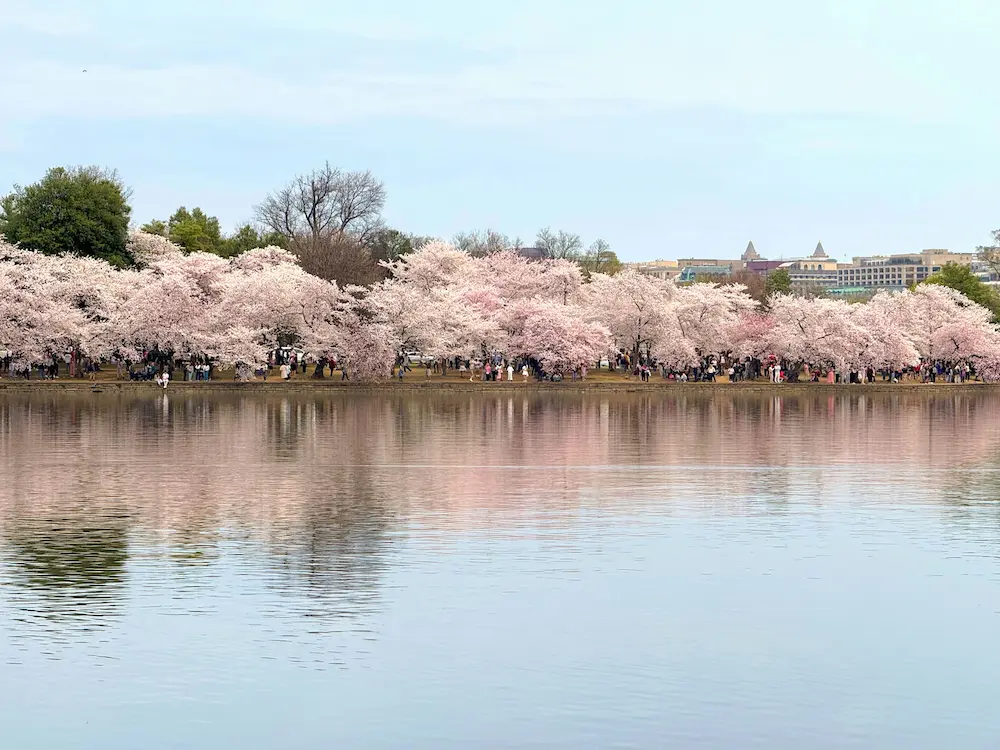
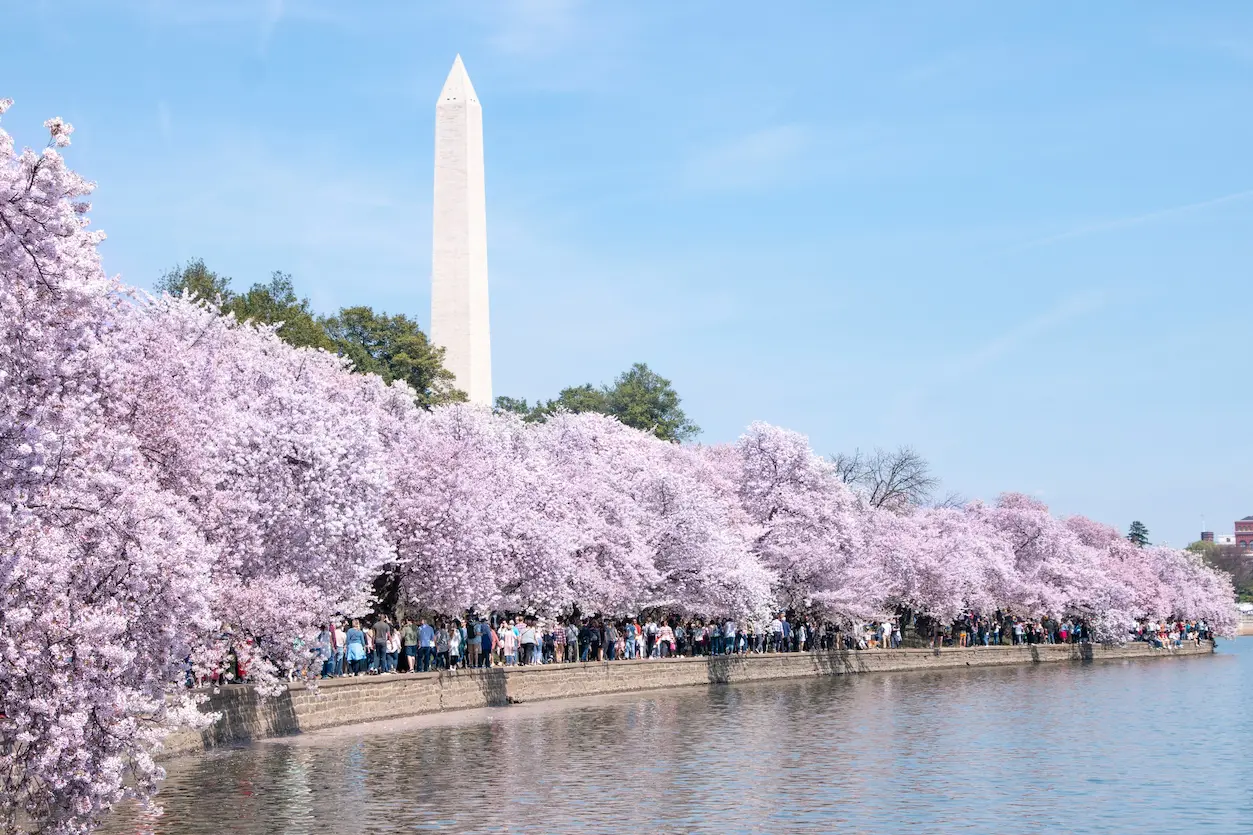
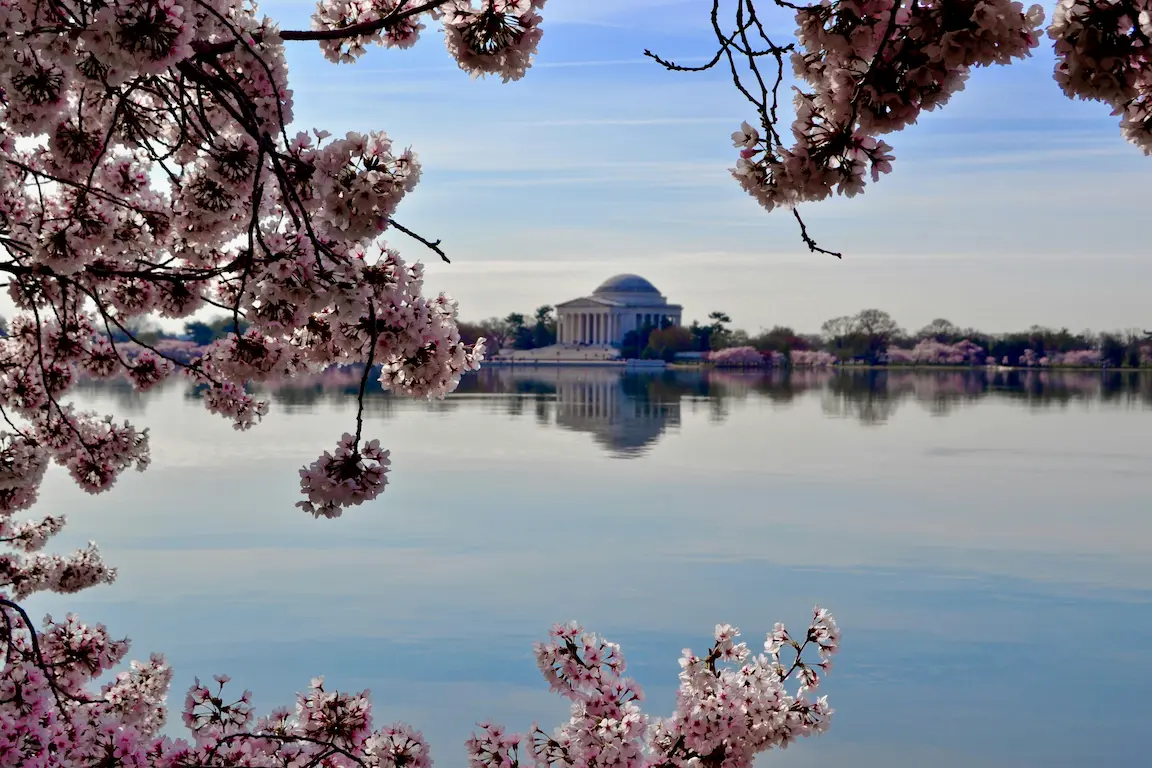
Spring is the most famous time to visit Washington D.C., but fame comes at a cost. The National Cherry Blossom Festival runs from late March through mid-April, and peak bloom — defined by the National Park Service as the moment when 70% of the Yoshino cherry trees around the Tidal Basin are open — falls on average between late March and early April, though it shifts year to year. In 2024 it arrived as early as March 17; in 2018 it held off until April 5. The earliest recorded peak was March 15, 1990; the latest, April 18, 1958.
The blossoms are genuinely worth experiencing once. But the crowds that come with them are significant. Hotel rates near the Mall during peak bloom weekends can run two to three times higher than what you would pay in January. The Tidal Basin path on a Saturday in late March is packed. Weekday mornings before 9am are dramatically more manageable — and the East Potomac Park loop at Hains Point has the same Yoshino variety with far fewer visitors at any time of day.
May is the underrated entry point into the season. Cherry blossom season has passed, temperatures sit in a comfortable 65–80°F range, and the city is fully alive with outdoor activity. The downside is that May is peak school field trip season — expect groups at the Smithsonian museums and on the Mall on weekday mornings. Memorial Day weekend brings additional crowds and higher prices across the board.
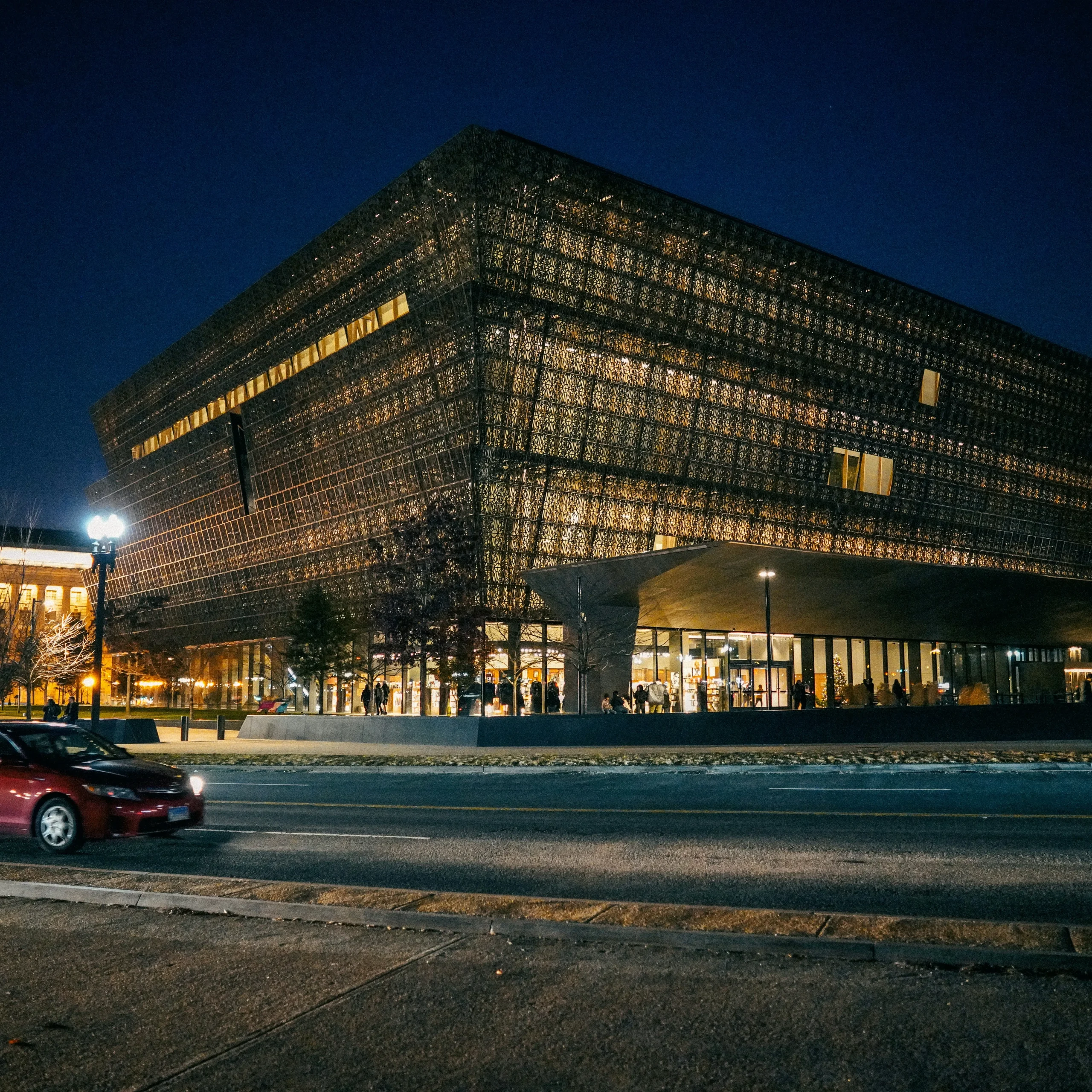
Summer is when Washington D.C. becomes a genuinely challenging outdoor city. Average highs in July and August regularly exceed 88°F, and the humidity that settles over the city makes that feel considerably worse. Walking between monuments on the Mall at noon in August is not the same experience as doing it in October. Morning and evening walks are manageable; midday is not.
That said, summer has real advantages — and most of them are free. The Smithsonian museums are air-conditioned and free to enter. The National Gallery of Art runs film screenings and special programs through the summer. The Fourth of July celebration on the Mall is one of the largest in the country, with a reading of the Declaration of Independence on the steps of the National Archives at 10am, a parade along Constitution Avenue, and a concert on the Capitol’s West Lawn in the evening. The Smithsonian Folklife Festival runs on the Mall in late June and early July, also free.
Hotel rates in summer are more complex than most visitors expect. July and August are actually among the cheaper months for D.C. hotels because business travel and conference activity slow down significantly. August in particular — especially the last two weeks when school starts in many states — is one of the best months to find lower rates at hotels that would otherwise be out of reach. The heat is the tradeoff you are accepting.
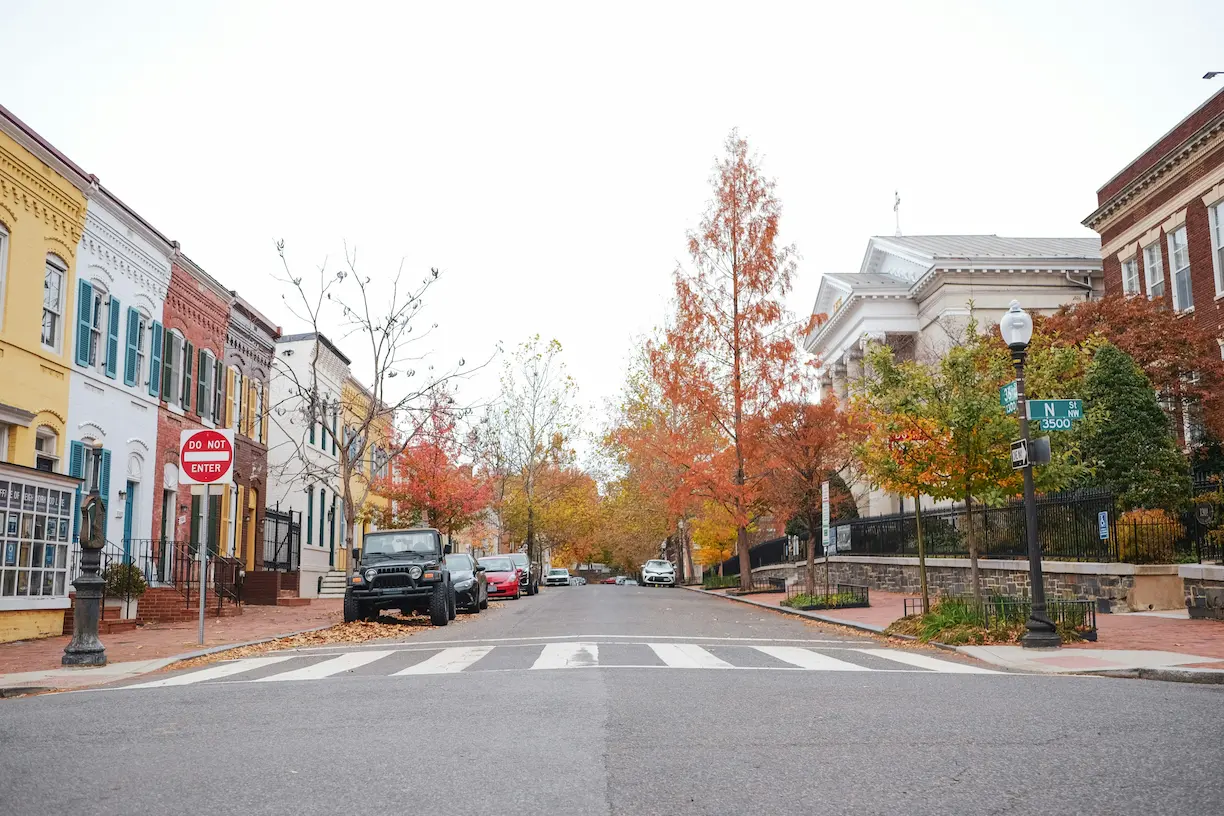
For most travelers visiting Washington D.C., fall is the most straightforward choice. Temperatures drop to a comfortable range — upper 50s to mid-70s through October — crowds thin significantly after Labor Day, and prices across most of the city fall back to shoulder-season levels.
September is one of the least crowded months of the year. The humidity that defines August lifts, outdoor dining and monument walks become genuinely pleasant again, and hotel rates are often lower than during summer weekends. The H Street Festival, Adams Morgan Day, and the DC State Fair bring neighborhood energy to the city without the tourist surge of spring.
October is D.C.’s most visually impressive month outside of blossom season. Fall foliage peaks in the city’s parks — Rock Creek Park, the National Arboretum, and tree-lined neighborhoods like Georgetown and Capitol Hill turn orange and red between mid and late October. The Marine Corps Marathon takes over parts of the city on the last Sunday of October, which affects traffic and Metro access but brings a lively energy to the weekend.
November extends the season with lower rates and lingering foliage in the city’s parks. Book accommodation a few weeks ahead for October weekends — demand picks up as foliage season approaches.
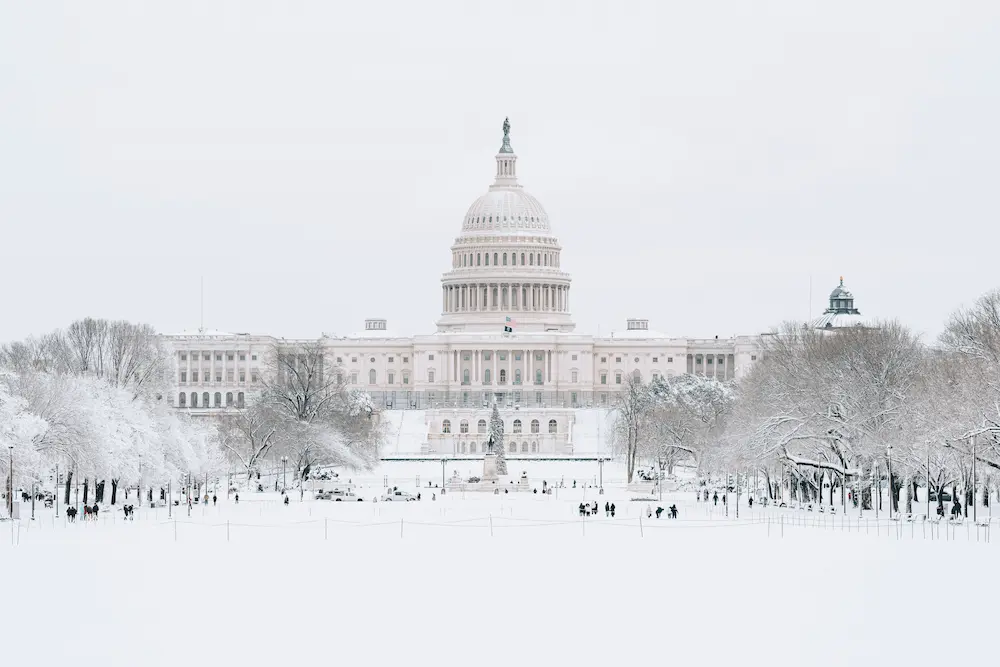
Winter is D.C.’s lowest-traffic season, and for the right kind of traveler, it works very well. The Smithsonian museums, the National Gallery of Art, the Library of Congress, and every other indoor cultural institution are better in January than in April — shorter lines, no school groups, and a pace that lets you actually spend time with what you came to see.
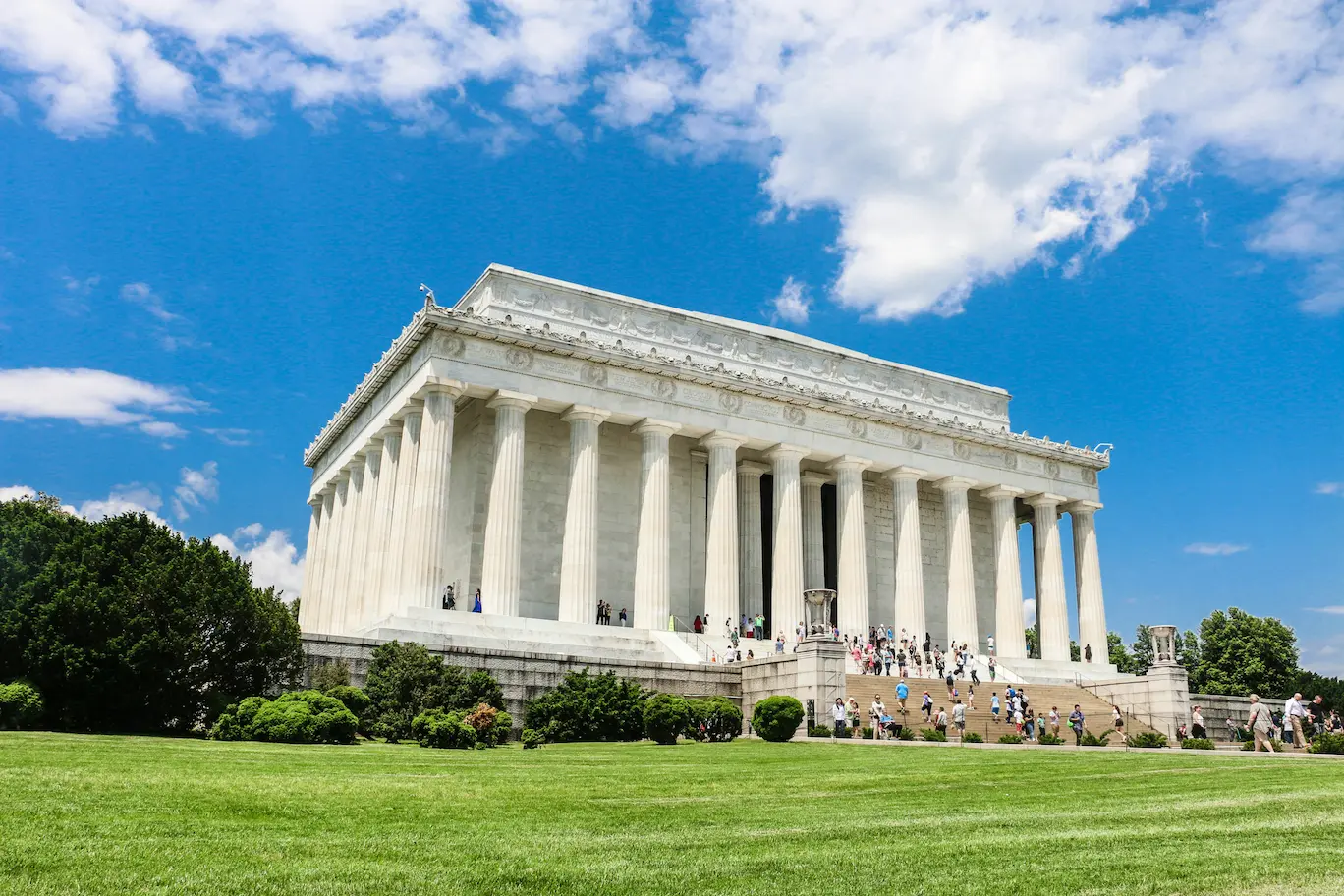
There is also a specific case for visiting the monuments in winter. The Lincoln Memorial against a grey January sky has a quality that July crowds cannot replicate. The Mall with a light snow is uncommon but striking when it happens, and all the monuments remain open 24 hours regardless of season.
December has a split personality. Early December is quiet and cheap, with holiday decorations going up across Georgetown, the Wharf, and the city’s main corridors. ZooLights at the National Zoo runs through much of the month. Mid-December prices climb as holiday events draw visitors — the National Christmas Tree on the Ellipse, the Georgetown Glow light installations, and seasonal programming around the city. January and February are the cheapest months in D.C., period, with the exception of Inauguration years, when every hotel in the city books out completely around January 20th.
Snowfall varies considerably year to year — some winters see barely an inch, others bring storms that close federal buildings and the Metro for a day. It is worth checking forecasts before a winter visit but not worth avoiding the season entirely because of it.
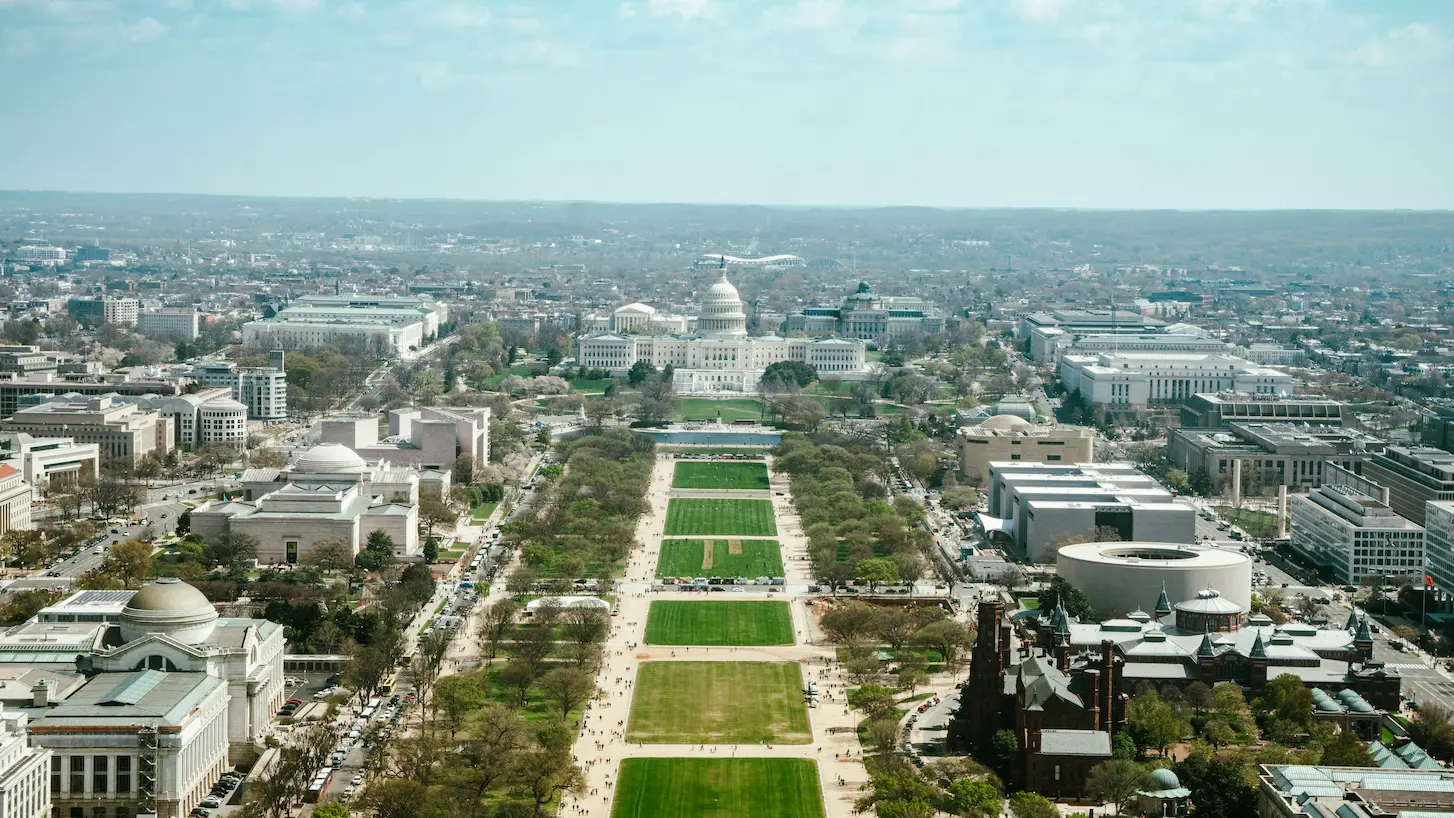
January: The quietest and cheapest month outside of Inauguration years. Lowest hotel rates of the year. Best for museum-focused trips, monument walks, and experiencing D.C. without crowds. Every major Smithsonian museum is easily navigable. Pack for temperatures that can dip into the upper 20s.
February: Still cold and still cheap. A good month for a quieter city break — museums are uncrowded and the pace is relaxed. Some years bring the first hints of warmer weather in the final week. Presidents’ Day weekend is busier than the rest of the month.
March: Spring begins here but unevenly. Cherry blossom season can arrive as early as mid-March in warm years, or hold off until April in cold ones. Hotel prices start climbing mid-month as visitors begin booking for potential blossom weekends. Early March is often still affordable and uncrowded.
April: The peak of cherry blossom season, and the busiest and most expensive window of the year for D.C. hotels near the Mall. Average peak bloom falls in the last week of March to the first week of April, but it varies. Weekday visits and morning arrivals make the Tidal Basin manageable. Worth experiencing once — but book early and budget for higher rates.
May: Excellent weather, fully bloomed gardens around the city, and the last month before summer heat arrives. Still busy with school groups on the Mall on weekday mornings. A very good month for walking-focused trips — temperatures in the mid-60s to low 80s, low humidity, long daylight hours.
June: Summer begins. Temperatures climb into the mid-80s and humidity builds. Hotel rates are moderate. Capital Pride is one of the largest events on the calendar in early June. The Smithsonian Folklife Festival starts on the Mall in late June and runs into early July.
July: Peak heat month — average highs above 88°F with high humidity. The Fourth of July celebration is one of the best reasons to visit in summer: Declaration of Independence reading at the National Archives in the morning, a parade along Constitution Avenue, and fireworks over the Monument in the evening. Hotel rates are often lower than spring peaks, but July 4th weekend itself books out fast.
August: Very similar to July for weather. The last two to three weeks of August, as school resumes in many states, offer some of the best hotel rates of the year. A good month for budget travelers who can handle the heat with museum days and early morning monument walks.
September: The turn. Crowds thin sharply after Labor Day, temperatures begin dropping, and humidity eases. One of the best months overall for a D.C. trip. Neighborhood festivals bring local energy. Hotel rates drop noticeably from summer peaks.
October: D.C.’s most visually striking month outside of blossom season. Fall foliage peaks in mid to late October across the city’s parks and neighborhoods. The Marine Corps Marathon on the last Sunday brings crowds but also energy. Comfortable sightseeing weather with temperatures in the 50s and 60s. Book a few weeks ahead for weekend stays.
November: Quieter and cheaper than October. Late foliage continues into early November. A strong month for history and food-focused trips — Georgetown, Capitol Hill, and the U Street Corridor are excellent in November without summer heat or spring crowds. Thanksgiving week is busy but manageable outside of the holiday itself.
December: Split between a quiet, affordable first half and a busier second half driven by holiday events. Georgetown Glow, ZooLights at the National Zoo, and the National Christmas Tree on the Ellipse draw visitors mid-month. Early December is genuinely underrated — low rates, festive atmosphere, and uncrowded museums.

Cherry blossoms: Late March to early April for peak bloom, though the exact date shifts year to year and cannot be predicted more than 10 days out. Visit on weekdays and before 9am for manageable crowds. East Potomac Park offers the same trees with fewer people than the Tidal Basin path.
Budget travel: January and February for the lowest rates across the city. August for a surprising combination of low rates and full summer activity. Avoid cherry blossom weekends and the holiday period in mid-December.
Museums and history: Winter and early spring outside of blossom season. Every Smithsonian museum, the National Archives, the Library of Congress, and the Holocaust Museum are quieter and more navigable from November through February.
Fall foliage and outdoor walks: October for peak color, September for fewer crowds and comfortable trail conditions in Rock Creek Park and the Arboretum.
Fourth of July: Worth planning around if the national celebration is the goal. Book months in advance — hotels near the Mall fill completely for this weekend.
Family trips with kids: May or late September strike the best balance of good weather, active outdoor spaces, and manageable crowd levels at the free Smithsonian museums.
Cherry blossom timing is genuinely unpredictable more than 10 days out. The NPS releases initial predictions in early March, but peak bloom has arrived as early as March 15 and as late as April 18 in the historical record. If you have a fixed travel window and the blossoms are the main event, build flexibility into your plans and track the NPS Bloom Watch updates as your dates approach.
The Tidal Basin is not the only place to see cherry blossoms in D.C. The National Arboretum, East Potomac Park, Anacostia Park, and Dumbarton Oaks all have cherry trees with significantly smaller crowds. If peak bloom timing is uncertain or the Tidal Basin is at capacity, these are real alternatives that require no reservation and no waiting.
August’s reputation for being the worst month to visit is partly deserved and partly overstated. The heat is real. But hotel rates drop, Congress is in recess, and the Smithsonian museums are free and air-conditioned. Travelers who plan their days around morning walks and afternoon museum visits do fine in August and often find better hotel value than at any other point in the year.
Inauguration years change the January calculus entirely. Every four years, in January following a presidential election, D.C. hotels book out completely for Inauguration weekend and rates spike across the region. January 2029 is the next such year. If your dates fall near January 20th in an Inauguration year, plan or book very far in advance — or shift your dates.
The honest answer to the best time to visit Washington D.C. is this: April and May and September and October give you the best combination of weather, access, and experience across the full range of what the city offers. Cherry blossom season is worth doing once — but it requires flexibility on dates and higher accommodation costs. Fall is the most underrated window, with comfortable walking weather, full cultural programming, and rates that reflect a city no longer at its tourist peak.
Start with what matters most to you — the blossoms, the monuments, the museums, the budget, or all four — and work backward from there. D.C. rewards that kind of planning, and almost every month has something going for it if you match the season to what you actually want to do.