The First Thing Charleston Does Is Confuse You We had driven in from the airport expecting something vaguely Southern — wide streets, slow pace, sweet tea on a porch somewhere. What we found instead was a peninsula city that felt more like a compressed European port town: narrow streets running between centuries-old buildings, a harbor […]
We had driven in from the airport expecting something vaguely Southern — wide streets, slow pace, sweet tea on a porch somewhere. What we found instead was a peninsula city that felt more like a compressed European port town: narrow streets running between centuries-old buildings, a harbor that smells like salt and low tide, and a food culture that references West Africa more than it does the rest of the American South. Three hours after landing, we were eating Gullah Geechee cooking at a cash-only counter spot in North Charleston and reconsidering everything we thought we knew about South Carolina.
That disorientation is the best thing about this trip. South Carolina contains more distinct regions — and more distinct identities — than its size suggests. This itinerary moves through three of them: two days in Charleston, one day in the Sea Islands and Lowcountry around Beaufort, one day at Congaree National Park and then Greenville, and a final day in the Upstate. You will need a rental car for most of it, and you will eat very well throughout.
If you are still sorting out where to stay along the route, Super tends to have strong rates for boutique hotels and guesthouses — useful for a trip where your base changes every couple of days.
A rental car is non-negotiable for this itinerary — approximately $45–75 per day depending on the vehicle and booking window. The only days you can realistically leave it parked are the evenings you spend on foot in Charleston and Greenville. Book in advance; rates climb significantly closer to pickup dates.
The best time to visit is March through May, when azalea season peaks in Charleston between mid-March and mid-April, temperatures sit in the low-to-mid 70s, and accommodation rates run lower than the summer peak. September through October works well too — the summer crowds thin out, the heat softens, and the Upstate foliage starts turning by mid-October. If you are traveling between June and November, travel insurance is worth buying for any coastal portion of the trip — hurricane season is real on the South Carolina coast and the Sea Islands are exposed.
Driving time from Charleston to Greenville is approximately 3.5 to 4 hours on I-26. Day 4 builds in a stop at Congaree National Park, which sits roughly halfway between Beaufort and Greenville — plan to leave Beaufort by 9 a.m. to make it work comfortably. Charleston’s historic district has metered street parking at approximately $2 per hour; paid garages run approximately $20–25 for a full day. The free CARTA shuttle runs through the historic district and is useful for getting between parking areas and the Battery. One practical note before Day 2: Bertha’s Kitchen in North Charleston is open Wednesday through Saturday only — and they do not accept cards. Bring cash before you go; there is no ATM on site.
Fly into Charleston International Airport (CHS), which has direct connections from most major East Coast cities and connections through Atlanta, Charlotte or Washington D.C. from the Midwest and West. Pick up your rental car and head directly to the southern tip of the Charleston peninsula.
Start at the Battery and White Point Garden. Spanish moss in the live oaks moves in the harbor breeze. The houses behind it are painted in colors that look wrong everywhere else and correct here. The water is flat. A pelican crosses the harbor in a straight line toward Fort Sumter without looking down. Both are free — the Battery is a promenade along the waterfront, White Point Garden a small park behind it, and together they give you the best free orientation to the city’s layout and scale. The antebellum mansions facing the harbor tell you immediately that this is a city that built serious wealth, and the views across to Fort Sumter and the barrier islands tell you how exposed that position was.
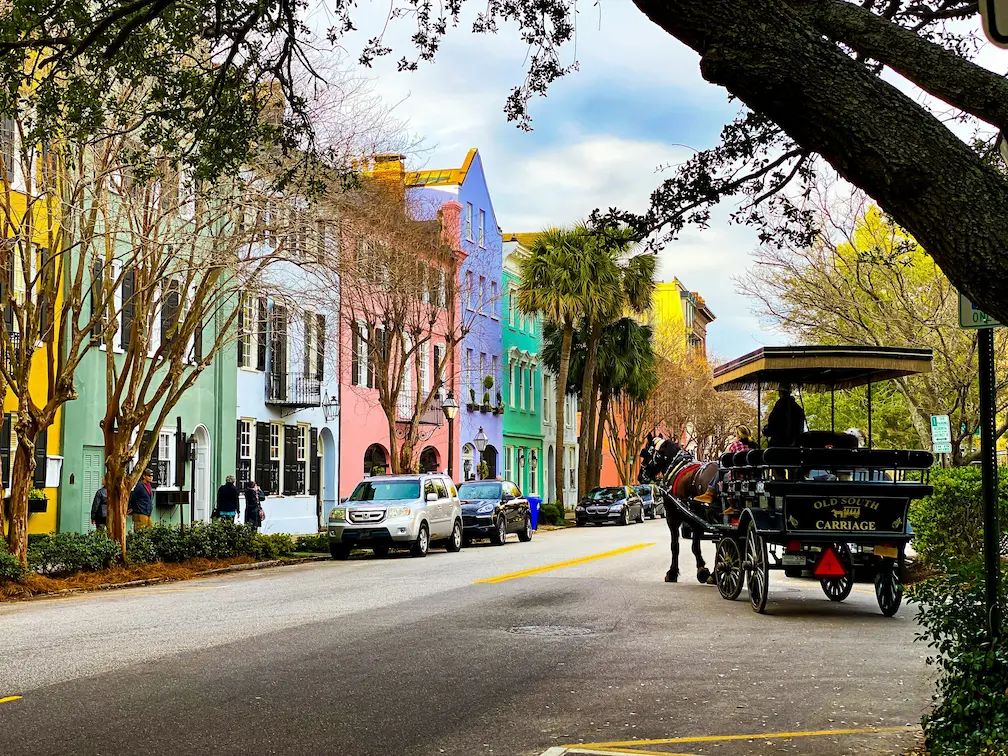
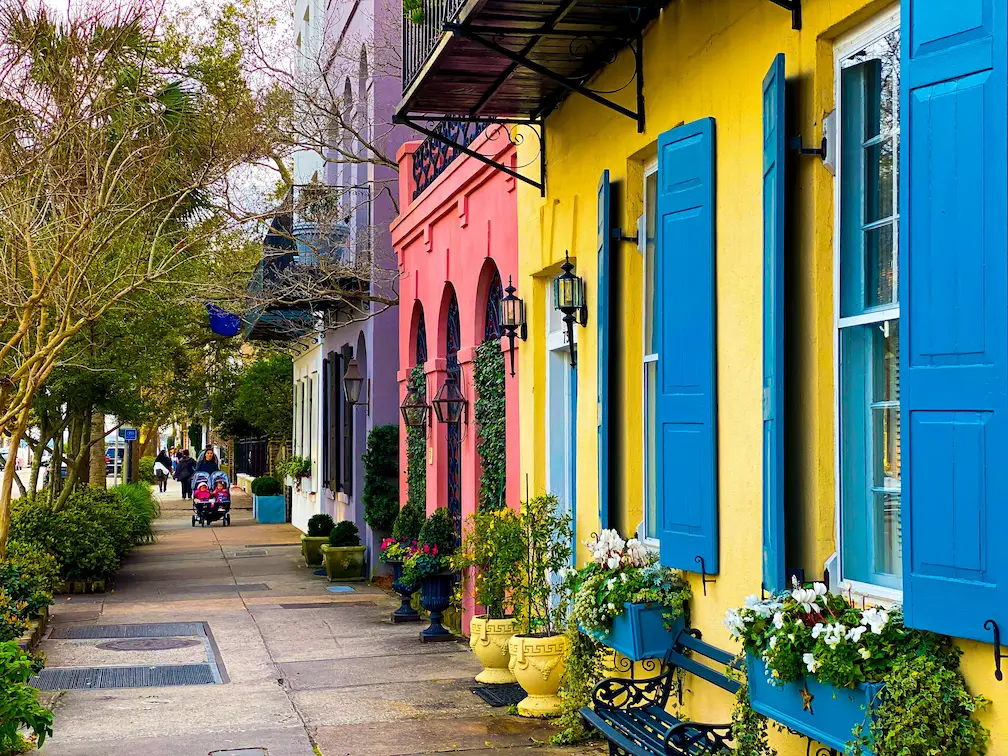
From the Battery, walk north along East Bay Street to Rainbow Row — 13 pastel-painted Georgian row houses from the 1700s, free to photograph from the sidewalk and the most reproduced image of Charleston. Then continue north to King Street and walk the full length. The lower section runs through the historic district with antique dealers and galleries. The middle section has the highest concentration of independent restaurants in South Carolina. The upper section, further north, is quieter and more local. Give it two hours.
For dinner, Husk on Queen Street is the serious introduction to South Carolina ingredients — the menu changes daily and builds around what is in season and regionally sourced, approximately $50–80 per person, and reservations are essential. If the budget calls for something more reasonable, The Glass Onion does shrimp and grits, fried chicken and Lowcountry comfort food well at approximately $20–30 per person.
Base for Days 1 and 2: the Cannonborough-Elliotborough neighborhood west of King Street has boutique guesthouses and small hotels at noticeably lower rates than the waterfront historic district hotels.
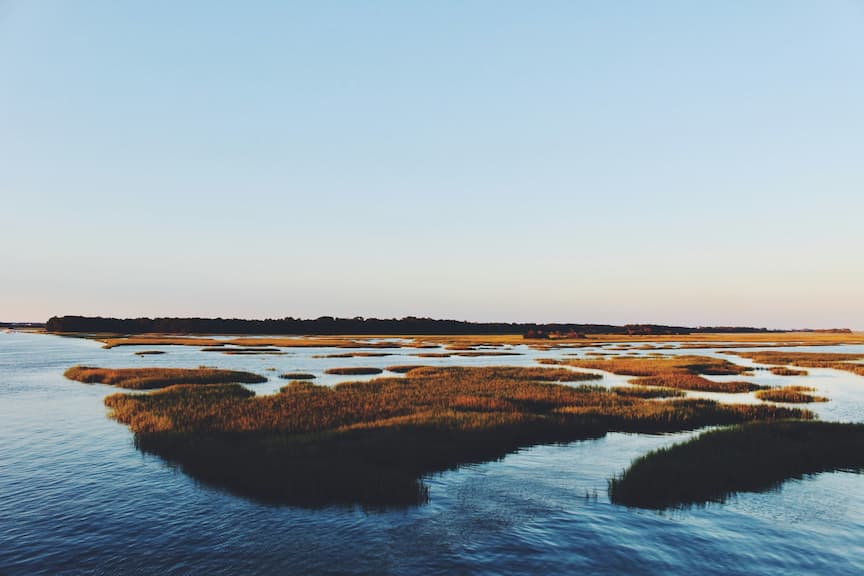
Charleston City Market has been operating since 1804 — four covered blocks running from Meeting Street toward the waterfront, free to walk through daily. The reason to spend time here beyond the market stalls is the sweetgrass basket weavers who work at the market. This is a living craft tradition of the Gullah Geechee people; the baskets are made by hand using techniques passed down across generations, and prices reflect that — approximately $50 to several hundred dollars depending on size and complexity. Watch the work before you consider buying anything. Understanding what you are looking at changes the experience entirely.
Fort Sumter is where the Civil War began, on April 12, 1861. The site is accessible only by ferry from Liberty Square at the end of Market Street — approximately $40 for adults, which includes the round-trip crossing and entry to the fort. The crossing takes 30 minutes each way and you get approximately one hour on the fort, so allow a full half day. Book the ferry in advance during spring and summer — tours sell out on busy days, and many visitors arrive assuming the site is free.
If you are visiting on a Wednesday through Saturday, head to Bertha’s Kitchen in North Charleston before or after the ferry. This is Gullah Geechee home cooking — fried chicken, okra soup, red rice, lima beans — at approximately $10–15 per person, cash only. It is one of the most honest and culturally significant meals available on this route, and it costs less than a cocktail at most Charleston hotel bars.
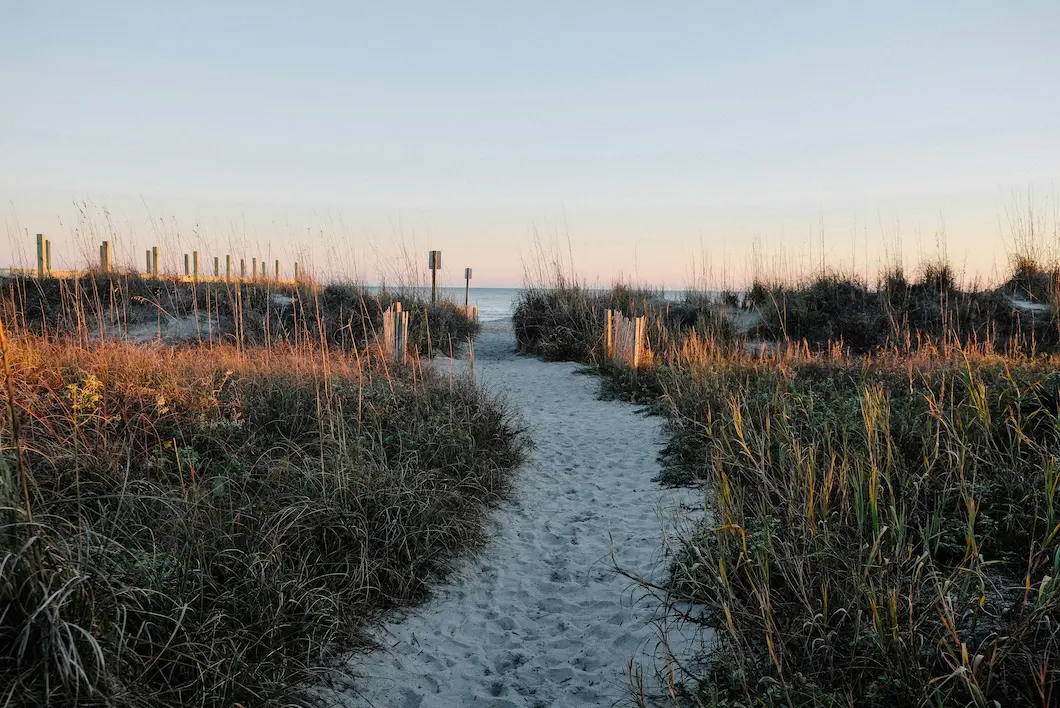
Spend the afternoon at Folly Beach, 15 minutes south of Charleston. It is the closest surf beach to the city — wide, free to access, and considerably less crowded than the Grand Strand beaches further north. The Folly Beach Pier costs approximately $7 for adults if you want to walk it; the beach itself costs nothing.
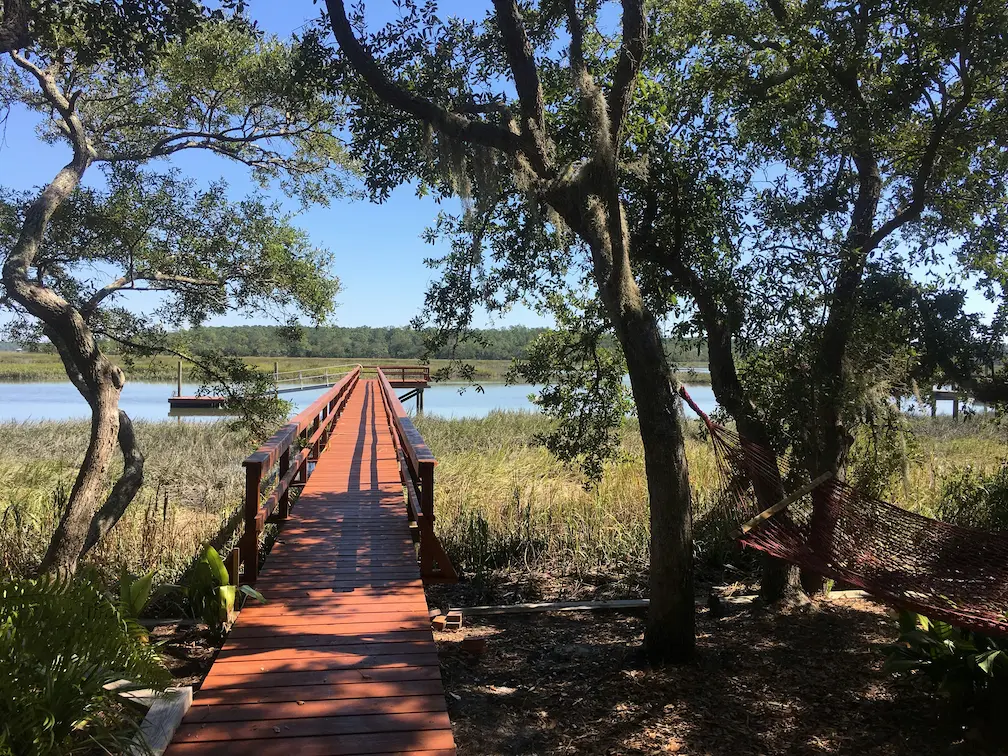
Drive south from Charleston on Highway 17 and US-21 to Beaufort — approximately 1.5 hours. The antebellum architecture here survived the Civil War more intact than much of Charleston because Union forces occupied the town early in 1861, which means the buildings were used rather than destroyed. Henry C. Chambers Waterfront Park runs along the Beaufort River, free and lined with live oaks draped in Spanish moss. Walk the historic district for a free two-hour orientation — the scale is smaller and more walkable than Charleston, and the pace is noticeably slower.
Nine miles from Beaufort on St. Helena Island, Penn Center was established in 1862 as one of the first schools for formerly enslaved people in the United States. The museum and campus document the history and continuing culture of the Gullah Geechee people, and entry is approximately $7 for adults. Approach it as what it is — a living cultural institution with an active community presence, not a heritage attraction. The Gullah Geechee people maintain a distinct language, foodways and cultural practice across the Sea Islands, and Penn Center is one of the primary places that work is sustained and documented.
From Penn Center, drive 16 miles to Hunting Island State Park. Entry is approximately $8 per person. Five miles of Atlantic beach backed by maritime forest, relatively undeveloped compared to most of the South Carolina coast — wide sand, driftwood, no resort infrastructure behind the dunes. The 1875 lighthouse is currently undergoing repairs and closed for climbing, but the grounds surrounding it remain open. The beach and the maritime forest trails are the main draw year-round regardless, and the boneyard beach on the southern end of the island — bleached tree trunks left by erosion on an open shoreline — is one of the more unusual stretches of coastline on the East Coast.
Stay in Beaufort rather than driving back to Charleston. The town is quiet in the evening, the historic district is walkable, and guesthouses and small hotels in the area run approximately $120–180 per night — noticeably cheaper than Charleston.
For dinner in Beaufort, Lowcountry Produce Market and Café does local produce, sandwiches and breakfast items at approximately $10–15. Old Bull Tavern is a casual gastropub at approximately $20–30 per person.
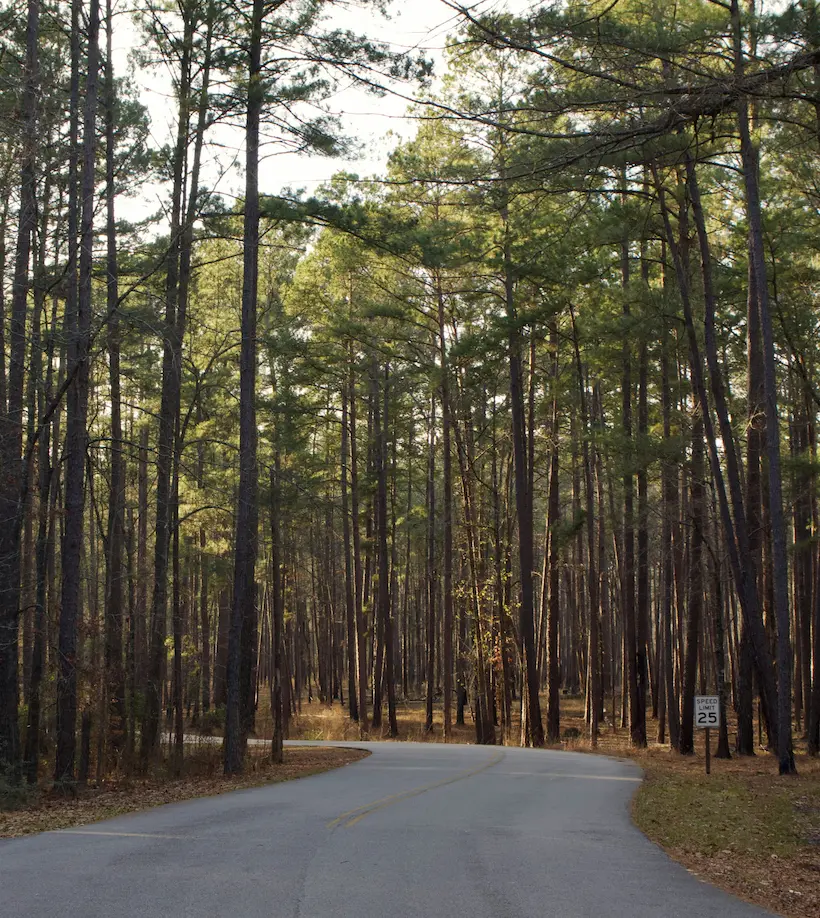
Leave Beaufort by 9 a.m. Drive approximately 1.5 hours toward Columbia, then 30 minutes southeast to Congaree National Park — the largest intact expanse of old-growth bottomland hardwood forest in the eastern United States. Entry is free with no reservation required for general visits.
The 2.4-mile Boardwalk Loop runs on an elevated path through the floodplain forest, with champion trees — the largest known specimens of their species — marked along the trail. The loblolly pines and bald cypresses here are among the tallest trees in the eastern U.S. You step onto the boardwalk and the canopy closes above you, and the scale of what is growing here takes a moment to register. If time allows, canoe rentals are available in the park for approximately $25 for a half day — paddling the blackwater Cedar Creek through the floodplain forest is the most immersive way to experience the park. If you visit in May or June, note that the synchronous firefly event draws significant crowds and requires advance reservations — but it is far from the only reason to visit year-round.
Drive approximately two hours on I-26 from Congaree to Greenville. Check into a hotel in the downtown core — staying downtown means you can walk the rest of the evening without moving the car. Mid-range hotels in the downtown area run approximately $120–180 per night.
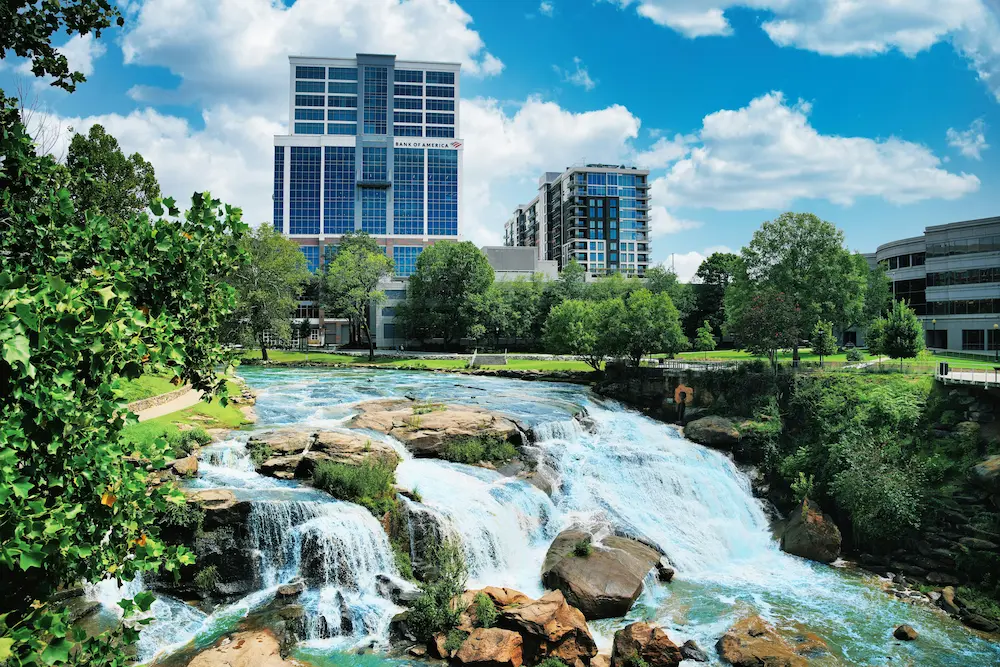
Walk to Falls Park on the Reedy before dinner — a waterfall at the center of downtown Greenville with a pedestrian suspension bridge above it, free, open daily, and lit in the evening. It is the most surprising urban green space in South Carolina, and most people driving through Greenville on I-85 have no idea it exists. Dinner on Main Street afterward: Jianna for Italian at approximately $30–50 per person, or Soby’s for New South cuisine at approximately $35–55 per person. Pre-dinner coffee at Methodical Coffee at approximately $4–7.
The Swamp Rabbit Trail is a 22-mile paved greenway running from downtown Greenville to Travelers Rest — free, genuinely local, and almost entirely without tourist infrastructure. Bike rentals are available in downtown for approximately $20–30 for a half day. The trail passes through woods, farmland and small communities, and on a weekday morning it is mostly occupied by commuters and dog walkers.
If you have time before a midday or afternoon flight, Caesar’s Head State Park is approximately 35 minutes from Greenville — entry approximately $5 per person. The overlook sits at 3,208 feet with views of the Blue Ridge escarpment and into North Carolina. The Raven Cliff Falls trail is 4 miles round trip to a 420-foot waterfall, one of the tallest on the East Coast. Adjacent Table Rock State Park has a more demanding 7.2-mile round trip trail to a 3,124-foot summit — strenuous, but the 1930s Civilian Conservation Corps-built lodge inside the park serves lunch at approximately $12–20 per person and is worth stopping at after the hike.
Depart from Greenville-Spartanburg International Airport (GSP), approximately 25 minutes from downtown Greenville. Allow two hours before domestic flights, 2.5 hours for international connections.
The defining Lowcountry dishes are worth seeking deliberately. Shrimp and grits — the foundational dish of the region — runs approximately $18–35 depending on the restaurant, with the best versions built around local creek shrimp. She-crab soup is a cream-based Charleston specialty with blue crab and roe at approximately $10–14 for a bowl. Both are on menus across Charleston.
Boiled peanuts deserve a mention before you encounter them at a roadside stand and make the mistake of expecting roasted peanuts. Raw peanuts boiled in salted brine until soft — approximately $3–5 per bag from roadside stands throughout the state. Deeply savory, nothing like the dry-roasted version, and an acquired taste that most people either love immediately or come around to by bag two.
Leon’s Oyster Shop in Charleston — oysters and fried chicken in a converted auto body shop, approximately $25–40 — is worth an evening if you want something between casual and serious. Methodical Coffee in Greenville is the best coffee on the Upstate portion of the route at approximately $4–7.
Book your rental car before you travel — rates rise significantly closer to pickup dates, and the $45–75 per day range assumes advance booking. Bertha’s Kitchen is open Wednesday through Saturday only and is cash only; there is no ATM nearby, so plan ahead. Book the Fort Sumter ferry in advance during spring and summer — it sells out on busy days and many visitors assume it is free (it is not, at approximately $40 per adult). Penn Center is a living Gullah Geechee institution, not a heritage museum — engage with it accordingly. Travel insurance is worth adding if any portion of your trip falls between June and November on the coast. Tipping at restaurants follows standard U.S. practice at 18–20%.
Five days in South Carolina covers more ground — culturally, geographically, historically — than most people expect from a state they may have only passed through. The Lowcountry and the Upstate are genuinely different places connected by one state border and a four-hour drive. Between the Gullah Geechee cooking in North Charleston, the old-growth forest at Congaree, the waterfall at the center of Greenville, and a beach on Hunting Island backed by maritime forest with almost nothing built behind it, this itinerary earns its distance. Whether you are road-tripping solo, traveling as a couple or moving through with family, the route works — and the cost, if you choose your accommodation sensibly and eat where the locals eat, is far lower than what most people associate with a week on the East Coast.