The taxi leaves the airport and within twenty minutes you are moving through a landscape that does not match any single idea of what Phuket is supposed to look like. There are temples, markets, construction sites, limestone hills, tour buses, and street food carts all at once. Then the road turns and the Andaman Sea […]
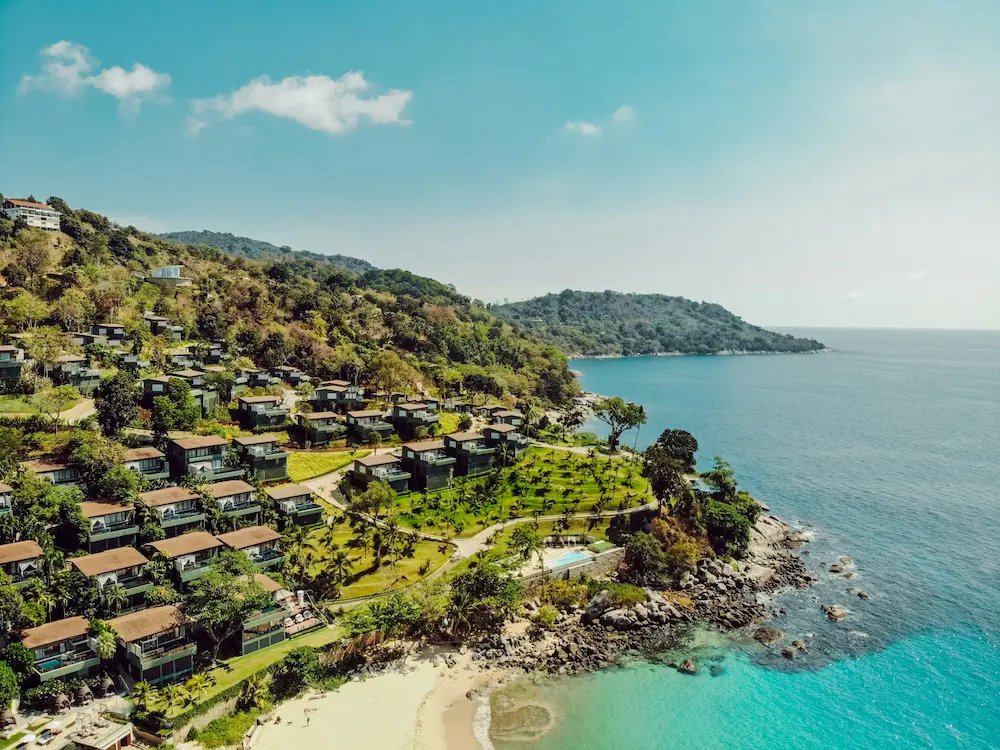
The taxi leaves the airport and within twenty minutes you are moving through a landscape that does not match any single idea of what Phuket is supposed to look like. There are temples, markets, construction sites, limestone hills, tour buses, and street food carts all at once. Then the road turns and the Andaman Sea appears between the buildings — flat, green, and wide.
Most people arrive in Phuket with a single image in mind: a beach, probably Patong, probably crowded. But Phuket is Thailand’s largest island, and it contains several completely different travel experiences within the same geography. The west coast has the famous beaches. The old town has one of the best-preserved Sino-Portuguese neighborhoods in Southeast Asia. The interior has temples and viewpoints. The surrounding waters have some of the most accessible island-hopping in the region. And the food — both local Thai and from the island’s Chinese-influenced Peranakan culture — is worth building the trip around.
This itinerary covers 10 days across the main areas of the island and the day trips most worth your time. It works whether you are based in one area for the whole trip or moving between neighborhoods.
One option to explore while comparing accommodation is Super, which frequently features bundled travel deals and a wide selection of stays throughout Phuket.
Getting there
Phuket International Airport is in the north of the island. Most international flights connect through Bangkok (Suvarnabhumi or Don Mueang), Kuala Lumpur, or Singapore, with direct connections also available from several European and Middle Eastern hubs. The airport is about 45 minutes by road from Phuket Town and around one hour from the southern beaches depending on traffic.
Taxis and private transfers are available from the airport; negotiate the price before getting in or use a metered option. Ride-hailing apps including Grab operate in Phuket and are the most straightforward option for getting a reliable fare from the airport.
Where to stay
Phuket Old Town is the best base for the first part of the trip. It is cheaper than the beach areas, more interesting at street level, and central enough to reach most other parts of the island by road. Guesthouses and boutique hotels in restored Sino-Portuguese shophouses are available at a range of prices.
What to do
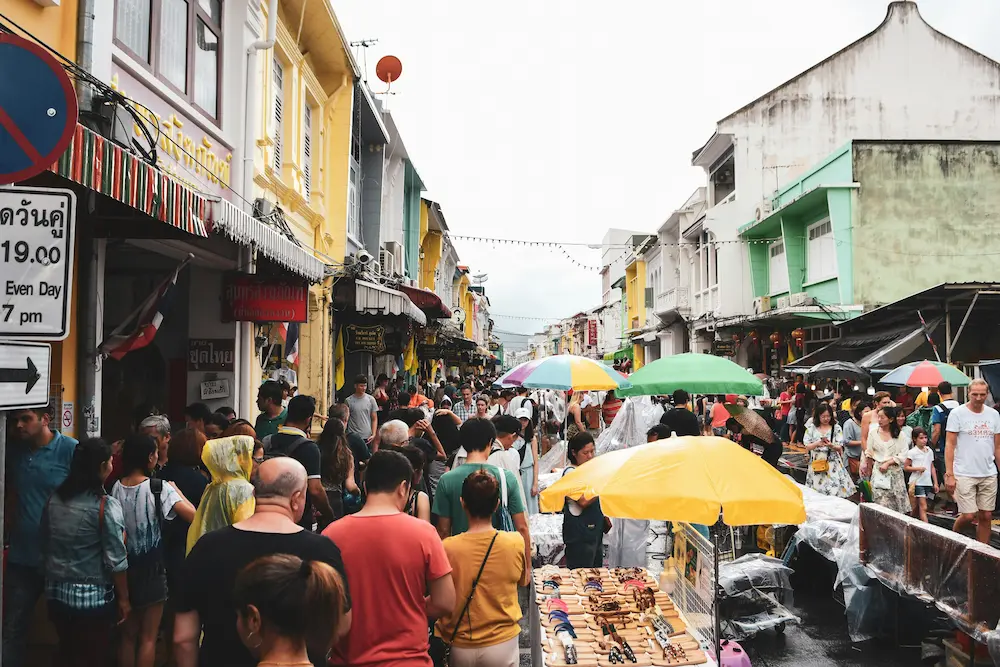
Use the first day to walk the Old Town rather than heading straight to a beach. The historic district around Thalang Road, Dibuk Road, and Soi Rommanee has some of the most intact Sino-Portuguese architecture in Thailand — two-story shophouses with tiled facades, covered walkways, and clan houses that have been in continuous use for over a century. The neighborhood was built by Chinese immigrants who came to Phuket during the tin mining period, and the architectural style reflects that hybrid cultural history.
The Phuket Thai Hua Museum on Krabi Road documents the Chinese immigrant history of the island with well-organized exhibits and is worth two hours of your time. The Jui Tui Shrine on Soi Phuthon is an active Chinese Taoist shrine — not a tourist attraction, but open to respectful visitors.
On day two, rent a scooter or hire a driver and explore the area around Khao Rang Hill, which has a viewpoint with a panoramic view over Phuket Town and the surrounding bay. Then head south to Chalong Bay, where Wat Chalong — the largest and most visited Buddhist temple on the island — is located. The temple complex is free to enter; dress modestly (cover shoulders and knees).
Day three is a good moment to sort out the rest of the week’s logistics. Book day trips, confirm rental transport, and choose which beaches to prioritize. Walking the Sunday Walking Street market on Thalang Road (Sunday evenings) is worth timing your arrival around if the schedule allows.
Where to eat
Phuket Town has the best local eating on the island. The morning market near the bus terminal on Ranong Road opens early and serves local breakfast dishes including khanom jeen (rice noodles with curry), dim sum from Chinese-style cafés, and fresh tropical fruit. Roti vendors operate from early morning on several streets in the Old Town.
For sit-down meals, the Sino-Portuguese shophouses along Thalang Road and Dibuk Road have been converted into restaurants and cafés serving both Thai and Peranakan-influenced food. Mee hokkien — Hokkien-style noodles — is a local specialty that reflects the island’s Chinese heritage and is served at several Old Town restaurants. For Thai food, look for small restaurants away from the main tourist streets where the menus are in Thai first.
The defining geography of Phuket
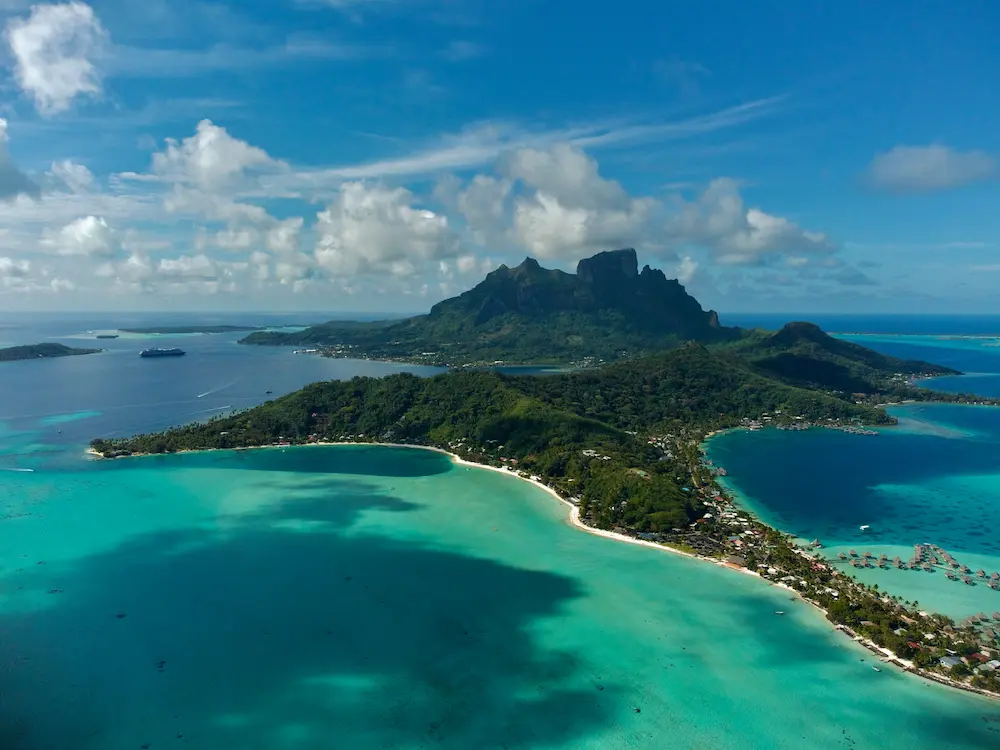
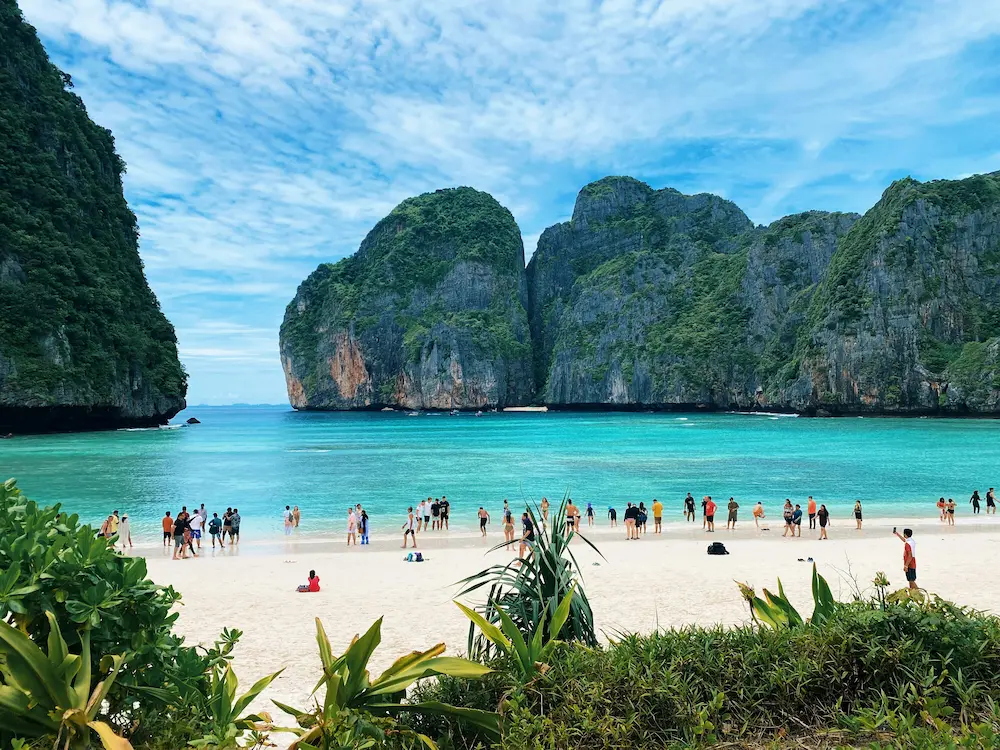
Phuket’s west coast faces the Andaman Sea and has the clearest water and most developed beach infrastructure on the island. The beaches run from north to south — Mai Khao and Nai Yang in the north, Kamala and Surin in the middle, Patong in the center, and Kata and Karon in the south. Each has a different character, and it is worth understanding those differences before choosing where to spend your time.
Surin and Kamala (Day 4)
Surin Beach is in the northwestern section of the developed coast and has cleaner water and a calmer atmosphere than Patong. The beach is long and the water is generally swimmable outside of monsoon season (roughly May to October, when the Andaman side gets significant wave activity and some beaches are flagged for swimming). Kamala, just south of Surin, is quieter still — a longer stretch with local fishing boats still operating from the northern end.
Both beaches are better suited to travelers who want a real beach day rather than a party. The restaurants and bars along Surin tend toward the higher end; for cheaper eating, the local market in Kamala town is the practical option.
Patong (Day 5)
Patong is the most developed and most crowded beach on the island. It is worth visiting once to understand what it is — a 3-kilometer beach with a full range of water sports, a dense strip of hotels and restaurants behind it, and Bangla Road running inland from the shore with bars and nightlife concentrated in a single walkable area. It is genuinely lively in the evening and genuinely crowded during the day.
For swimming, the northern end of Patong Beach is less congested than the center. Water sports — jet skis, parasailing, banana boats — are available along the full length of the beach. If one day in Patong is enough for your purposes, that is the right amount.
Kata and Karon (Day 6)
Kata Beach and Karon Beach are south of Patong and have a more relaxed atmosphere with similar quality water. Kata Noi, a smaller beach immediately south of Kata, is the quieter option and worth a half-day. The viewpoint above Kata Beach — accessible by road or a short hike — looks north over three bays simultaneously and is one of the best vantage points on the island. Arrive in the late afternoon when the light is low and the crowds from the day tours have thinned.
The most popular day trip from Phuket
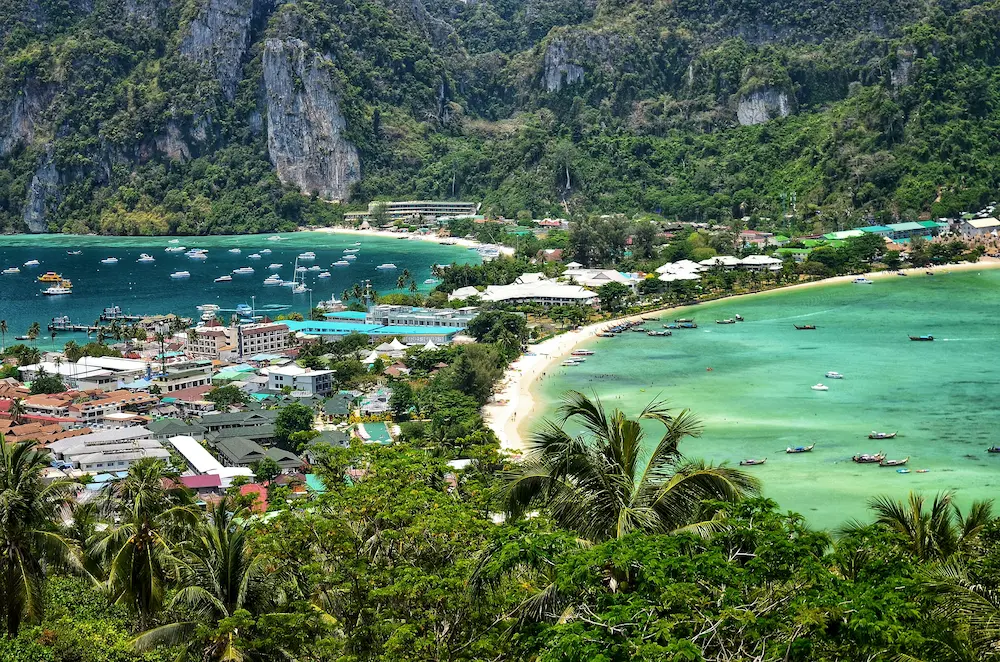
The Phi Phi Islands are approximately 45 kilometers southeast of Phuket and are reached by speedboat or a slower ferry. The island group includes Phi Phi Don (inhabited, with guesthouses and restaurants) and Phi Phi Leh (uninhabited, with the famous Maya Bay and the Viking Cave).
Most day trips from Phuket depart in the morning and combine snorkeling stops, a visit to Maya Bay, and time on Phi Phi Don. The water around the islands is clear and the snorkeling around the limestone cliffs is genuinely good. Maya Bay — made internationally known by the 2000 film The Beach — has managed visitor numbers since reopening in 2022 after a period of closure for environmental recovery. It is worth visiting but manages the expectation: it is a small beach enclosed by limestone walls, and it will have other visitors.
Book the day trip directly with a boat operator rather than through a hotel desk — same boats, lower price. Speedboat day trips are significantly faster than ferry-based tours; if seasickness is a concern, take medication before departure.
The landscape that defines the Andaman coast
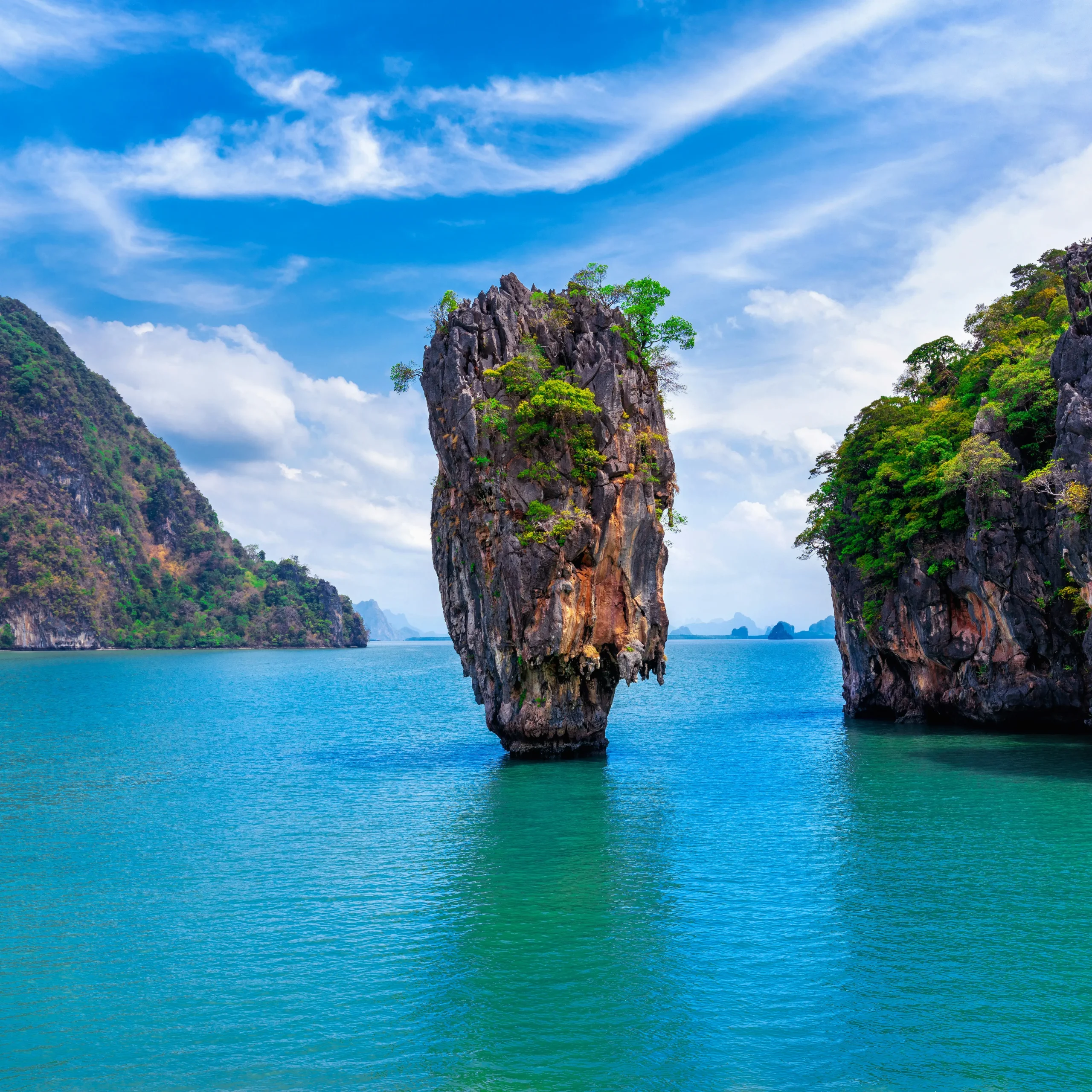
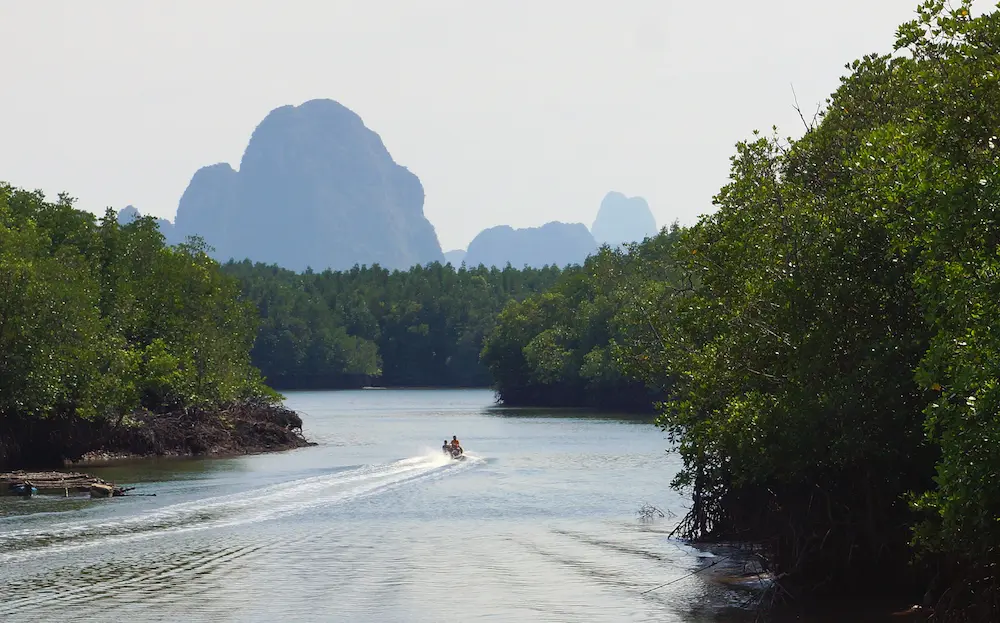
Phang Nga Bay is a bay northeast of Phuket covered in limestone karst formations — tall, narrow rock columns rising directly from the water, their bases eroded by tidal action into a distinctive overhanging silhouette. The bay also contains James Bond Island (Khao Phing Kan), named for its appearance in a 1974 film, and Ko Panyi, a Muslim fishing village built entirely on stilts over the water.
Most organized tours of Phang Nga Bay depart from piers north of Phuket Town and include the main highlights in a single day. Kayaking tours through sea caves and mangrove channels inside the bay are available and give access to areas that larger boats cannot enter. The bay is best visited on a clear morning when the limestone formations reflect in the still water.
Phang Nga Bay is in Phang Nga Province, not on Phuket island — it requires a road journey north followed by a boat departure. Most tour operators handle the transfer from Phuket as part of the package.
The parts of Phuket most visitors skip entirely
The interior of Phuket island has several worthwhile stops that most travelers never reach because they stay on or near the beach for the entire trip.
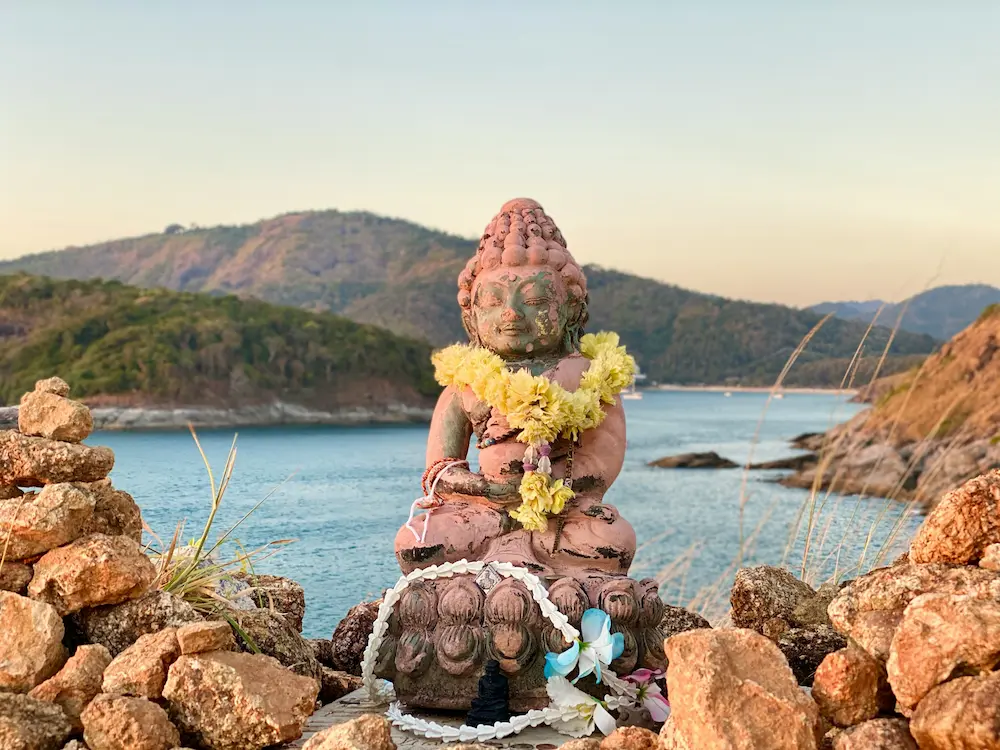
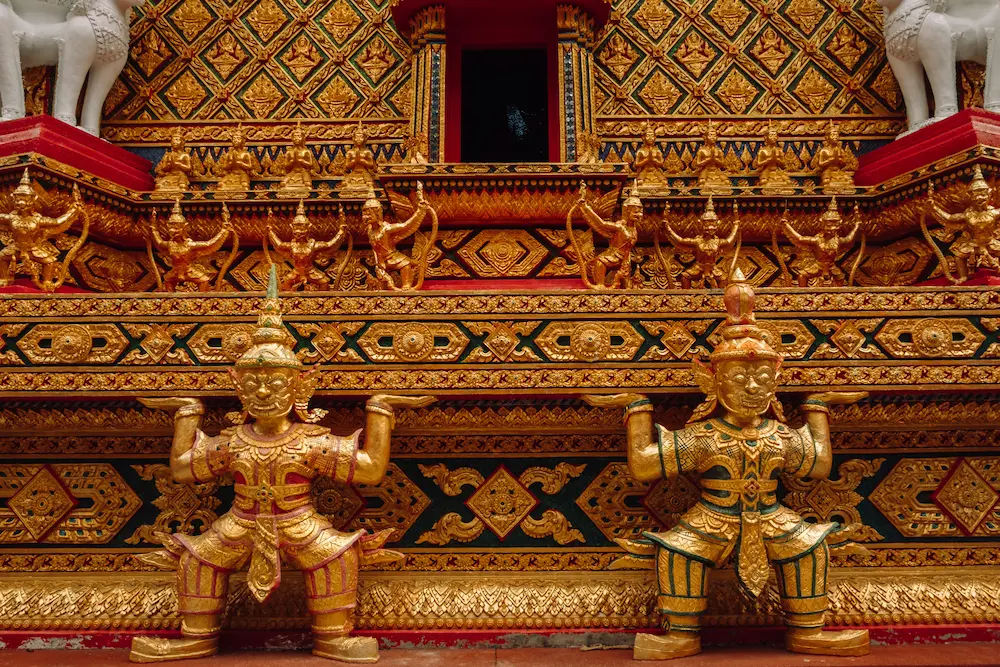
Wat Chalong, if you have not visited yet, is worth the trip south from Old Town. It is the largest Buddhist temple complex on the island, active and well-maintained, with several prayer halls, a stupa said to contain a bone fragment of the Buddha, and monks in residence. Entry is free; cover shoulders and knees.
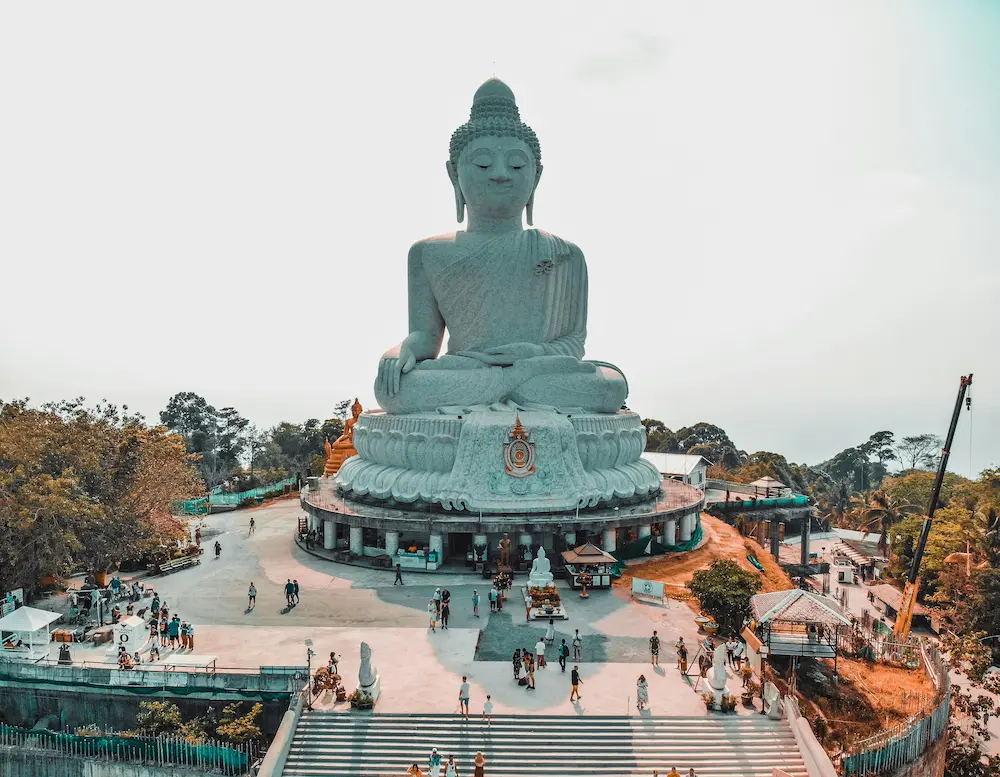
The Big Buddha — a 45-meter white marble statue on top of Nakkerd Hill in the south of the island — is visible from many parts of Phuket and is reachable by road. The views from the hilltop across the southern coastline and out to sea are among the best on the island.
The weekend market at Naka Market (Saturday and Sunday evenings, northern Phuket Town) is one of the more local-oriented markets on the island, with food stalls, clothing, and household goods at prices aimed at residents rather than tourists.
Last morning
Use the final morning for whatever the trip has not yet covered. A second walk through the Old Town, a return to a beach that worked well earlier in the week, or a longer breakfast at a shophouse café on Thalang Road. The morning market near Ranong Road operates early and is at its best before 8am — a good final stop before heading to the airport.
For souvenirs, the Old Town has shops selling locally produced cashews, dried seafood, and the Phuket-specific product most worth bringing back: cashew nut products in various preparations, which are a recognized local specialty and available at markets and shops throughout the Old Town.
Getting out
Phuket International Airport is in the north of the island. Allow significant time for the transfer — traffic on the main road north can be heavy, particularly in peak season and during morning hours. Confirm your transfer timing with your accommodation the evening before and add a buffer beyond what seems necessary.
Best time to visit
Phuket has two distinct seasons. The dry season on the Andaman coast runs roughly from November to April — this is when the west coast beaches are at their best, with calm seas, clear water, and consistent sunshine. November through February is peak season with the highest demand and prices. The wet season (May to October) brings the southwest monsoon, which produces significant rain and waves on the west coast. Some beaches are flagged for swimming during this period. However, the east coast of the island and areas like Phang Nga Bay remain more accessible during the wet season, and accommodation prices drop noticeably.
Getting around
Scooter rental is the most practical option for independent travelers and is available throughout the island. Traffic on the main roads can be heavy, particularly around Patong. Songthaews — shared pickup trucks running fixed routes — connect Phuket Town to the main beaches at low cost. Tuk-tuks are available but negotiate the price before getting in. Grab operates reliably across most of the island and is the easiest way to get a metered, agreed fare.
Money
The local currency is the Thai baht (THB). ATMs are widely available across the island. Credit cards are accepted at most hotels, larger restaurants, and tour operators. Smaller restaurants, market stalls, and local operators are cash only. Arrive with some baht in hand and withdraw more as needed — ATM fees from foreign cards apply.
Cultural notes
Thailand is a predominantly Buddhist country, and temple visits require modest dress — shoulders and knees covered. Remove shoes before entering temple buildings. The Thai monarchy is protected by strict laws; do not make negative comments about the royal family.
Tipping is not mandatory but is common practice in tourist-facing businesses — rounding up a restaurant bill or leaving a small amount for hotel staff is the norm.
What to pack
Ten days in Phuket is enough to move through the different versions of what the island actually is — the Old Town, the beaches, the offshore islands, the bay, the temples — without reducing any of them to a half-day checkbox. The mistake most visitors make is treating Phuket as a single beach destination and spending the full trip in Patong. The island rewards the people who move around it.
Whether you are here for the Andaman water, the Sino-Portuguese architecture, the day trips to Phi Phi and Phang Nga, the temple circuit, or the food in the Old Town at night — Phuket has a specific version of each. And most of it is more accessible than the resort brochures suggest.