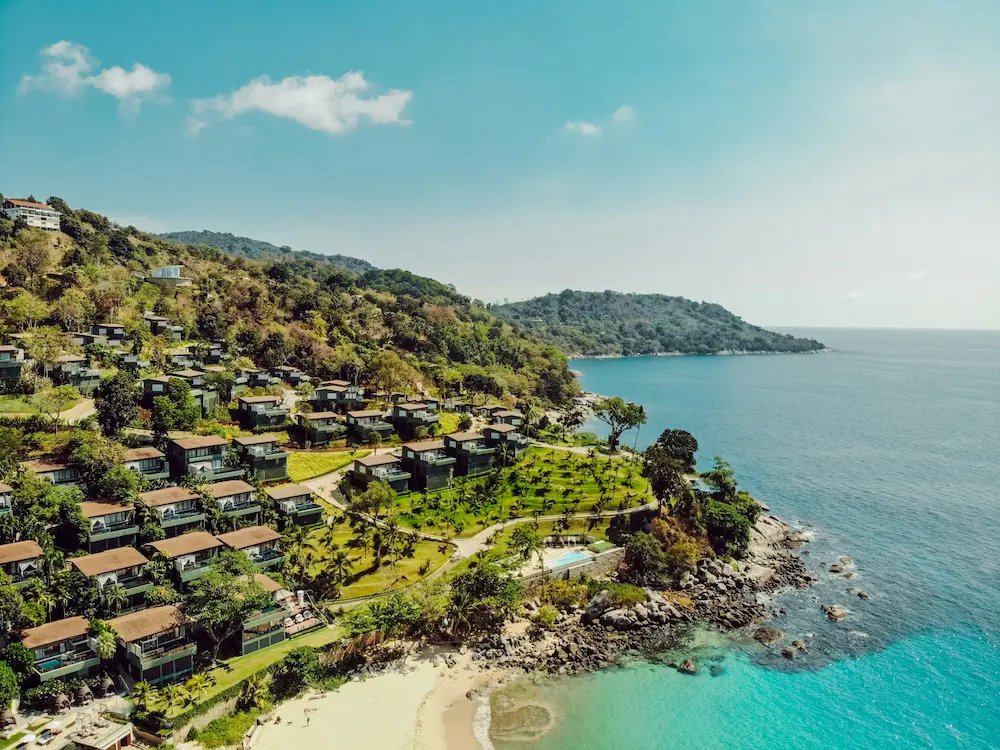
The songthaew drops you at the top of the hill just before sunset. Below, three bays curve into the coastline — Kata, Kata Noi, and Karon — each one a different shade of green and blue depending on the depth. The light is low, the water is flat, and nobody else is at the viewpoint […]
The songthaew drops you at the top of the hill just before sunset. Below, three bays curve into the coastline — Kata, Kata Noi, and Karon — each one a different shade of green and blue depending on the depth. The light is low, the water is flat, and nobody else is at the viewpoint yet. You reach for your camera before you have even found a place to stand.
Most people arrive in Phuket with a single image in mind: a crowded beach, probably Patong, probably midday. But the most photographed spots on the island are rarely at peak hour or in the most obvious locations. They are on hilltop viewpoints at dusk, in the painted shophouse streets of the Old Town at 7am, on longtail boats moving toward limestone formations in Phang Nga Bay, and on quieter beaches where the water is clear and the light hits the shore at the right angle.
If you stay in Phuket Old Town or use it as a base for day trips, you are actually closer to most of these places than travelers staying in beach hotels. The Old Town puts you within reach of the island’s cultural photography, the morning markets, and the road north to Phang Nga — without paying beach-area prices. That’s why we recommend using it as your base if visual variety is what you are after.
Those still planning their stay in Phuket may want to look at Super where accommodation and travel are often combined into discounted packages across different parts of the island.
1. Kata Viewpoint — three bays, one frame
The viewpoint above Kata Beach, located on the road between Kata and Karon, looks north over three bays simultaneously — Kata Noi, Kata, and Karon — in a single composition. It is one of the most photographed landscapes in southern Thailand and one of the few spots in Phuket where the scale of the coastline is visible from a single position. The viewpoint is accessible by road or a short walk up from Kata Beach. Late afternoon, approximately one hour before sunset, produces the best light — low, directional, and warm on the water. By midday the haze reduces visibility significantly.
2. Thalang Road, Old Town — the shophouse facades
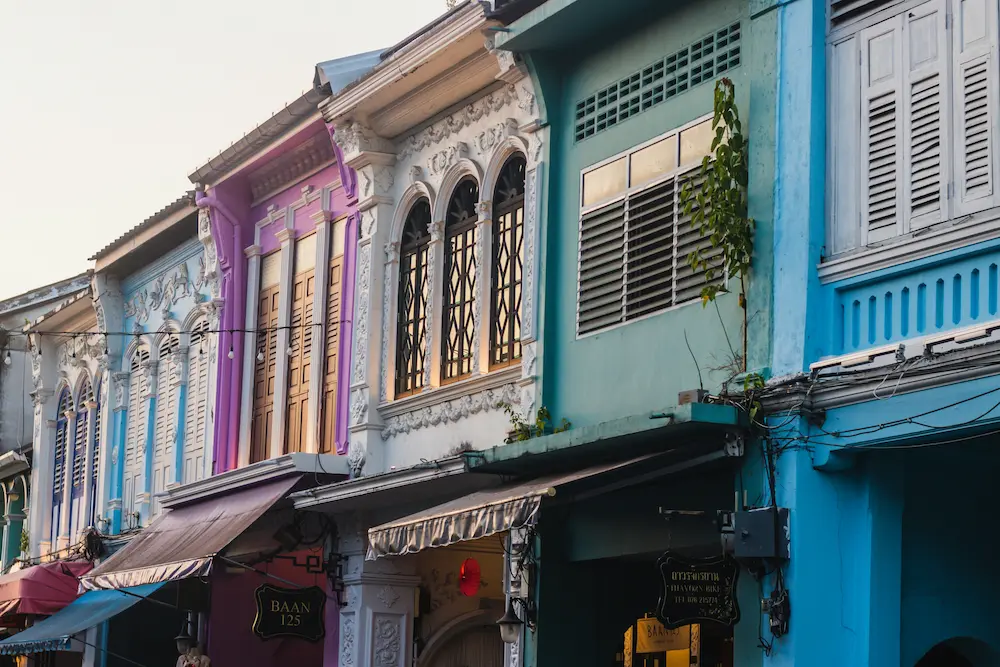
The stretch of Thalang Road running through Phuket Old Town has some of the most photographed building facades in Thailand. The Sino-Portuguese shophouses — two-story structures with tiled fronts, shuttered windows, and covered five-foot walkways — were built during the tin mining period by Chinese immigrants and have been in continuous use for over a century. The facades photograph best in the early morning, between 6 and 8am, before the street fills with traffic and market activity. The light comes from the east at that hour and illuminates the tiled fronts directly. Soi Rommanee, a narrow lane running parallel to Thalang Road, has a particularly dense concentration of painted shophouses and is worth walking in full before the day starts.
3. Phang Nga Bay — limestone karst from the water
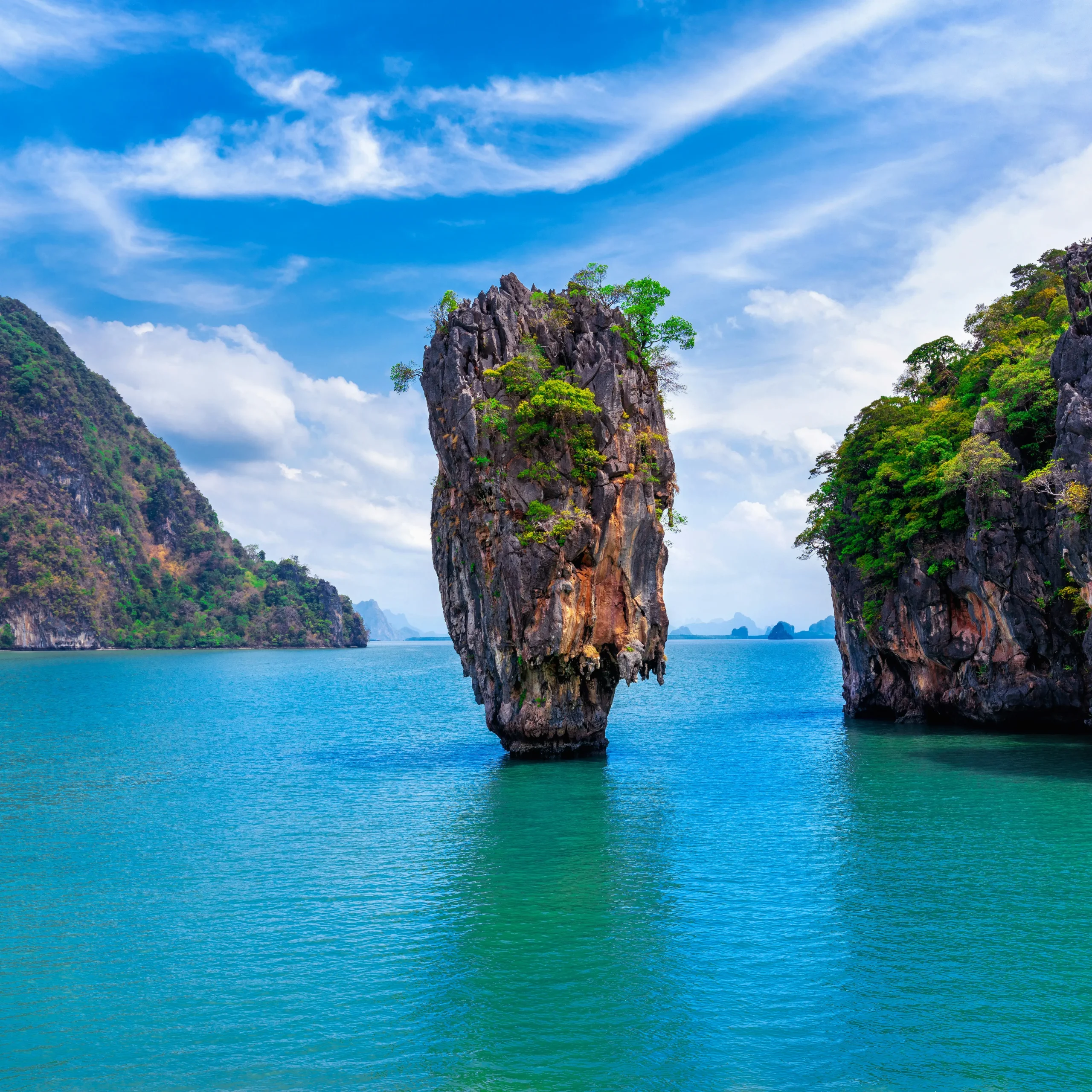
Phang Nga Bay, northeast of Phuket in Phang Nga Province, is one of the most photographed natural landscapes in Southeast Asia. Limestone karst formations rise directly from flat water, their bases undercut by tidal erosion into a distinctive silhouette visible from every angle. The bay is best photographed from a kayak or small boat in the early morning, when the water is calm and the formations reflect clearly below. Most organized tours depart from piers north of Phuket Town; kayaking tours give access to sea caves and narrow channels that larger boats cannot enter. The combination of limestone, mangrove, and flat water produces a visual environment that does not look like anywhere else in the region.
4. Big Buddha viewpoint — the southern coastline from above
The Big Buddha sits on top of Nakkerd Hill in the south of the island and is visible from many parts of Phuket. The statue itself — 45 meters of white marble — is the subject of most photographs taken here, but the view from the hilltop across the southern coastline and out to sea is equally worth the trip. On a clear morning, the visibility extends across multiple bays and the outline of offshore islands is visible on the horizon. The site is free to enter. Arrive early — by mid-morning tour buses arrive in numbers and the atmosphere changes. Dress modestly: shoulders and knees covered are required.
5. Patong Beach at sunrise — before the crowds
Patong is the most crowded beach in Phuket by mid-morning, but at sunrise it is a different place entirely. The 3-kilometer stretch of sand is largely empty, the light comes from behind the hills to the east and illuminates the water from the side, and the usual beach infrastructure — jet skis, vendors, chairs — has not yet been set up. The composition looking south along the beach with the hills in the background is the cleanest version of the Patong shot. By 8am the beach begins to fill. By 10am the light is overhead and the crowds are present. The window is short and worth using.
6. Phuket Old Town at the Sunday Walking Street
On Sunday evenings, Thalang Road is closed to traffic and becomes a walking street market. The combination of lit shophouse facades, food stalls, local vendors, and the density of activity in a narrow pedestrian street produces a visual environment that photographs well from multiple angles. The market runs from approximately 4pm to 10pm. The best light for photography is in the first hour, when the ambient daylight and the market lighting overlap before it goes fully dark. It is one of the few times in Phuket when a large number of people and a visually interesting setting are in the same place at the same time.
7. Promthep Cape — the southern tip of the island
Promthep Cape is at the southernmost point of Phuket island and has a direct view west over the Andaman Sea. It is one of the most visited sunset viewpoints on the island and for straightforward reasons: the horizon is unobstructed, the light at the end of the day is clean, and the rocky headland provides foreground for wide-angle compositions. It is busy at sunset — arrive 30 to 40 minutes before the sun drops to find a position. Earlier in the day it is quiet and the view north along the coastline is worth the stop.
8. Surin Beach — the cleaner west coast composition
Surin Beach, north of Patong on the west coast, has a calmer and less developed visual environment than the beaches further south. The beach is long, the water is clear during the dry season (November to April), and the absence of jet skis and banana boats in the northern section of the beach makes for a cleaner frame. The light in the late afternoon hits the water at a low angle and produces the most saturated color. The beach photographs best outside peak season when the Andaman side is calm — during the wet season (May to October) the waves increase and some sections are flagged for swimming.
9. Jui Tui Shrine — color and texture in the Old Town
The Jui Tui Shrine on Soi Phuthon in Phuket Old Town is an active Chinese Taoist shrine with a visual density — red lacquer, gold detail, incense smoke, offerings — that photographs well at any time of day. It is not a tourist attraction; it is a functioning religious site and should be treated as one. Asking before photographing worshippers is the appropriate approach. The exterior of the shrine and the courtyard are openly accessible. Early morning, when incense is being lit and the light is low, produces the most atmospheric conditions.
10. Longtail boats at Ao Po or Chalong Pier — the working harbor
The longtail boats that operate throughout Phuket’s waters are one of the most recognizable visual elements of southern Thailand. Ao Po pier in the north of the island and Chalong Bay pier in the south both have concentrations of longtails moored in the morning before departures. The combination of painted wooden hulls, long engine shafts, and the water behind them photographs well in the early morning light. Chalong Bay also has the backdrop of Wat Chalong’s spires visible from the pier area, which adds context to wide-angle compositions.
Phuket has a visual range that goes well beyond beach chairs and cocktails at sunset. The Old Town facades, the limestone formations in Phang Nga Bay, the three-bay viewpoint above Kata, the working shrines and piers, and the quiet end of Surin Beach in the late afternoon all exist within the same island — and most of them are free or nearly free to access.
Whether you are traveling with a professional camera or a phone, after landscapes or street photography or underwater reef shots — the most memorable images from Phuket tend to come from places that require nothing more than an early start and knowing where to look. And from the Old Town, most of them are closer than you’d expect.