The taxi slows as it enters the Old Town. The street narrows, the buildings close in on both sides — two-story shophouses with tiled facades, shuttered windows, and covered walkways that have been here for over a century. A woman opens a café on the ground floor of one of them. A monk walks past on the opposite side. You are not at a beach yet, and already Phuket is not what you expected.
Phuket has a reputation for being a single thing: a beach destination, probably Patong, probably crowded. But the island is large — Thailand’s largest — and it contains several completely different environments within the same geography. The west coast has the famous beaches. The Old Town has some of the most intact Sino-Portuguese architecture in Southeast Asia. The surrounding waters connect to Phang Nga Bay and the Phi Phi Islands. The interior has temples, viewpoints, and markets. And the food, both local Thai and from the island’s Chinese Peranakan heritage, is worth building the trip around.
This guide covers the specific spots and experiences in each of those environments — what they actually involve, how to access them, and what to know before you go.
Accommodation prices in Phuket vary widely depending on the area and the season. If you’re still comparing options, it’s worth checking platforms like Super, which often bundle hotels and travel into discounted packages across different parts of the island.
The Old Town and Cultural Experiences
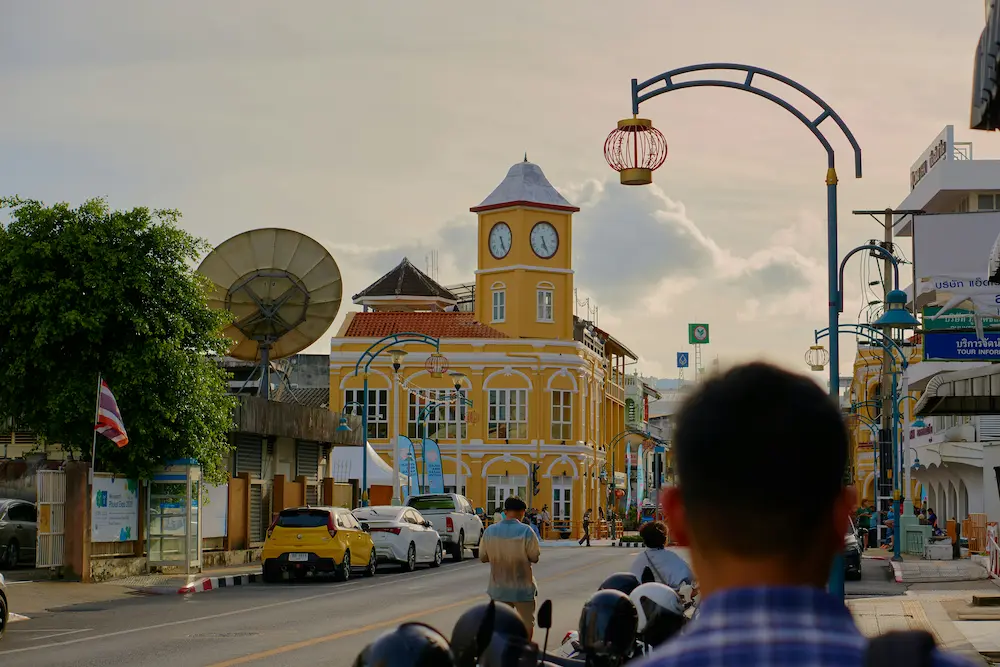
The Old Town is the part of Phuket most visitors move through too quickly. It deserves at least two full days — one to walk the architecture, one to get into the markets, the shrines, and the food at a slower pace.
- Thalang Road — The main street of the historic district and the one with the highest concentration of intact Sino-Portuguese shophouses. The facades — two-story, tiled, with covered five-foot walkways — were built by Chinese immigrants during the tin mining period and have been in continuous use since. Best explored on foot in the early morning before traffic builds. The light from the east hits the tiled fronts directly between 6 and 8am.
- Soi Rommanee — A narrow lane running parallel to Thalang Road with a dense concentration of painted shophouses, several of which have been converted into cafés and small bars without losing the original structure. Less trafficked than Thalang Road and worth walking in full. The visual texture here — peeling paint, hanging plants, old signage — photographs well at any time of day but is best before 9am.
- Dibuk Road — Running perpendicular to Thalang Road, Dibuk Road has a mix of restored and unrestored shophouses and several of the Old Town’s better independent restaurants. Worth walking as part of the full Old Town circuit.
- Phuket Thai Hua Museum — Located on Krabi Road, this museum documents the history of the Chinese community in Phuket from the tin mining era to the present. The building itself is a well-preserved example of Sino-Portuguese architecture. Allow two hours. Entry fee applies; verify the current amount on arrival.
- Jui Tui Shrine — An active Chinese Taoist shrine on Soi Phuthon, in continuous religious use. Not a tourist attraction — a functioning place of worship. The visual environment inside — red lacquer, gold detail, incense smoke, ceramic figures — is distinctive. Ask before photographing worshippers. The exterior courtyard is openly accessible.
- Sunday Walking Street — On Sunday evenings, Thalang Road closes to traffic and becomes a pedestrian market with food stalls, local vendors, and live music. The overlap of lit shophouse facades and market activity produces a visual environment unlike anything else in Phuket. Runs approximately 4pm to 10pm; the first hour has the best combination of natural and artificial light.
- Morning market, Ranong Road — The market near the bus terminal on Ranong Road operates from early morning and is one of the most local food environments on the island. Khanom jeen (rice noodles with curry broth), dim sum from Chinese-style cafés, fresh tropical fruit, and roti from street vendors. At its best before 8am, when the stalls are fullest and the activity is at its peak.
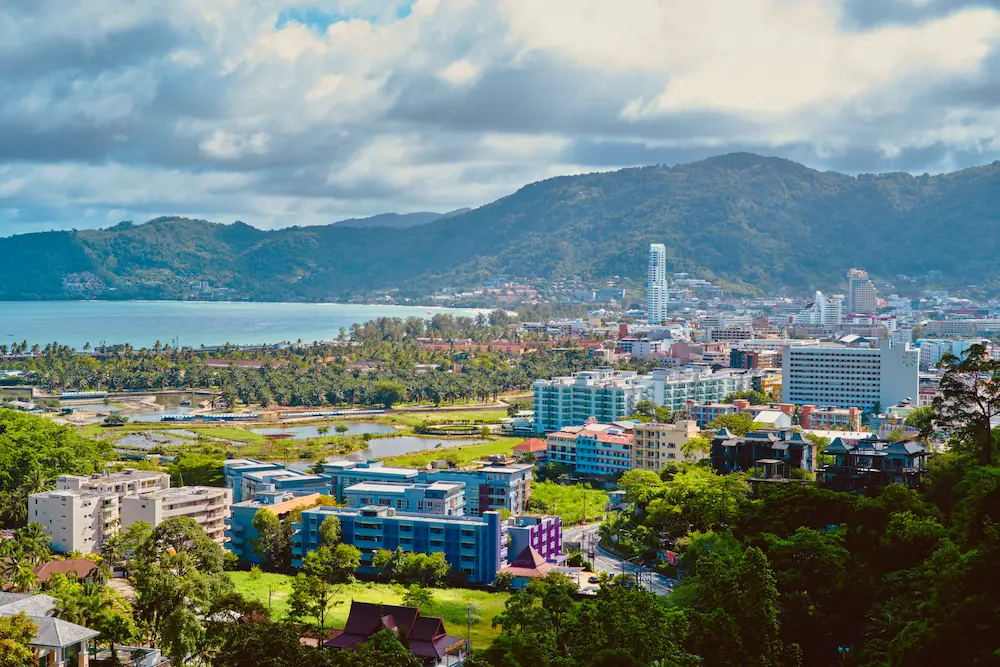
- Khao Rang Hill viewpoint — A hill north of the Old Town with a viewpoint looking south over Phuket Town and the surrounding bay. Reachable by scooter or on foot. Best in the morning before haze builds. Less visited than the beach viewpoints and worth combining with an Old Town morning.
Temples and Land Experiences
- Wat Chalong — The largest and most visited Buddhist temple complex on the island, located south of Phuket Town near Chalong Bay. Several prayer halls, a stupa said to contain a bone fragment of the Buddha, and monks in residence. Entry is free. Cover shoulders and knees; remove shoes before entering buildings. Active at all hours but least crowded in the early morning.
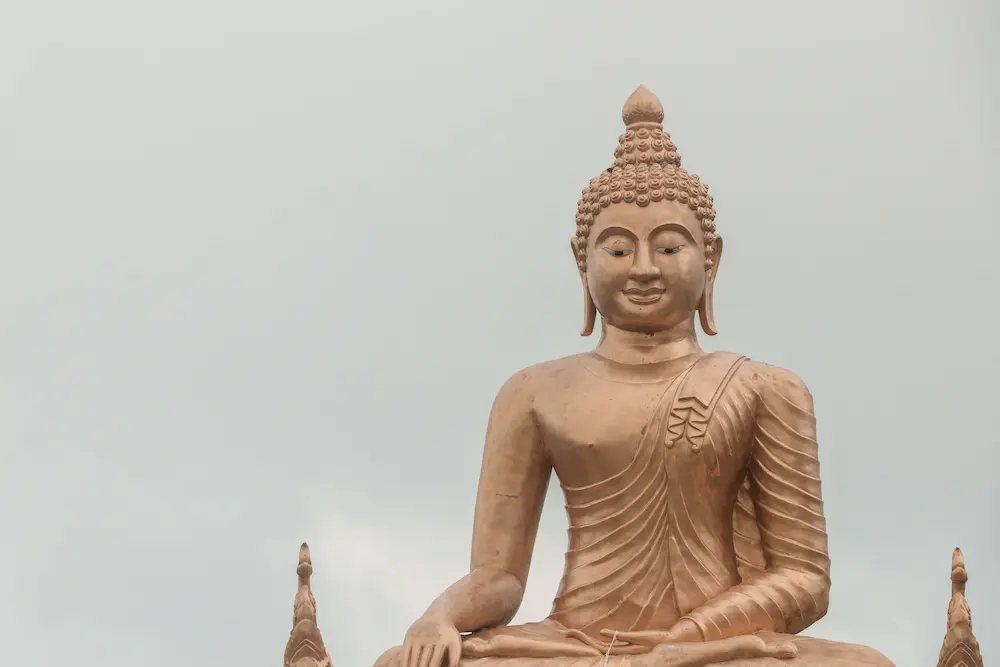
- Big Buddha — A 45-meter white marble statue on top of Nakkerd Hill in the south of the island, visible from many parts of Phuket. The views from the hilltop across the southern coastline and out to the Andaman Sea are among the best on the island on a clear morning. Entry is free. Dress modestly — shoulders and knees covered are required. Arrive early; tour groups begin arriving by mid-morning.
- Promthep Cape — The southernmost point of Phuket island, with an unobstructed view west over the Andaman Sea. One of the most visited sunset viewpoints on the island. Arrive 30 to 40 minutes before sunset to find a position. Earlier in the day the cape is quiet and the views across the water and along the coastline are worth the stop without the crowd.
- Kata Viewpoint — On the road between Kata and Karon, this viewpoint looks north over three bays simultaneously — Kata Noi, Kata, and Karon — in a single composition. One of the most photographed landscapes in southern Thailand. Late afternoon, approximately one hour before sunset, produces the best light and the lowest haze. Accessible by scooter or on foot from Kata Beach.
- Khao Phra Thaeo National Park — A protected rainforest area in the north of the island, one of the last remaining patches of original forest on Phuket. Contains two waterfalls — Bang Pae and Ton Sai — both accessible by trail. Entry fee applies. Best visited in the wet season when the falls are at full flow. The Gibbon Rehabilitation Project, which cares for rescued gibbons, is located within the park.
- Vanilla plantation and cashew farms — Phuket is known locally for its cashew nuts, and several farms in the interior offer short visits. Worth combining with a northern island circuit if you are already on a scooter exploring that part of the island. Ask locally for current farm locations open to visitors.
The West Coast Beaches
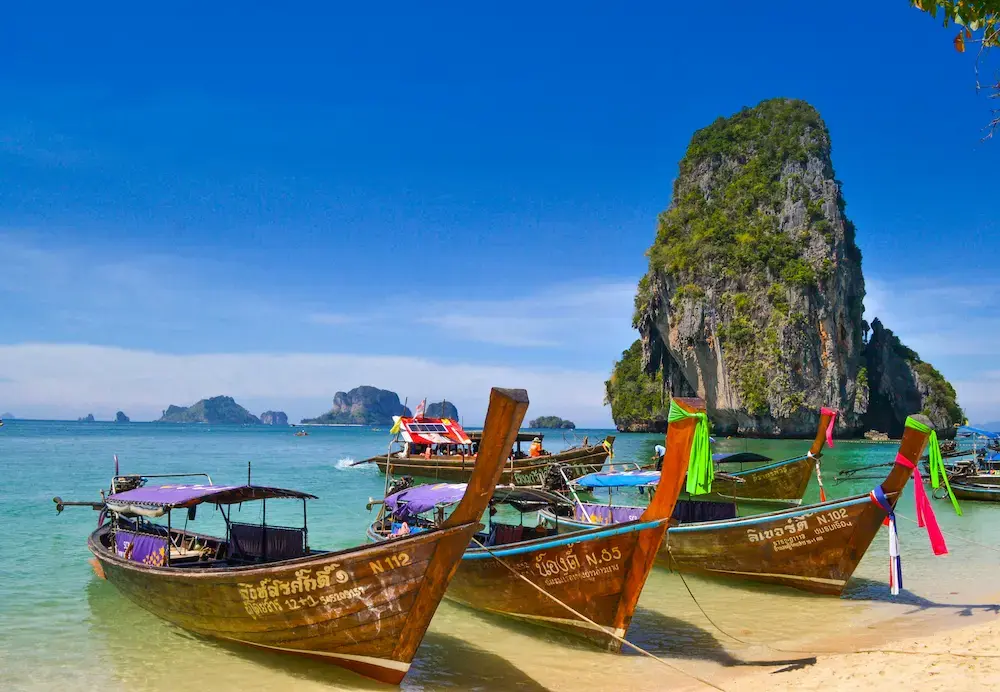
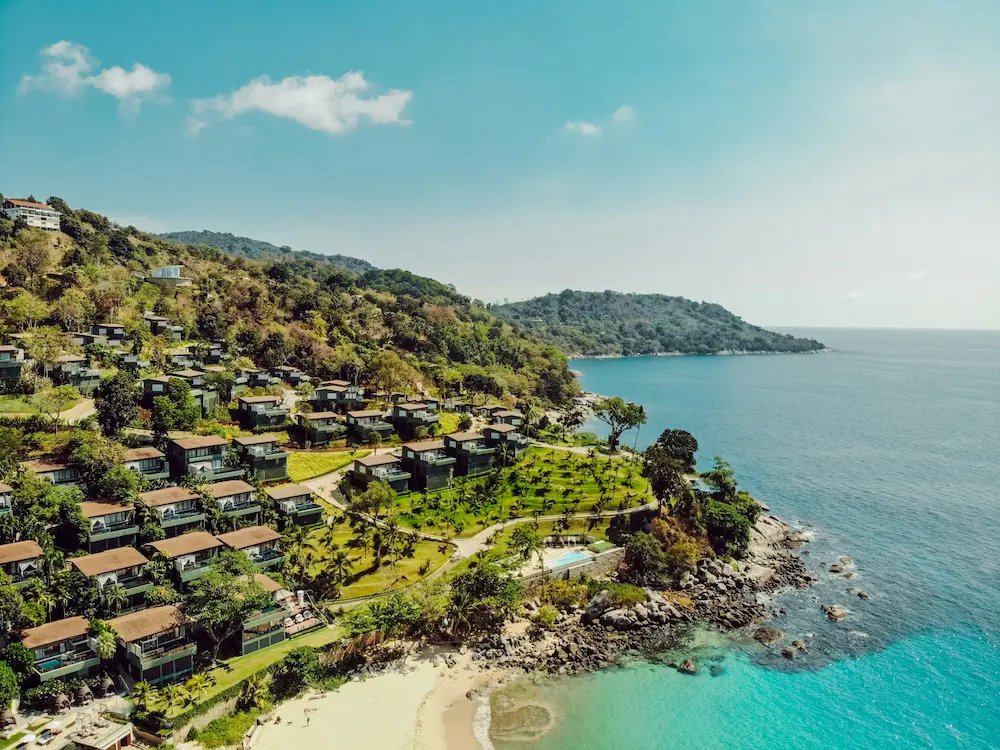
Phuket’s west coast faces the Andaman Sea and has the clearest water and most developed beach infrastructure on the island. The beaches run from north to south, each with a different character. Understanding those differences is worth doing before choosing where to spend your beach days.
- Mai Khao Beach — The northernmost beach on the island, long and largely undeveloped. Close to the airport. Sea turtles nest here between November and February — the beach is monitored during nesting season and public access to nesting areas is managed. The quietest major beach on the island.
- Nai Yang Beach — South of Mai Khao, still in the north of the island and relatively uncrowded. Calm water inside a bay that provides some shelter from Andaman swells. A practical base for travelers who want beach access near the airport without the noise and density of the southern beaches.
- Surin Beach — On the northwest coast, with clearer water and a calmer atmosphere than Patong. Less development behind the beach than further south. The northern section of the beach, away from the main restaurant strip, is the quietest part. Best during dry season (November to April) when the Andaman side is calm.
- Kamala Beach — Just south of Surin, with a longer stretch of sand and local fishing boats still operating from the northern end. The village behind the beach has a functioning local community with markets and small restaurants separate from the tourist strip. Quieter than Patong and worth a full day.
- Patong Beach — The most developed and most crowded beach on the island. A 3-kilometer stretch with the full range of water sports, a dense hotel and restaurant strip behind it, and Bangla Road running inland with bars and nightlife concentrated in a walkable area. Worth visiting once. Best at sunrise, before the beach infrastructure is set up and before the crowds arrive.
- Karon Beach — South of Patong, longer and less congested. The water quality is similar to Patong but the atmosphere is noticeably calmer. A good alternative for travelers who want a developed beach area without Patong’s density.
- Kata Beach — South of Karon, with a more compact beach and a slightly more family-oriented atmosphere. Consistent surf conditions make it one of the better beaches for beginner surfing. The viewpoint above Kata (see item 12) is accessible directly from here.
- Kata Noi — A smaller beach immediately south of Kata, separated by a headland. Less visited than Kata proper and worth the short walk or scooter ride. The water is clear and the beach is compact enough that it does not feel crowded even when it has visitors.
- Rawai Beach — At the southern tip of the island, near Promthep Cape. Not a swimming beach — the water is shallow and the bottom is rocky — but it has a functioning fishing village and a line of longtail boats available for charter to nearby islands. Worth visiting for the atmosphere rather than the swimming.
Day Trips from Phuket
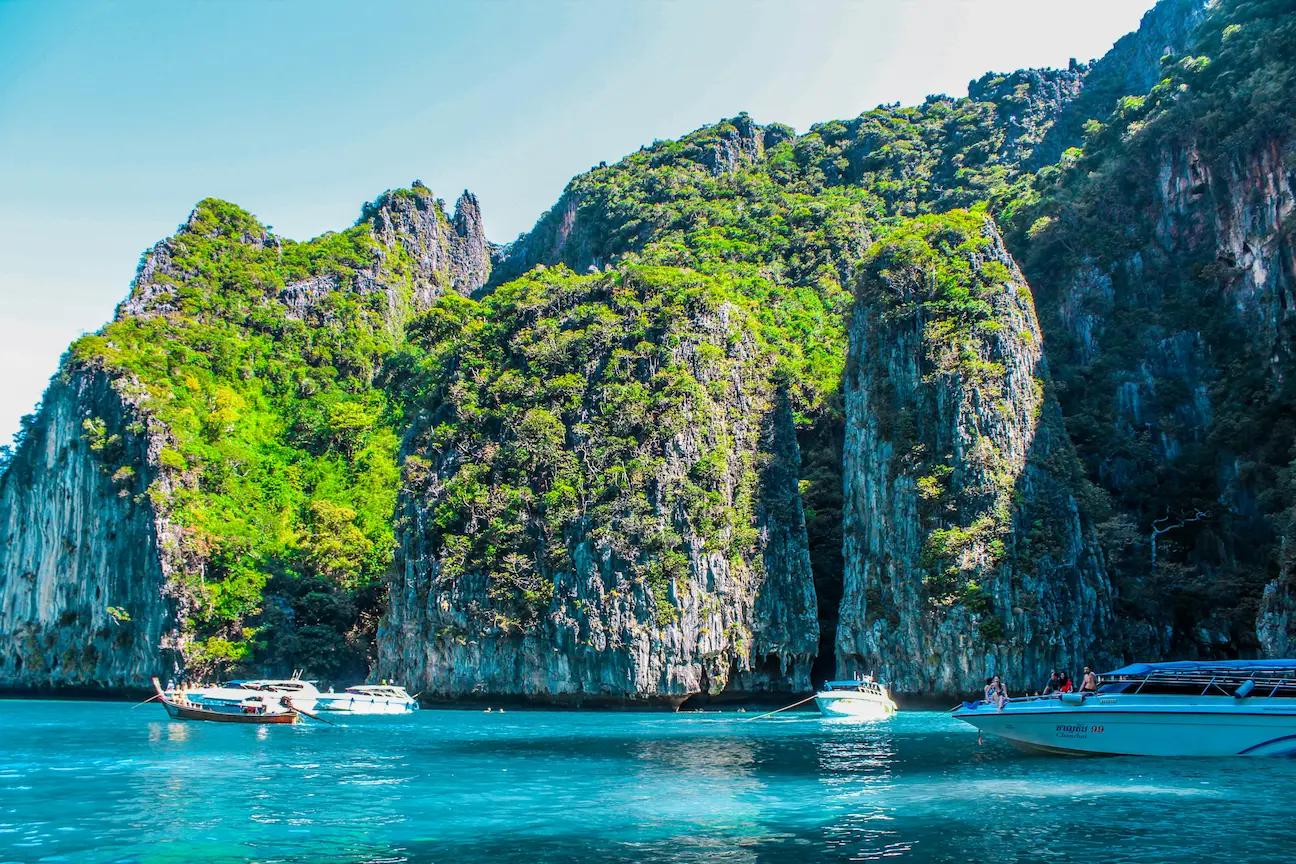
- Phi Phi Islands — Approximately 45 kilometers southeast of Phuket, reached by speedboat or ferry. The island group includes Phi Phi Don (inhabited, with accommodation and restaurants) and Phi Phi Leh (uninhabited, containing Maya Bay). Most day trips combine snorkeling stops, a visit to Maya Bay, and time on Phi Phi Don. Maya Bay reopened in 2022 after a period of closure for environmental recovery and now manages visitor numbers. Book directly with a boat operator rather than through a hotel desk.
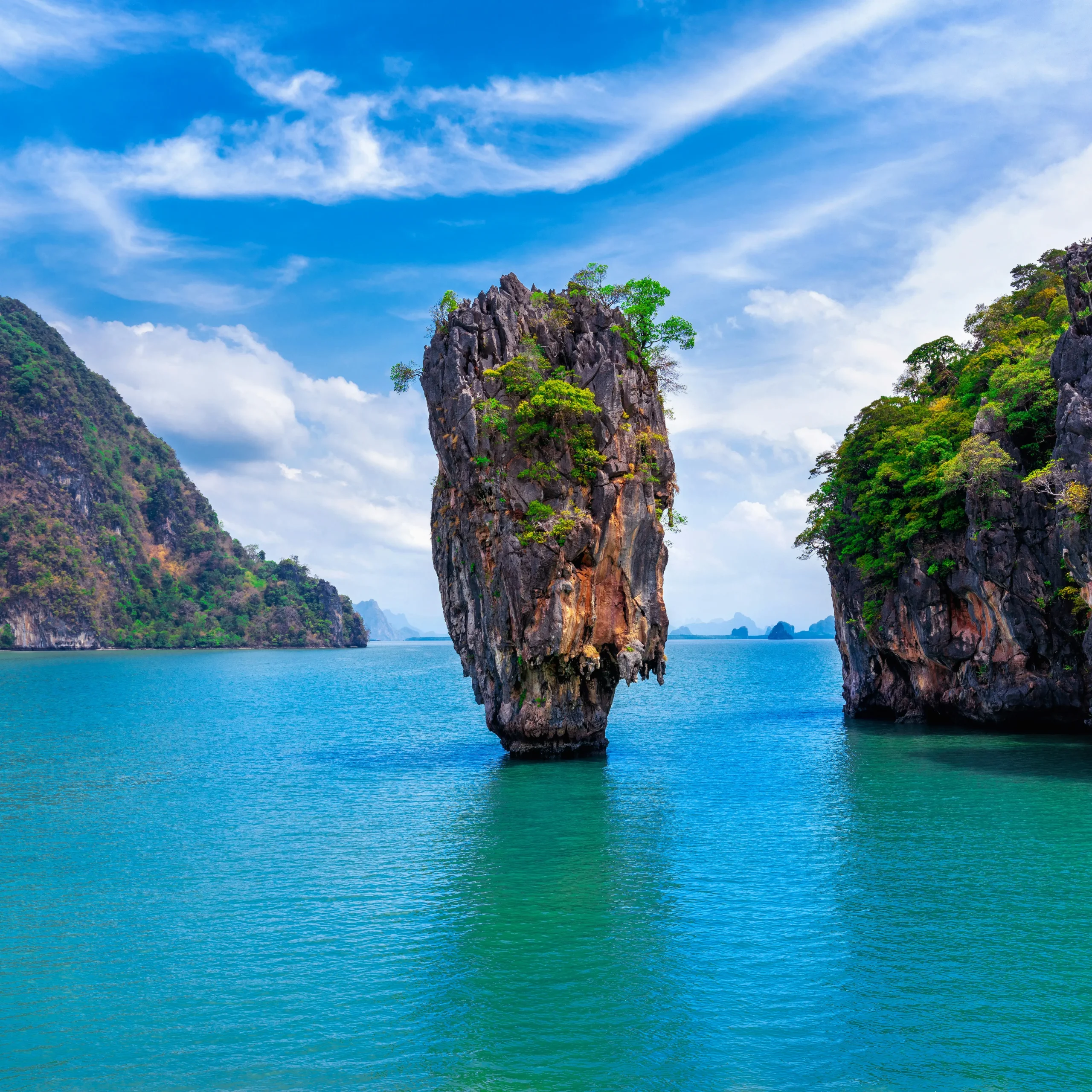
- Phang Nga Bay — Northeast of Phuket in Phang Nga Province, with limestone karst formations rising from flat water. Contains James Bond Island (Khao Phing Kan), named for its appearance in a 1974 film, and Ko Panyi, a Muslim fishing village built on stilts over the water. Kayaking tours give access to sea caves and narrow channels that larger boats cannot enter. Best in the early morning when the water is calm and the formations reflect clearly. Most tours depart from piers north of Phuket Town.
- Similan Islands — A group of islands in the Andaman Sea, approximately 84 kilometers northwest of Phuket, accessible by liveaboard or day trip during the dry season (November to April). The marine environment — visibility, coral coverage, fish diversity — is among the best accessible from Phuket. The islands are a national park; entry fees apply. Day trips are long and involve open-water crossing; liveaboards are the more comfortable option.
- Racha Islands (Ko Racha Yai and Ko Racha Noi) — Two islands south of Phuket, closer and faster to reach than the Similans. Ko Racha Yai has clear water, coral reefs, and accommodation. Ko Racha Noi is uninhabited and has good diving. A practical day trip option for snorkeling and diving without the full-day commitment of the Similans.
- James Bond Island (Khao Phing Kan) — Most often visited as part of a Phang Nga Bay tour. The distinctive limestone stack — called Koh Tapu — rising from the water next to the main island is one of the most recognizable rock formations in Southeast Asia. Best visited early in the day before tour groups arrive in volume.
Water Activities
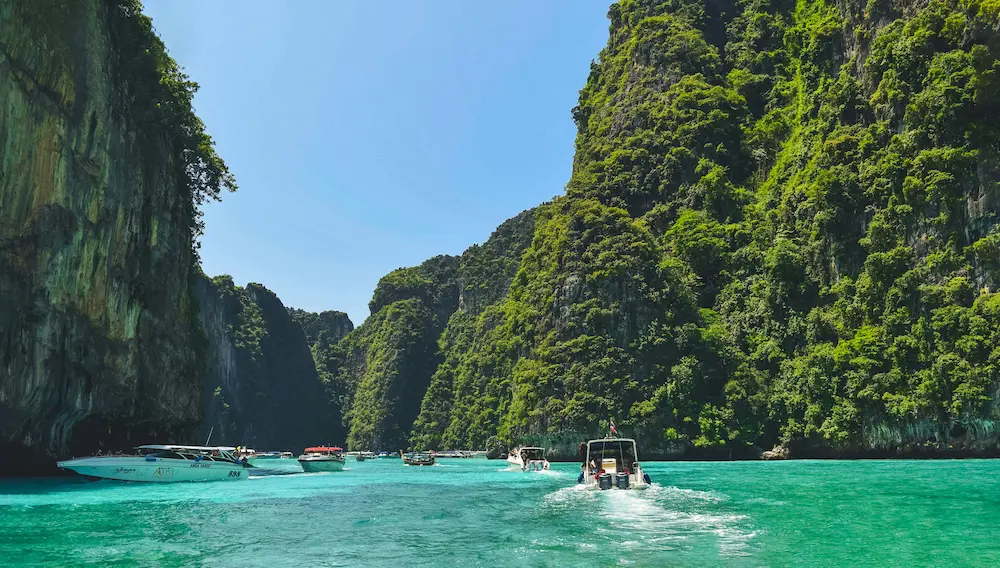
- Snorkeling around Phi Phi and Racha Islands — The clearest water accessible on a day trip from Phuket. Most boat tours to Phi Phi and Racha include snorkeling stops. Bring your own mask if fit and comfort matter to you — rental equipment quality varies between operators.
- Scuba diving — Several established dive operators are based in Phuket, running day trips to the Racha Islands, Shark Point, Anemone Reef, and King Cruiser Wreck. Liveaboards to the Similan Islands are available during the dry season. Ask operators specifically which sites are running and what conditions are currently like before booking.
- Surfing at Kata Beach — Kata has consistent beginner-friendly surf conditions during the wet season (May to October) when Andaman swells increase. Several surf schools operate on the beach. Not a world-class surf destination but reliable for first-timers or travelers who want a few sessions.
- Sea kayaking — Available as guided tours through Phang Nga Bay (see item 25) or as independent rental at several beaches. The Phang Nga Bay kayaking experience — paddling through sea caves and into enclosed lagoons — is significantly different from standard beach kayaking and worth prioritizing if this is on your list.
- Longtail boat charter — Longtail boats are available for charter at Rawai Beach, Chalong Bay, and several other points around the island. A chartered longtail gives flexible access to nearby smaller islands and bays without the group tour format. Negotiate the price and itinerary directly with the operator at the pier.
Where to Base Yourself and For How Long
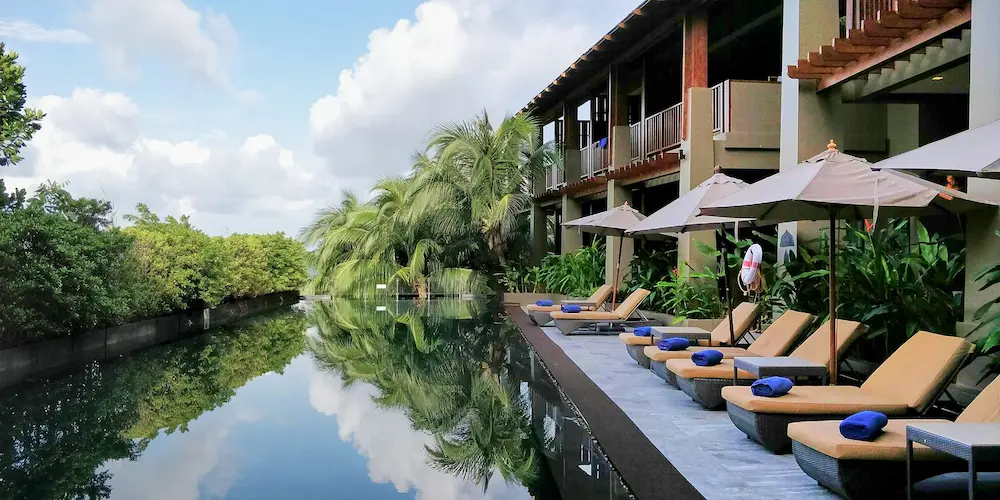
- Phuket Old Town — The most interesting base for travelers who want cultural depth alongside beach access. Cheaper than the beach areas, with the best independent restaurants on the island and easy access by scooter to most beaches. The historic architecture makes the area worth exploring on its own terms, not just as a base.
- Length of stay — Seven to ten days covers the Old Town, the main west coast beaches, and day trips to Phi Phi and Phang Nga Bay without rushing any of them. A reasonable minimum itinerary for first-time visitors: two nights in the Old Town, three nights near a beach (Kata or Karon work well for most travelers), one day trip to Phi Phi, one day trip to Phang Nga Bay, and Wat Chalong and the Big Buddha on a half-day circuit.
Practical Notes: Getting There, Best Time, Budget Reality
Getting to Phuket is straightforward. The international airport receives direct flights from Bangkok, Kuala Lumpur, Singapore, Hong Kong, and select European and Middle Eastern cities. For most travelers, the route involves one connection through Bangkok or another Southeast Asian hub. The airport is approximately 45 minutes by road from Phuket Town and around one hour from the southern beaches.
The best time to visit for most travelers is November through April, the dry season on the Andaman coast. November through February is peak season — highest prices and most visitors. March and April offer similar conditions with less demand. The wet season (May to October) brings rain and waves to the west coast beaches, with some beaches flagged for swimming. Accommodation prices drop noticeably during this period. Phang Nga Bay and the east coast remain more accessible in the wet season.
The local currency is the Thai baht (THB). ATMs are widely available across the island. Credit cards are accepted at most hotels, larger restaurants, and tour operators. Smaller restaurants, market stalls, and local operators are typically cash only. Travelers who stay in the Old Town and book day trips directly rather than through hotel desks will consistently pay less for the same experiences.
Final Thoughts
Phuket is easier to explore than its reputation as a party beach suggests, and more varied than most first-time visitors expect. The beaches are real and worth your time. But so is the Old Town, the temple circuit, the morning markets, and the day trips to Phang Nga Bay and the offshore islands.
Whether you are here for the Andaman water, the Sino-Portuguese architecture, the food in the Old Town at night, or a diving trip to the Similan Islands — Phuket has a specific version of each. The key is knowing what each experience actually involves and where to find it without going through the most expensive option on the island.