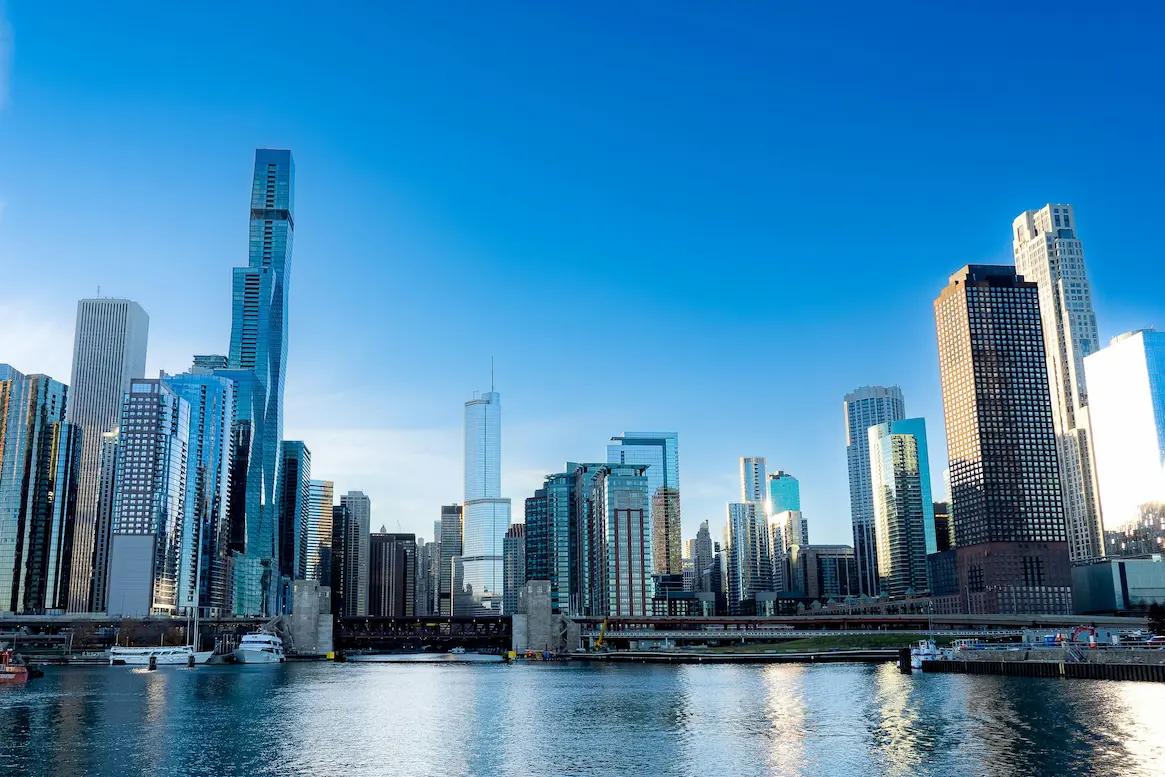
The L comes above ground at Lake Street and suddenly the Loop is all around — the tracks curve ahead, buildings on both sides close enough to touch from the windows, a gap opening to the river below, the Bean visible in the distance catching the skyline in its surface. The train slows. The doors […]
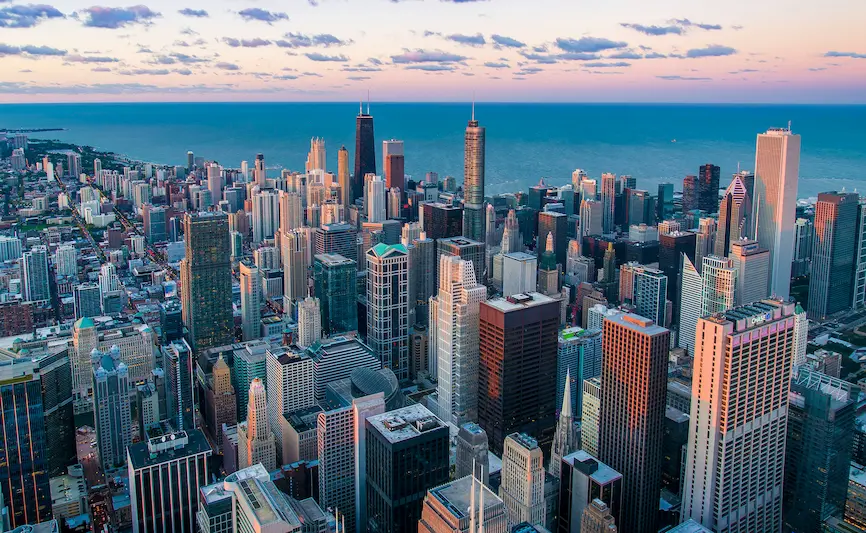
The L comes above ground at Lake Street and suddenly the Loop is all around — the tracks curve ahead, buildings on both sides close enough to touch from the windows, a gap opening to the river below, the Bean visible in the distance catching the skyline in its surface. The train slows. The doors open. The city is immediately, entirely itself. No ramp-up, no easing in. Chicago just begins. That first moment on the elevated platform, wind off the lake hitting you before you have even found your bearings, is when most people realize this city operates at a scale they did not quite expect. Five days is enough to understand it — not all of it, but the parts that matter.
This Chicago itinerary covers the things to do in Chicago that are actually worth your time: the architecture, the food culture, the music rooms, the lakefront, and the neighborhoods that look nothing like the tourist brochures. It is built around the CTA L train, which costs $2.50 per ride or approximately $20 for a 3-day pass, and it does not require a car for a single day.
Super tends to have some of the most competitive hotel rates in the Loop and River North — worth checking before you commit to anything, especially during shoulder season when mid-range rooms in River North can run closer to $150/night rather than the summer peak.
The most important decision you make before landing in Chicago is also the simplest: take the L from the airport, every time. The Blue Line from O’Hare runs approximately 45 minutes to the Loop for $5. The Orange Line from Midway takes about 30 minutes for the same $5. A taxi or rideshare from O’Hare costs approximately $45–60 each way. That math does not require a calculator.
For getting around the city, a single-ride card costs $2.50. A day pass runs approximately $10, and a 3-day pass approximately $20 — the better option if you are moving around a lot. Get a Ventra card at any station kiosk when you arrive.
For Day 3, add a Divvy bike share day pass to your budget: approximately $15 for classic bikes, $25 for e-bikes. The Lakefront Trail is 18.5 miles of flat, well-maintained path along Lake Michigan — doing it by bike instead of trying to walk sections of it changes the experience entirely.
The best time to visit is May through June or September through October. Summer (July–August) has the best weather and the highest hotel rates. Winter is genuinely cold — wind off Lake Michigan turns a 20°F day into something closer to -10°F — but it is viable if your itinerary is built around indoor culture, which this one largely is.
For accommodation, stay in the Loop, River North, or West Loop. All three put you within walking distance of Days 1 and 2. Mid-range hotels in River North run approximately $150–250/night. The South Loop tends to run a bit lower.
One final logistics note before you eat anything: Chicago-style deep dish takes 45 minutes to bake at every serious restaurant in the city. Order when you sit down, not when you are hungry.
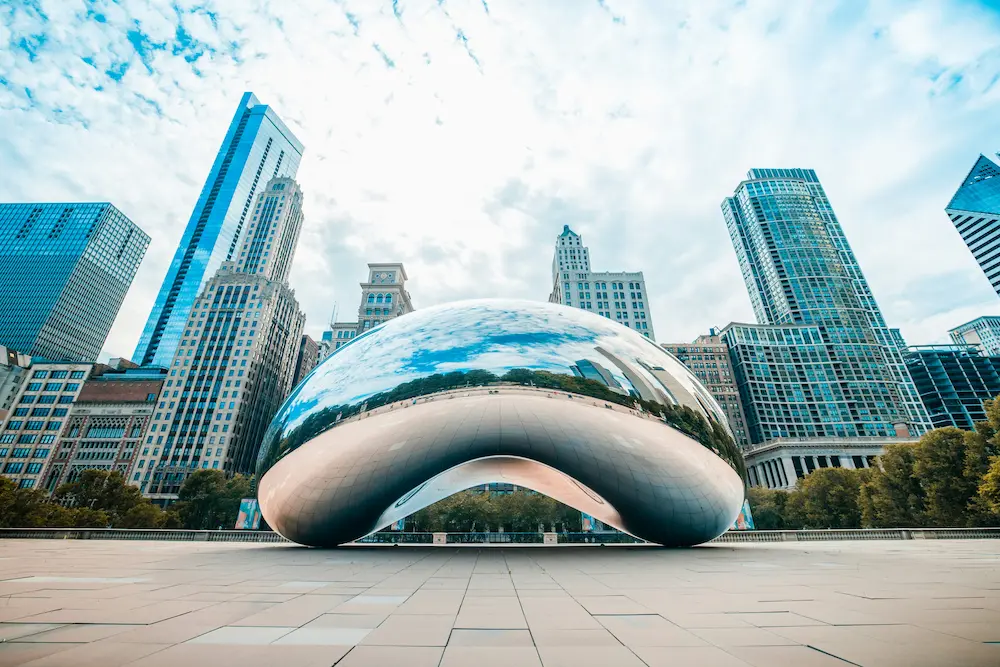
Start in Millennium Park before anything else. It is free, it is open every day, and it sets the tone for the rest of the trip. Cloud Gate — the 110-ton reflective steel sculpture by Anish Kapoor that everyone calls the Bean — is worth more time than you think. The distorted reflections of the skyline curve around it from every angle, and you can walk underneath it. Crown Fountain nearby is two 50-foot glass towers displaying faces of Chicago residents projected in sequence — also free. In summer, Jay Pritzker Pavilion hosts free evening concerts in the park. Check the schedule before you go.
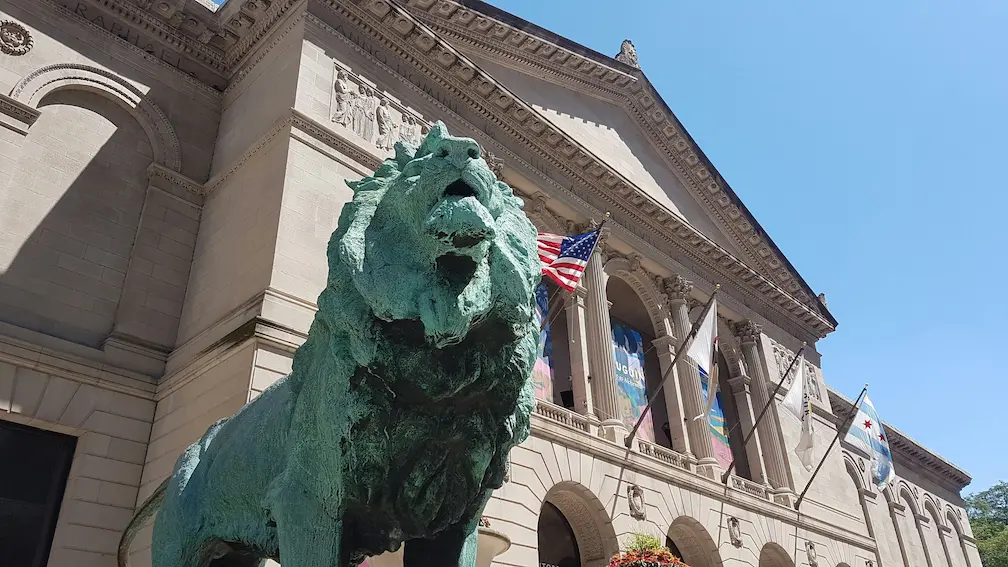
From Millennium Park, the Art Institute of Chicago is directly on Michigan Avenue. Entry is approximately $35 for adults, and two to three hours is the minimum you want here. Grant Wood’s American Gothic, Georges Seurat’s A Sunday on La Grande Jatte, and Edward Hopper’s Nighthawks are all in the permanent collection — among the most recognized paintings in American art, and all in a single building. The Modern Wing connects back to Millennium Park via the BP Bridge, and it holds the strongest collection of contemporary art in the Midwest.
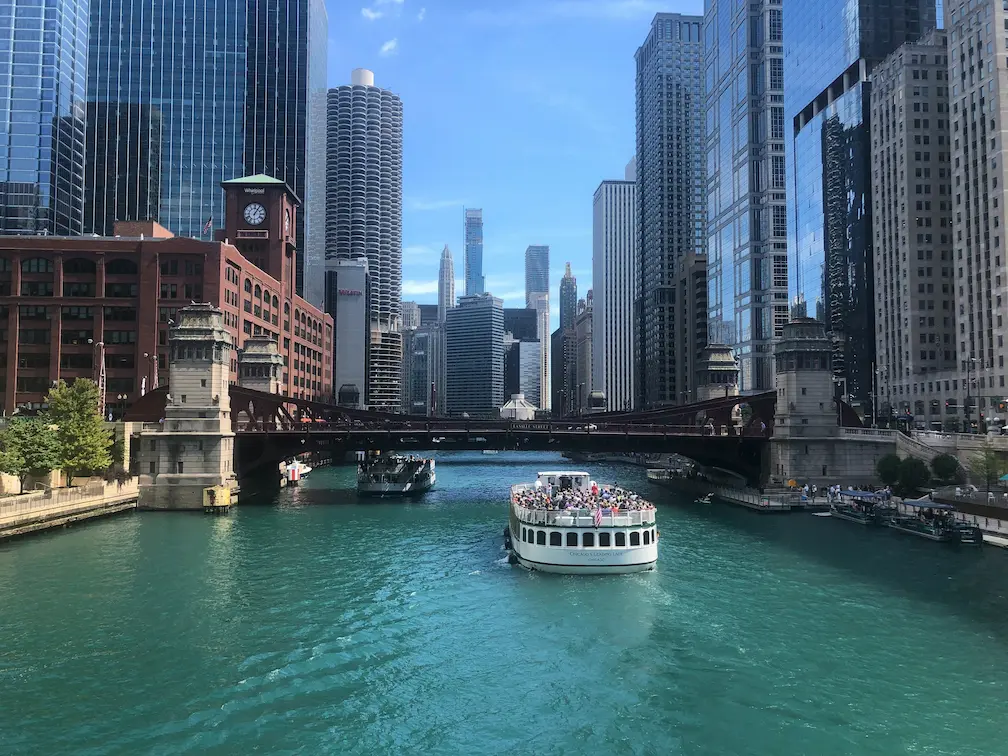
In the evening, walk the Chicago Riverwalk west from Michigan Avenue along the Chicago River through the Loop. It is free and one of the better urban walks in any American city. Architecture boat tours depart from here — approximately $45–55 for adults for a 90-minute narrated tour. If you are saving the boat tour for Day 2 morning, use tonight’s Riverwalk walk to scout the departure point and just take in the buildings from water level.
For dinner: Au Cheval in the West Loop for the burger that gets talked about more than almost anything else in Chicago. Plan on approximately $20–25 per person. No reservations — arrive at opening to avoid a wait. Or go straight to Lou Malnati’s for deep dish. Order the moment you sit down, because the pizza takes 45 minutes. A small deep dish runs approximately $18–22 and is more than enough for two people who have never had the real thing before.
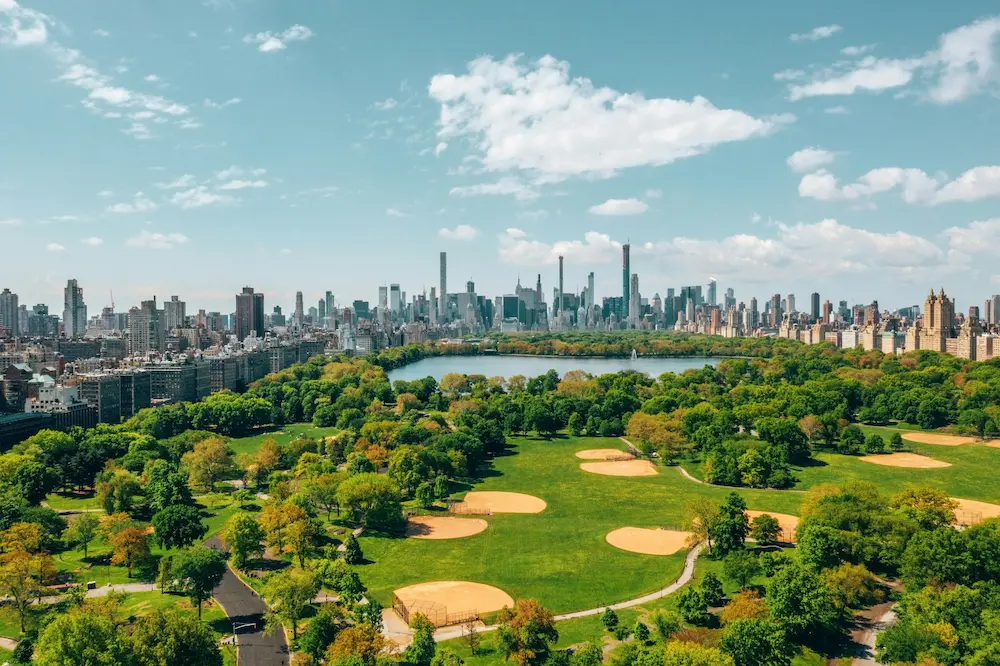
Book the Chicago Architecture Foundation boat tour for morning — it departs from the Riverwalk at Michigan Avenue and runs approximately $45–55 for adults. The 90-minute narrated river tour is the single clearest way to understand Chicago’s architectural legacy. You are looking up at buildings from the water while someone explains what you are actually seeing. Do this first.
After the boat tour, walk the Loop for the architecture that most visitors walk past without going inside. The Rookery at 209 S. LaSalle (1888) is free to enter during business hours — the interior lobby atrium was redesigned by Frank Lloyd Wright in 1905, and most people have no idea it is accessible. The Monadnock Building at 53 W. Jackson (1893) is one of the last load-bearing masonry skyscrapers ever built, also free to enter. Sullivan Center at 1 S. State (1899, Louis Sullivan) — the cast iron ornamental detail on the exterior is worth stopping in front of for ten minutes.
In the afternoon, take the Metra Electric train from Millennium Station to the 55th–56th–57th Street stop for Hyde Park. The fare is approximately $4 each way and faster than driving. The Museum of Science and Industry is here — entry approximately $22 for adults — and inside it is a German U-boat, the U-505, captured during World War II. It is the only German submarine in the United States and sits in a dedicated below-ground facility. Plan two to three hours. Two blocks away, Frank Lloyd Wright’s Robie House (1910) is one of the most complete examples of his prairie-style work anywhere — guided tours run approximately $20.
For dinner, take the Pink Line to the 18th Street stop in Pilsen. The best Mexican food in Chicago is in this neighborhood — tacos, tamales, birria, pozole — at prices that reflect a working neighborhood rather than a tourist corridor. Birrieria Zaragoza is cash preferred and runs approximately $15–20 per person. Any of the taquerias along 18th Street will do the job for approximately $3–5 per taco. Pilsen is also one of the better neighborhoods in Chicago for street art, so walk a few blocks before or after dinner.
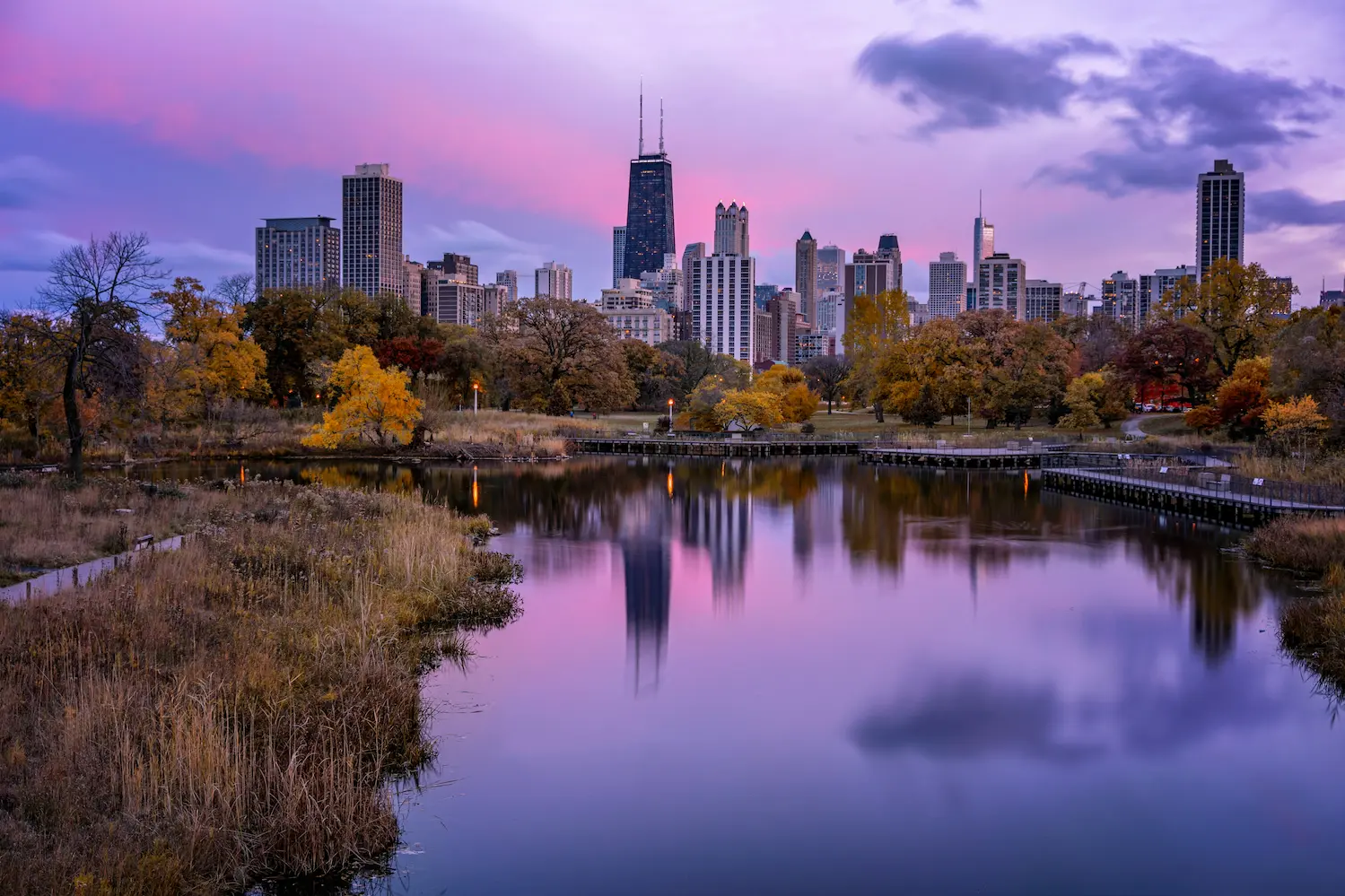
Pick up a Divvy bike with a day pass (approximately $15) and head for the Lakefront Trail. The path runs 18.5 miles along Lake Michigan — flat, well-maintained, and one of the better urban cycling routes in the country.
Ride north past Navy Pier. It is worth a brief stop for the lakefront view from the end of the pier — that part is free, and it is the best part. The Centennial Wheel runs approximately $18 if you want it, but the pier itself is heavily commercialized. Take the view and move on.
Continue north to Lincoln Park Zoo, one of the last free admission zoos in the United States. Gorillas, polar bears, big cats, approximately 200 species total. The zoo sits inside Lincoln Park, a free six-mile lakefront park with beaches, a conservatory, and running paths. North Avenue Beach is the most popular free beach in Chicago and sits directly adjacent to the park.
In the afternoon, ride west to the 606 Trail — an elevated rail-to-trail conversion that runs 2.7 miles from Wicker Park through Bucktown and Logan Square. It is free, and Divvy docks line the route. Start from the Wicker Park end for the better street art and city views.
Stay in Wicker Park for the evening. Walk Milwaukee Avenue from the Damen Blue Line stop. Dinner at any of the independent restaurants on North Avenue or Damen for approximately $20–35 per person — the neighborhood has a solid range without a dominant single recommendation. Live music at Double Door or Subterranean on North Milwaukee; cover runs approximately $5–15 depending on the night.
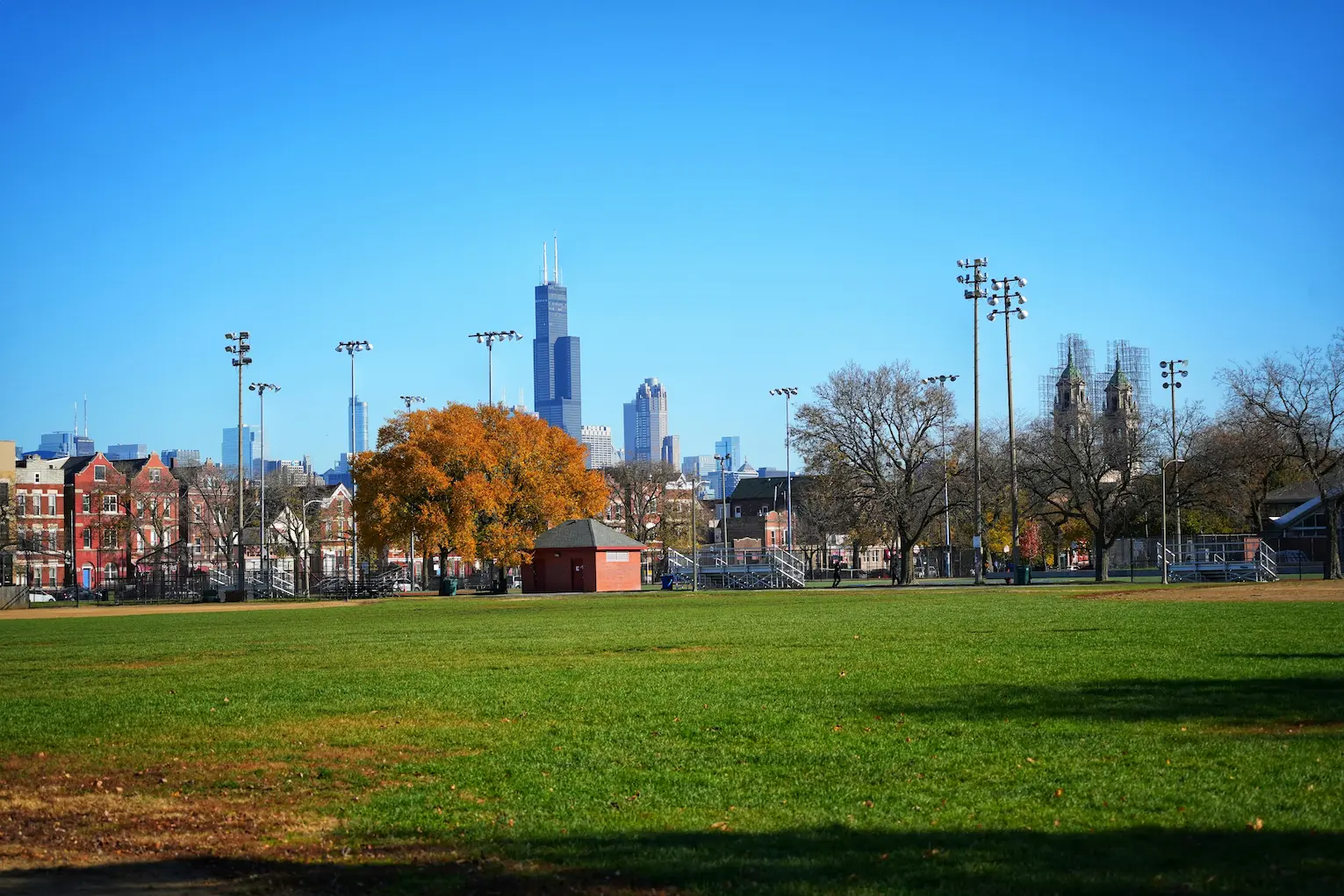
Take the Green Line L west to Oak Park — approximately 25 minutes and $2.50. This is the largest concentration of Frank Lloyd Wright buildings in the world. The Frank Lloyd Wright Home and Studio offers guided tours for approximately $20. Unity Temple (1908) runs approximately $18. For approximately $8, you can get a walking tour map that covers over 25 Wright buildings visible from the street — this alone is worth a couple of hours. Allow half a day in Oak Park before heading back downtown.
Back in the city, the West Loop and Fulton Market District run along Randolph Street and Fulton Market Avenue and hold the highest concentration of serious restaurants in Chicago. For lunch, the French Market at 131 N. Clinton is a free-to-walk indoor market with local food vendors — a low-cost way to eat well in a neighborhood that skews expensive at dinner.
For dinner, Girl & the Goat on West Randolph is chef Stephanie Izard’s James Beard Award-winning restaurant, shared plates, approximately $50–75 per person. Reservations are essential and often need to be booked weeks in advance. If that window has closed, Publican on Fulton Market is a beer hall-style restaurant focused on pork and oysters at approximately $40–60 per person — no reservations required for bar seating.
For the evening: Buddy Guy’s Legends on South Wabash is the most reliable live blues venue in Chicago. Cover runs approximately $10–20 on weekdays. Buddy Guy himself still plays there every January. Then take the Red Line north to Lawrence for the Green Mill Cocktail Lounge in Uptown — open since 1907, jazz most nights, cover approximately $5–10. It is one of the oldest continuously operating music rooms in the United States and looks exactly like you would want it to.
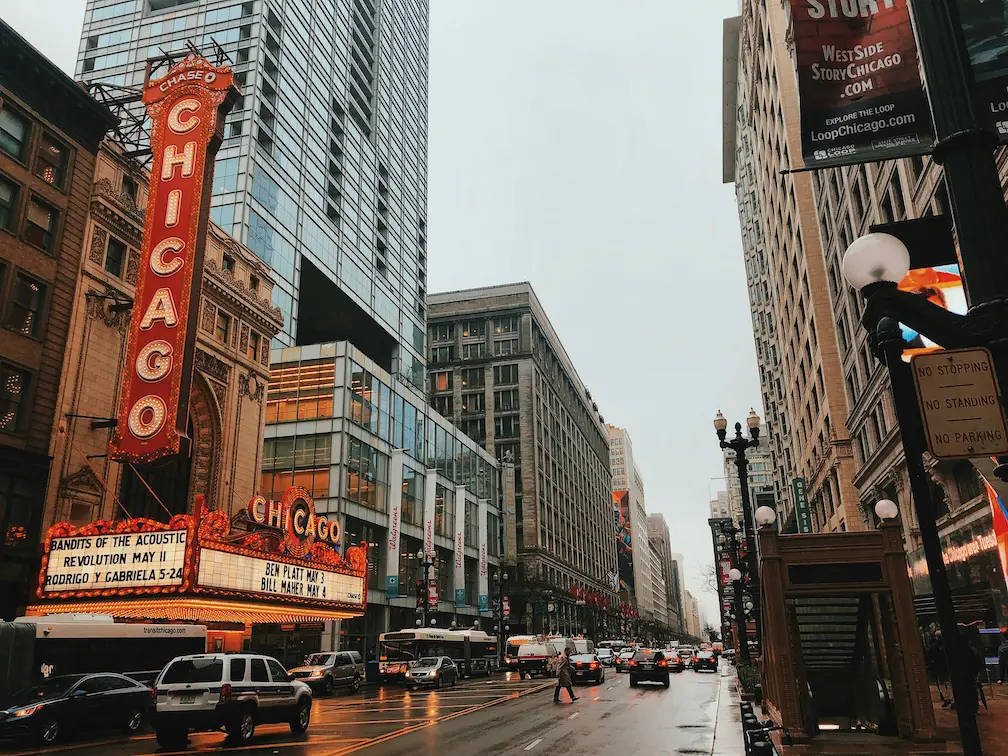
If your departure is in the evening, the morning is genuinely useful. Green City Market in Lincoln Park runs on Saturdays and Wednesdays from May through October — one of the better farmers markets in the Midwest, free to browse, local produce, cheese, bread, and prepared food from approximately $5–15 per item. Worth an hour.
Second City comedy theater has produced more household names than any other comedy institution in the world — Tina Fey, Bill Murray, Steve Carell, Stephen Colbert, Gilda Radner. The mainstage shows are the main draw, but the training center shows at approximately $10–20 are often just as sharp. Friday nights include a free improv set after the late mainstage show.
Before leaving, stop at Chicago Tribune Tower at 435 N. Michigan for fifteen minutes. Embedded into the lower exterior walls are fragments of famous buildings from around the world — pieces of the Taj Mahal, the Colosseum, the Great Wall of China, Notre Dame, the Berlin Wall, and dozens more. It is free to examine from the sidewalk and one of the most interesting things in the city that most visitors walk past entirely.
For departure: allow 90 minutes from downtown to O’Hare including security, 60 minutes for Midway. Take the L both times.
Chicago has a food culture that deserves its own itinerary, but these are the ones worth knowing on a five-day trip:
Lou Malnati’s or Pequod’s for deep dish — Pequod’s has a caramelized cheese crust that is distinct from every other deep dish in the city, approximately $20–28 for a small. Order immediately.
Portillo’s for a Chicago-style hot dog: all-beef frankfurter, poppy seed bun, mustard, relish, onion, tomato, sport peppers, pickle spear. No ketchup — this is a genuine cultural rule, not a suggestion. Approximately $5–7. Same counter, the Italian beef is thinly sliced seasoned beef on Italian bread, dipped in the cooking juices, with giardiniera. Approximately $8–12.
Garrett Popcorn for Chicago-style mix: caramel and cheddar popcorn combined. This sounds wrong and tastes right. Approximately $8–15 depending on size.
And at some point, at any Chicago bar, order a Malört shot. It is a bittersweet Swedish-style liqueur that became a Chicago tradition through sheer stubbornness. Approximately $4–6. It is notoriously bitter and absolutely not for everyone — but it is one of those things that is genuinely Chicago and genuinely not found the same way anywhere else.
Chicago is one of those cities where the more you dig, the more it gives back. The architecture alone justifies a trip — and then there is the food culture, the music, the lakefront, the neighborhoods that each feel like a different city entirely. Pilsen, Wicker Park, Hyde Park, Oak Park — none of them look like the downtown postcard, and all of them are worth the L ride.
Five days gets you a real introduction. You will come back knowing exactly what you missed and exactly where to start next time. Whether you are here for the deep dish, the blues rooms, the Frank Lloyd Wright trail, or just to stand under the Bean and watch the skyline bend around you — Chicago makes room for all of it, at every budget.