What If You’re Doing Hawaii Wrong Before You Even Land? Most people planning a first Hawaii trip spend weeks researching resorts and almost no time thinking about which island actually matches what they want. They book Waikiki because it’s the most recognizable name, spend three nights on a crowded beach strip surrounded by chain restaurants, […]
Most people planning a first Hawaii trip spend weeks researching resorts and almost no time thinking about which island actually matches what they want. They book Waikiki because it’s the most recognizable name, spend three nights on a crowded beach strip surrounded by chain restaurants, and fly home having seen a fraction of what Hawaii delivers when you plan it right.
The better move for a five-day trip is to split your time between two islands: Oahu and Maui. Oahu gives you the energy of Honolulu, the cultural weight of Pearl Harbor, and the completely different world of the North Shore. Maui gives you one of the best road trips in the US, the best beach infrastructure in the state, and a remote east coast that feels nothing like a resort destination. Together they cover more of what Hawaii actually is than any single island can.
A rental car is essential on both islands — pick one up at Honolulu’s Daniel K. Inouye International Airport (HNL) on arrival. Inter-island flights between Oahu and Maui run frequently and take about 30 minutes; book in advance and you can find fares under $60 each way. Maui’s Kahului Airport (OGG) is your departure point at the end of the trip.
If you are still sorting out where to stay on either island, Super often has competitive rates across both Oahu and Maui neighborhoods — worth checking before you commit.
Three nights on Oahu and two on Maui is the right balance for five days. Oahu has more ground to cover and rewards slower exploration — the North Shore alone justifies a full day. Maui’s two days work best structured around the Road to Hana on day four and the Wailea coast on day five before departure.
Fly into Honolulu. Fly out of Kahului. Book your inter-island flight for the morning of day four.
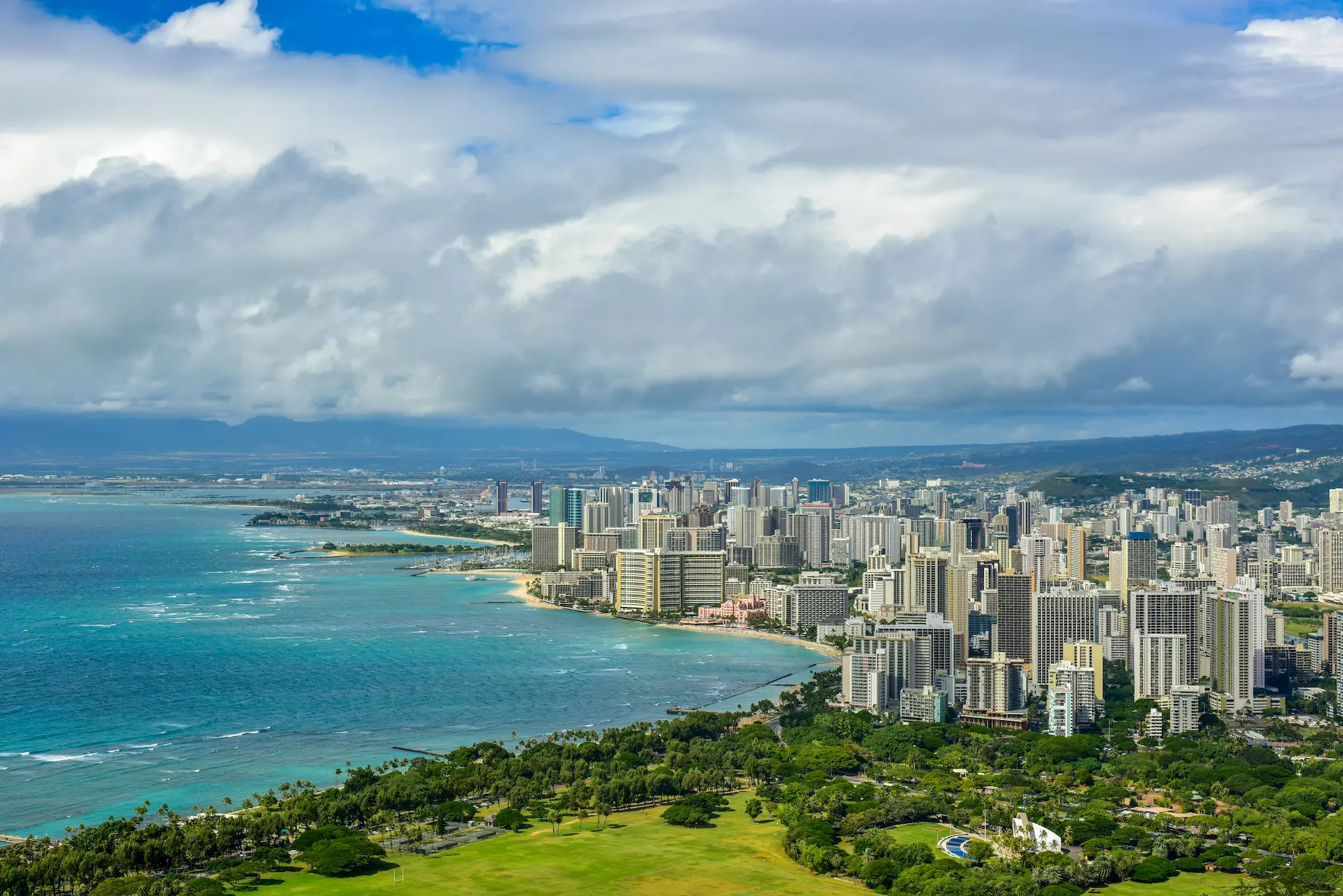
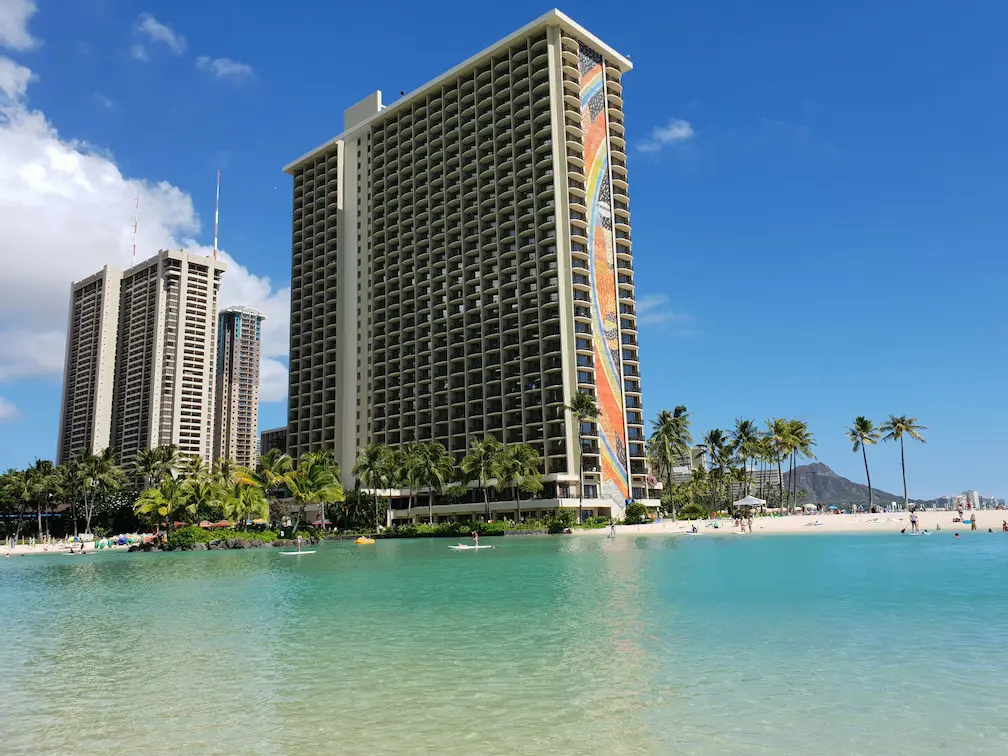
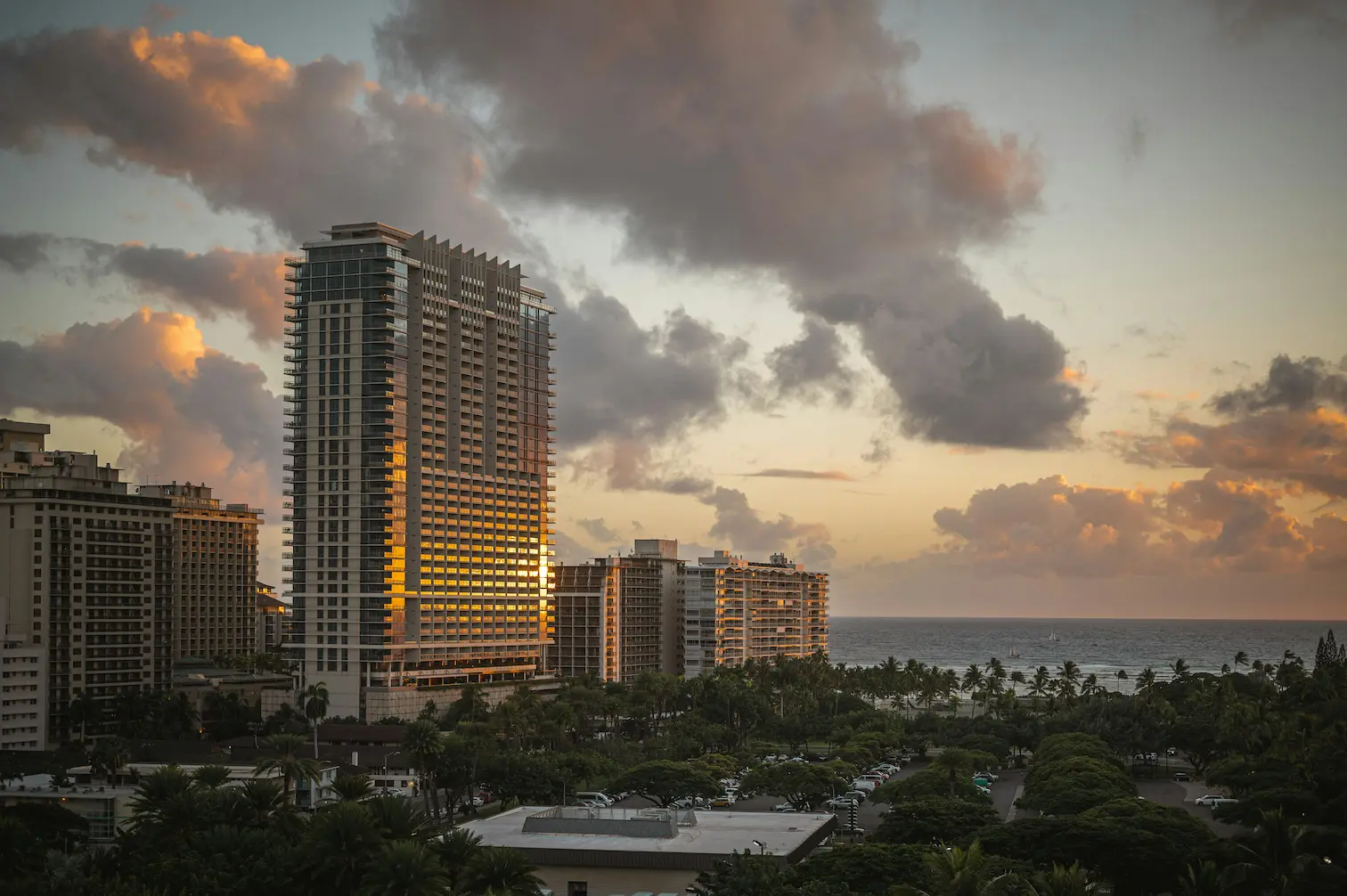
The instinct for most first-time visitors is to plant themselves in Waikiki and stay there. That is exactly what keeps most visitors from seeing Oahu. The beach is fine. The neighborhood behind it is not worth the prices it charges. Spend one afternoon at Waikiki — the Art Deco stretch along Kalakaua Avenue is worth a walk, and the beach itself is free — then move on.
The rest of Honolulu is where the city earns its reputation. Chinatown, just west of downtown, is one of the most undervisited neighborhoods on the island. The open-air markets along Maunakea Street sell fresh flower leis, local produce, and cheap plate lunches at prices that have nothing to do with resort Hawaii. The neighborhood has a rough-around-the-edges character that makes it feel like a real place rather than a tourist construct. Walk it in the morning when the markets are active.
The Punchbowl Crater — officially the National Memorial Cemetery of the Pacific — sits above Honolulu inside an extinct volcanic crater and is free to visit. The views over the city from the rim are among the best on the island, and the grounds are genuinely moving. Most visitors drive past it on the way to Diamond Head without stopping. Diamond Head itself is worth the hike — a 1.6-mile round trip to the summit of another extinct crater, with a panoramic view of the Waikiki coastline. Entry requires advance online reservation; fees are approximately $5 per person and $10 per vehicle.
Pearl Harbor is the most significant historical site on Oahu and requires a dedicated half-day. The USS Arizona Memorial is free but requires timed-entry reservations booked well in advance, especially in peak season. The Battleship Missouri, docked nearby, charges admission separately. Give yourself the full morning — arriving late and rushing this one is a common mistake.
Day two is for the North Shore. The drive from Honolulu takes about an hour on H-2 through the center of the island, and the change in atmosphere is immediate. The North Shore runs at a completely different pace from Waikiki — slower, more local, built around surf culture rather than resort infrastructure. Haleiwa town has a main street with shave ice stands, local boutiques, and the kind of casual plate lunch spots that remind you food in Hawaii does not have to be expensive. Matsumoto Shave Ice on Kamehameha Highway has been operating since 1951 and still draws lines — the shave ice here runs around $4 to $6 depending on size and toppings.
Between November and February, the surf on the North Shore’s seven-mile stretch is among the most powerful in the world. Waimea Bay and the Banzai Pipeline draw professional surfers and spectators from everywhere. The beach is free to watch from. Between April and October the water calms significantly and Waimea Bay becomes swimmable — one of the better swimming beaches on the island when conditions are right. You step into the water and the temperature surprises you. Not cold — just cooler than you expected, with a clarity that makes the bottom look closer than it is.
Sunset from the North Shore beach parks, with the Waianae Mountains behind you and the surf dying down for the evening, is one of the better free experiences Hawaii offers.
For accommodation on Oahu, Honolulu’s Kaimuki and Kapahulu neighborhoods give you access to the city without Waikiki pricing. Expect to pay approximately $120–200/night for a solid guesthouse or Airbnb. If you want to be closer to Waikiki for convenience, the streets east of Kalakaua Avenue run cheaper than the beachfront strip.
Fly from Honolulu to Kahului on the morning of day three. Pick up your rental car at OGG and drive directly to the Wailea coast on Maui’s south shore to drop your bags — you will be based here for two nights. Then take the afternoon at your own pace: Wailea Beach is one of the better swimming beaches on the island, calm and accessible, and the beach walk connecting Wailea’s resort properties is a free public path with good views of Molokini Crater offshore.
Day four is the Road to Hana — and it needs the full day. The highway runs 64 miles from Kahului to the town of Hana along Maui’s northeast coast, with 617 curves, 59 bridges, and a coastline that shifts constantly between black sand beaches, waterfall pools, bamboo forests, and open ocean cliffs. Budget six to eight hours minimum, not including time in Hana itself.
The first stop worth making is Twin Falls, about 11 miles east of Kahului — an easy walk from a roadside parking area to a set of freshwater falls with a swimming pool at the base. It gets crowded by midmorning, so earlier is better. Ke’anae Peninsula, further along, is a flat lava shelf that juts into the ocean with a small Hawaiian village, a historic taro farm, and a roadside banana bread stand that has been a fixture for years. The bread runs a few dollars and is worth stopping for.
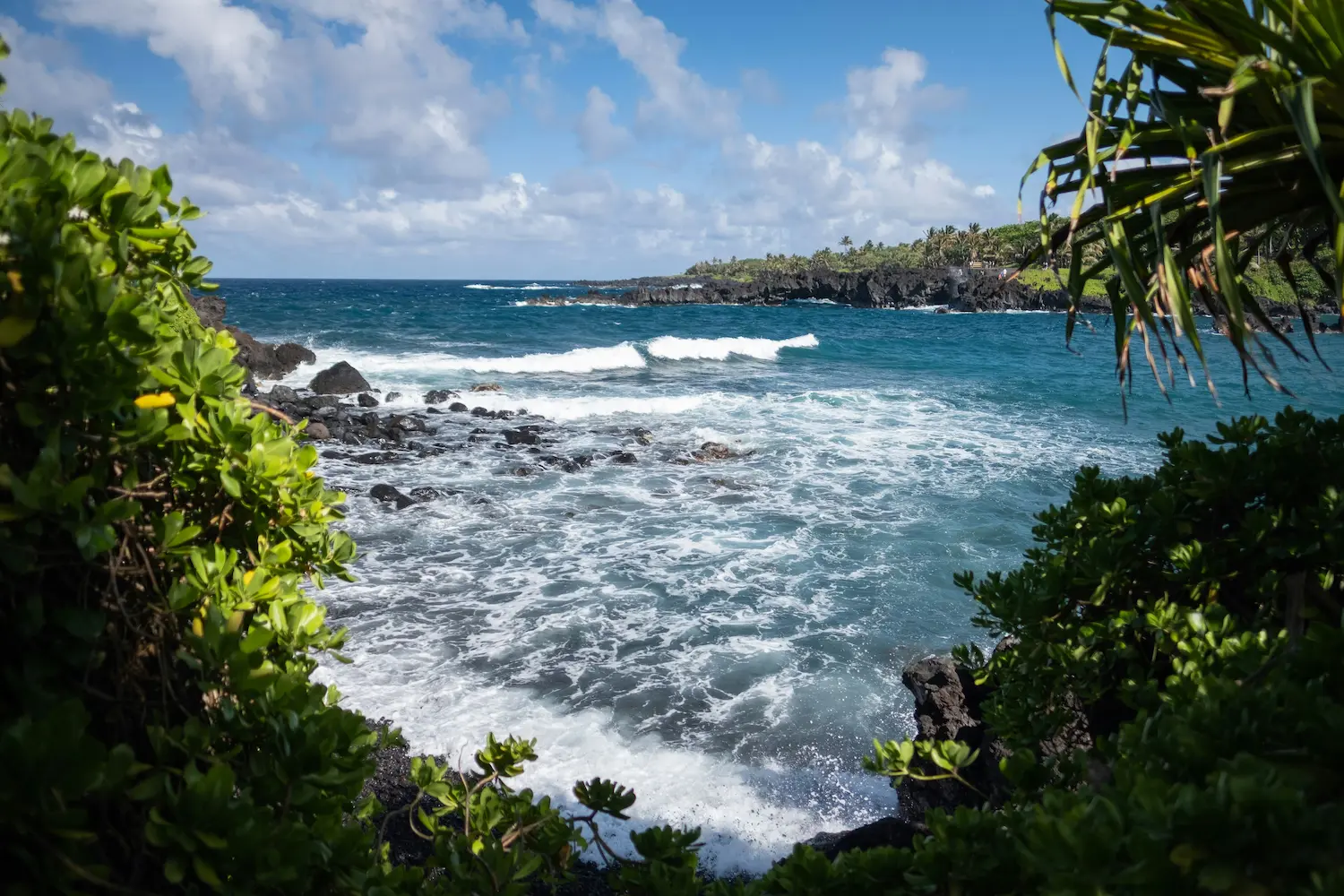
Waianapanapa State Park near Hana contains one of the most unusual beaches in Hawaii: Pa’iloa Beach, a black sand beach formed from volcanic lava, with sea caves accessible at low tide and a coastal hiking trail that winds along dramatic cliffs above the Pacific. Entry requires advance reservation through Hawaii’s state parks system — book this before the trip, not the morning of.
Hana itself is a small, unhurried town with almost no tourist infrastructure by design. The Hasegawa General Store has been the community’s main shop since 1910 and still operates as a working store selling everything from local snacks to fishing gear. Wander Hana Bay in the late afternoon when the day-trippers have turned back. The return drive along the same road at dusk, with less traffic and the light going golden across the coast, is genuinely one of the better driving experiences in the state.
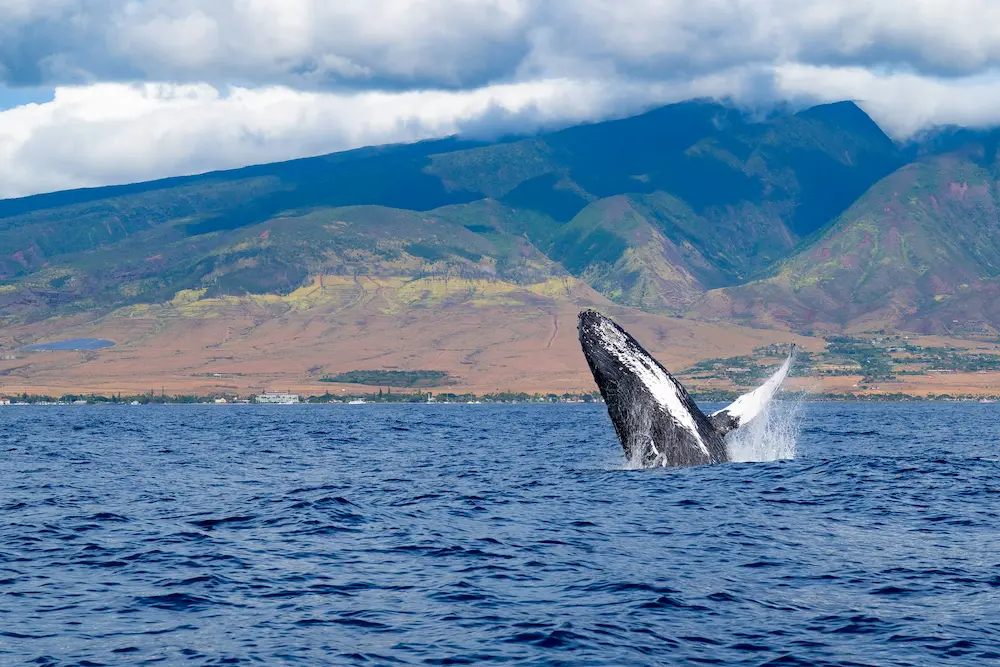
The last day splits between two areas that represent Maui’s most visited and most historically significant.
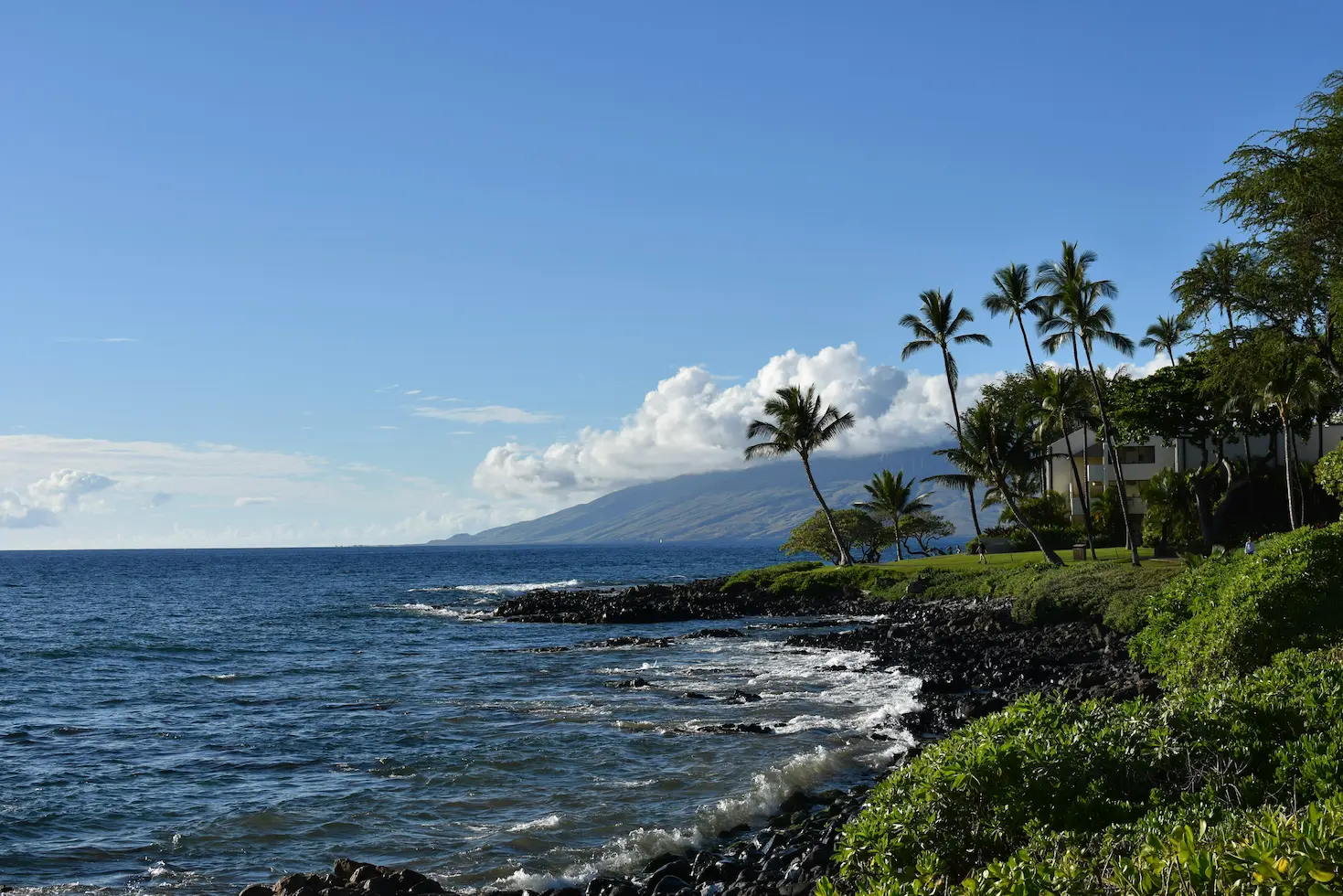
Wailea’s beach strip in the morning — Wailea Beach, Polo Beach, and Makena Beach State Park are all within a short drive of each other and all free to access. Makena, locally known as Big Beach, is the largest undeveloped beach on Maui: a long crescent of coarse golden sand with strong surf, no resort development behind it, and a raw quality that most of the south shore lacks. The water here is more powerful than at calm Wailea — it is a beach for watching the ocean as much as swimming in it.
Lahaina on Maui’s west coast was the island’s historic whaling town and, before that, the capital of the Kingdom of Hawaii. The historic Front Street district has been partially rebuilt following the devastating August 2023 fire that destroyed much of the town. As of 2025, recovery is ongoing — some businesses have reopened, the harbor area is accessible, and the Banyan Tree that anchors the town square survived the fire. Check current conditions before visiting, as the situation is still evolving. Lahaina remains an important and meaningful stop; approach it with that in mind.
The drive from Lahaina back to Kahului for departure takes about 45 minutes without traffic. OGG is a straightforward airport with good food options airside — one of the few Hawaiian airports where arriving with time to spare is not a punishment.
The best window for this itinerary is April through early June or September through October. You avoid the peak pricing of winter and summer, humidity is lower than midsummer, and both islands are operating fully without holiday crowds. December through mid-April brings the highest hotel rates on both islands — shoulder season savings can reach 25 to 40 percent on the same properties.
Pack reef-safe sunscreen for both islands — Hawaii law prohibits sunscreens containing oxybenzone and octinoxate, and most resort shops stock compliant options, but bringing your own saves the markup.
The Road to Hana has active speed limit enforcement and very limited passing opportunities. Do not rush it — the road does not allow for rushing, and the people who try make it worse for everyone behind them. Start early, take the stops, and budget the full day.
Tipping follows standard US practice: 18 to 20 percent at sit-down restaurants, standard amounts for housekeeping and activity guides.
Inter-island flight baggage fees apply on most carriers — Hawaiian Airlines and Southwest both serve the Honolulu-Kahului route, and Southwest’s no-checked-bag-fee policy can save money if you are traveling with more than a carry-on.
Hawaii done right over five days is not about finding the best beach and staying on it. Oahu rewards the visitors who leave Waikiki — the North Shore, Chinatown, Pearl Harbor, and Punchbowl are all within reach of the same rental car and none of them require a resort budget. Maui rewards the visitors who get up early enough to have the Road to Hana mostly to themselves and slow down enough on Makena Beach to remember why they came.
April through early June is the best window: the winter crowds have thinned, the water is warm on both islands, and the Road to Hana is running at its greenest after the spring rains. That combination is hard to beat.