Most travelers book Myrtle Beach and think they’ve seen South Carolina. They haven’t. Myrtle Beach is the most visited destination in the state — and in summer, it is also one of the most expensive. Oceanfront hotel rates run $200–400 per night for mid-range rooms in July. The restaurants are mostly chains. The beach parking […]
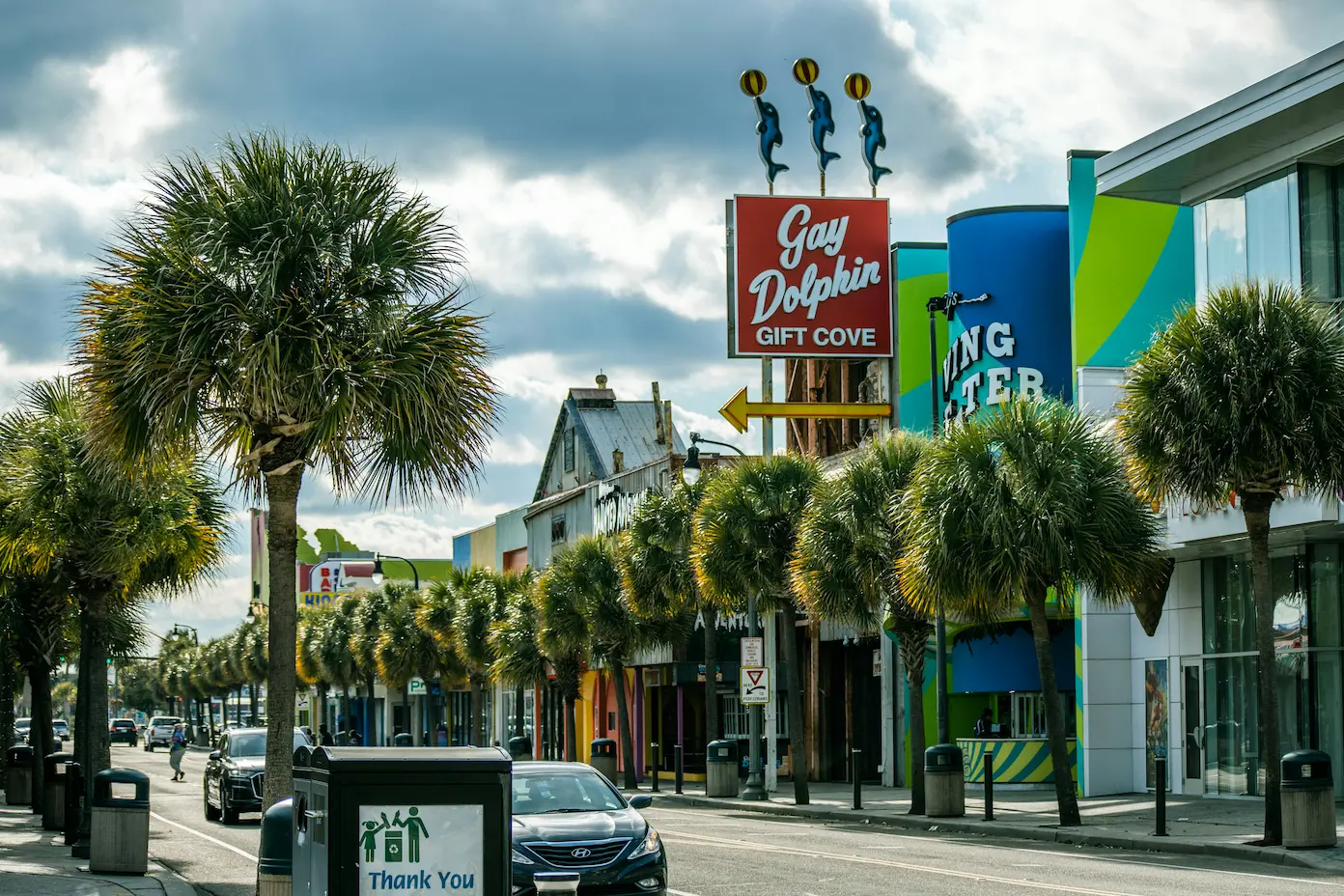
Myrtle Beach is the most visited destination in the state — and in summer, it is also one of the most expensive. Oceanfront hotel rates run $200–400 per night for mid-range rooms in July. The restaurants are mostly chains. The beach parking lots charge by the hour. The souvenir shops are everywhere. The beach itself is wide and free, but nearly everything around it is built to extract money from visitors as efficiently as possible.
Here is what most people who book Myrtle Beach never realize: the rest of South Carolina operates on a completely different budget. Free national parks. Free historic walks through some of the oldest neighborhoods in the country. A $7 museum that tells one of the most important stories in American history. A waterfall in the middle of a major city that costs nothing to visit. Gullah Geechee home cooking for $10–15 a plate, cash only.
South Carolina has two price realities. This article is about the one most visitors miss.
If you are still working out where to stay, Super tends to have strong rates across the state — worth a look before you commit to anything on the Grand Strand.
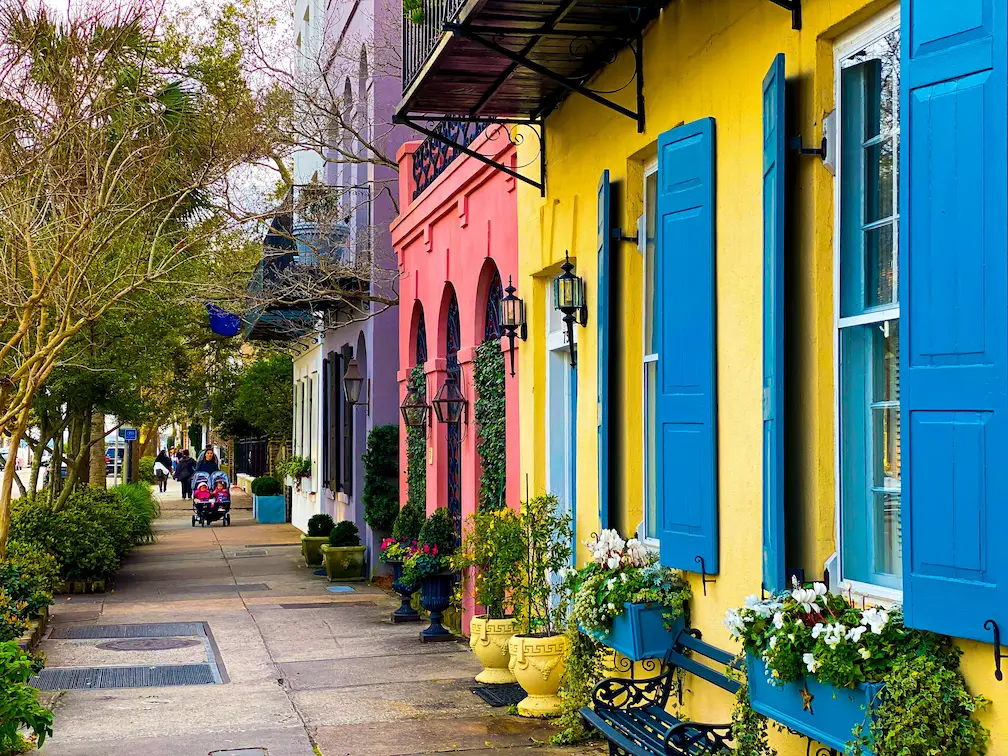
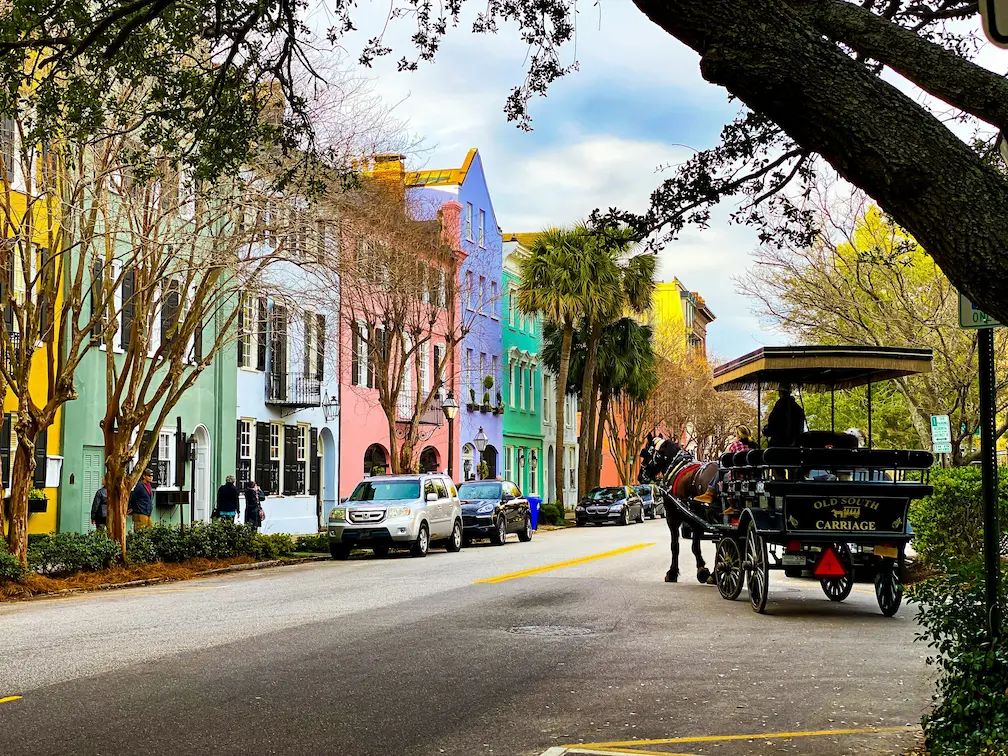
Walking Charleston’s historic district is the single best free activity in the state — and most visitors underestimate how much there is to see without spending anything. Start at the Battery and White Point Garden, the free waterfront promenade at the southern tip of the Charleston peninsula. Walk north along East Bay Street to Rainbow Row: 13 pastel-painted Georgian row houses from the 1700s, photographed from the public sidewalk at no cost. Continue into the French Quarter to St. Michael’s Church, built in 1761, the oldest surviving church building in Charleston. The churchyard holds graves of signers of both the Constitution and the Declaration of Independence. Done properly, this walk takes 2–3 hours and costs nothing. Charleston’s architecture is the attraction, and nearly all of it is visible from the street.
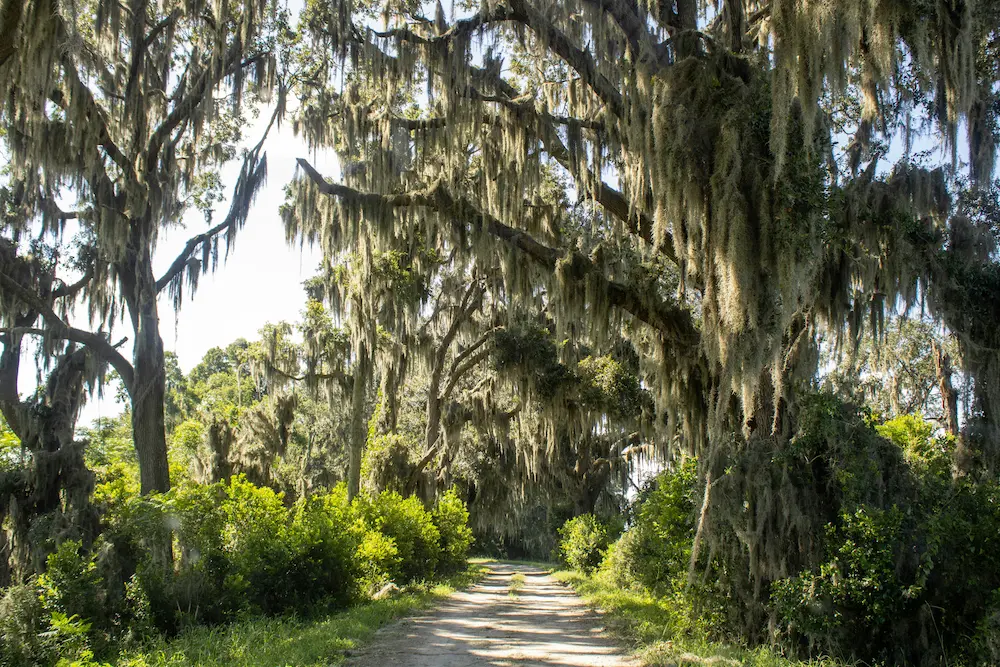
You turn off the main road onto a dirt track near Beaufort and the marsh opens up on both sides — grass as far as the water, egrets standing in the shallows, a shrimp boat moving slowly toward the inlet. The road keeps going. There is nothing here that costs anything.
Henry C. Chambers Waterfront Park in Beaufort is free to enter and one of the most photographed public spaces in South Carolina. Live oaks draped in Spanish moss, tidal marsh views across the Beaufort River, a boardwalk and benches — no entry fee, no parking charge if you walk from downtown Beaufort.
Falls Park on the Reedy in Greenville is a waterfall in the center of a major American city, free and open daily. A pedestrian suspension bridge crosses above the falls. The Reedy River Greenway connects the park to other green spaces along the river — all free to walk. It is one of the more surprising urban green spaces in the South, and most South Carolina visitors never see it because they never make it to Greenville.
The Swamp Rabbit Trail is a 22-mile paved greenway running from downtown Greenville to Travelers Rest — free to walk or run. Bike rentals are available in downtown Greenville for approximately $20–30 for a half day. The trail passes through woods, farmland and small communities with no tourist infrastructure whatsoever — genuinely local.
Congaree National Park charges no entry fee and requires no reservation for general visits. The Boardwalk Loop is a 2.4-mile elevated walk through old-growth bottomland hardwood forest where some of the tallest trees in the eastern United States grow. Free ranger-led programs run on weekends, including guided canoe tours on Cedar Creek at no additional cost beyond the free park entry. Congaree is worth visiting any time of year — the park is frequently associated with the synchronous firefly event in May and June, which requires advance tickets and draws significant competition, but the forest and the boardwalk are available year-round and are genuinely worth the drive on their own terms.
Hunting Island State Park charges approximately $8 per person to enter — low enough to belong in the free section for practical purposes. For that $8, you get access to 5 miles of Atlantic coastline with maritime forest directly behind the sand and significantly less development than anything on the Grand Strand. It is the most natural beach in South Carolina that is easily accessible from a paved road.
During azalea season in March and April, Charleston’s public gardens, churchyards and historic district streets are full of blooming azaleas at no cost. Magnolia Cemetery has significant azalea plantings and is free to walk. The paid alternative — Middleton Place plantation gardens, which hold the oldest landscaped gardens in the United States — runs approximately $29 for adults and is worth seeing if the azalea display is at peak, but the free version of azalea season in Charleston is genuinely impressive on its own.
Penn Center on St. Helena Island charges approximately $7 for adults — one of the most historically significant sites in South Carolina at one of the lowest entry prices in the state. Established in 1862 as one of the first schools for formerly enslaved people, the museum documents the history and living culture of the Gullah Geechee people. Penn Center is not a museum in the conventional sense. It is a living institution that has been in continuous operation since 1862, and visitors who arrive without context for what they are looking at tend to underestimate what they are seeing. Reading about the Gullah Geechee people before visiting transforms the experience entirely.
The Hunting Island Lighthouse climb costs approximately $2 on top of the $8 park entry — roughly $10 total — and gets you to the top of the 1875 lighthouse with views across the barrier island chain. One of the more affordable elevated viewpoints on the entire East Coast.
Table Rock State Park in the Upstate charges approximately $6 per person. Two significant peaks, multiple waterfalls, and a historic 1930s CCC-built lodge that serves lunch for approximately $12–20. The Table Rock Trail is 7.2 miles round trip to 3,124 feet — strenuous but free once you are inside the park. The lodge dining room is one of the more atmospheric places to eat in South Carolina, and the price reflects none of that. Note: a 2025 wildfire burned portions of the summit area, so some sections of the upper trail may have limited tree cover — the views from the top remain.
Caesar’s Head State Park, also in the Upstate, charges approximately $5 per person. The overlook at 3,208 feet has views into North Carolina. The Raven Cliff Falls trail is 4 miles round trip to a 420-foot waterfall — free once you are inside the park. One note: trailhead parking at Table Rock fills before 10am on peak weekends, and Caesar’s Head’s small overlook lot reaches capacity by mid-morning on busy days. Arriving by 8am on weekends solves this completely.
Folly Beach, 15 minutes south of downtown Charleston, has free beach access and is the closest surf beach to the city. The pier costs approximately $7 for adults — or skip it and use the free beach. Significantly less crowded than Isle of Palms and more affordable than beach club areas on Sullivan’s Island.
Bertha’s Kitchen in North Charleston is cash only, open Wednesday through Saturday from 11am to 5pm, and costs approximately $10–15 per person for a full plate lunch. Fried chicken, lima beans, okra soup, rice and gravy — Gullah Geechee cooking that represents the actual food tradition of the Lowcountry, not the tourist-facing version of it. It is the most culturally significant affordable meal in South Carolina, and it requires cash. Withdraw before you go, and plan your visit around the Wednesday–Saturday schedule.
Roadside boiled peanuts are the South Carolina snack that most out-of-state visitors either skip or stumble across by accident. Raw peanuts boiled in salted water for hours until soft — sold from roadside stands throughout the Lowcountry and Midlands for approximately $3–5 per bag. They are available on highways between Charleston and Beaufort and along most rural roads in the region. Worth stopping for.
For seafood, the Marshwalk in Murrells Inlet — 15 miles south of Myrtle Beach — is a boardwalk lined with independent seafood restaurants serving fresh local catch. Creek Ratz and Dead Dog Saloon both run approximately $20–30 per person. The quality is significantly better than anything on the Myrtle Beach strip, and the price is lower. If you are going to eat seafood on the Grand Strand, drive south.
On King Street in Charleston, budget accordingly: a casual dinner runs approximately $30–50 per person. It is worth doing once or twice for the experience, but alternating with Bertha’s Kitchen for lunch (cash only, $10–15, Wed–Sat) and roadside boiled peanuts ($3–5) keeps the food budget balanced without sacrificing anything.
Spending the entire trip at Myrtle Beach is the most common and most costly mistake South Carolina visitors make. The beach is wide and the ocean is the same Atlantic — but the surrounding infrastructure is built entirely around extracting money from tourists. Chain restaurants, souvenir shops, overpriced parking and summer hotel rates that climb to $200–400 per night. If you want a beach day on the Grand Strand, take it — then drive 15 minutes south to Murrells Inlet for better seafood, or 90 minutes south to Hunting Island for a natural beach that actually feels like South Carolina.
Skipping Greenville entirely is the second most common mistake. Most visitors fly into Charleston and never leave the Lowcountry. Greenville in the Upstate has Falls Park, the Swamp Rabbit Trail, access to Blue Ridge waterfalls and one of the strongest independent restaurant scenes in the state. Building one night in Greenville into any South Carolina itinerary adds almost no cost and changes the character of the trip entirely. The drive from Charleston is 3.5 hours — manageable as a road trip stop.
Not carrying cash costs real money in South Carolina. Bertha’s Kitchen is cash only — the best affordable meal in the state is inaccessible without it. Roadside boiled peanut stands, farm stands, sweetgrass basket weavers at the Charleston City Market and many small Lowcountry restaurants are cash only or cash preferred. ATMs in rural Lowcountry and on the Sea Islands are limited. Withdraw before leaving any major city.
Paying full price for Fort Sumter without understanding the alternatives is a straightforward mistake to avoid. The ferry to the island costs approximately $40 per adult and is worth doing once for the harbor crossing and the history. But the NPS visitor center on the mainland at Liberty Square tells much of the Fort Sumter story through exhibits and film at no cost, with harbor views included. Visit the mainland center first and decide from there whether the full ferry trip adds enough for your group.
Treating Penn Center as a tourist attraction rather than what it actually is — a living Gullah Geechee cultural institution — leads to a thin experience. Visitors who arrive expecting a polished museum miss the significance of what they are looking at. Read about the Gullah Geechee people before visiting. Approach the campus and staff with the respect you would give a living cultural center.
Renting a car and driving it into the Charleston historic district every day is an expensive error. Garage parking near the Battery runs approximately $20–25 per day. Over a 3-day Charleston stay, that is $60–75 in parking fees stacked on top of the daily car rental rate. The better approach: stay within walking distance of the main sites, park once on arrival, and leave the car for day trips. The free CARTA downtown shuttle covers longer walks within the historic district.
Booking Myrtle Beach accommodation in summer without comparing nearby alternatives leaves money on the table. The same quality room in Murrells Inlet or Pawleys Island — 15–30 minutes south — costs approximately 30–40% less with a quieter environment. The beach quality does not change. Compare the full Grand Strand before committing to a Myrtle Beach address.
Going to Congaree only for the firefly event and not otherwise is a missed opportunity. The synchronous fireflies in May and June are remarkable, and tickets are competitive. But the old-growth forest, the champion trees and the boardwalk loop are available year-round for free. A weekday morning on the boardwalk in October or March is a better experience than a crowded firefly night. Plan a Congaree visit independent of the firefly schedule.
Visiting Upstate waterfalls on a summer or fall weekend without arriving early means you may not find parking at all. Table Rock’s trailhead fills before 10am on peak weekends. Caesar’s Head’s overlook lot reaches capacity by mid-morning on busy days. The solution is simple: arrive by 8am on weekends, or go on a weekday.
Eating every meal on King Street in Charleston adds up faster than most visitors expect. The restaurants are good but priced for travelers — $30–50 per person for a casual dinner. Alternating with Bertha’s Kitchen at lunch (cash only, Wed–Sat, $10–15), roadside boiled peanuts ($3–5) and lower-cost options around the Charleston City Market keeps the daily food spend reasonable without cutting anything worth keeping.
The America the Beautiful Annual Pass costs $80 and covers Congaree National Park, Cowpens National Battlefield, Kings Mountain National Military Park and the land portions of Fort Sumter. If you are visiting more than one of these sites, buy the pass before your first park entry.
The best value timing windows are March through May — azalea season, mild temperatures and rates below summer levels — and September through October, when the weather is still warm enough for beach visits and accommodation rates run approximately 20–30% lower than summer. Hurricane season runs June through November; travel insurance is worth buying for coast visits in that window.
Outside Charleston’s walkable historic core, a car is essential. Budget approximately $45–75 per day for a rental and book in advance. Within Charleston, park once and use the free CARTA downtown shuttle for coverage across the peninsula.
Carry US cash. Bertha’s Kitchen (cash only, Wed–Sat), roadside stands, farm markets and smaller Lowcountry restaurants either require it or strongly prefer it. ATMs are limited outside the major cities and tourist corridors.
Standard US tipping applies — 18–20% at restaurants. Cash tips are especially appreciated at local spots.
South Carolina is two states in one budget conversation. There is the Myrtle Beach version — convenient, heavily marketed and priced accordingly. And there is the version most visitors never find: a $7 museum that changed American history, a free waterfall in a city center, a lighthouse climb for $10, the best fried chicken in the Lowcountry for $15 cash, and beaches and old-growth forests that charge nothing or close to it.
Whether you are drawn to coastal history, Appalachian trails, Gullah Geechee culture, natural beaches or just want to eat well without spending much — South Carolina has a version of that experience within reach. You just have to know where to look.